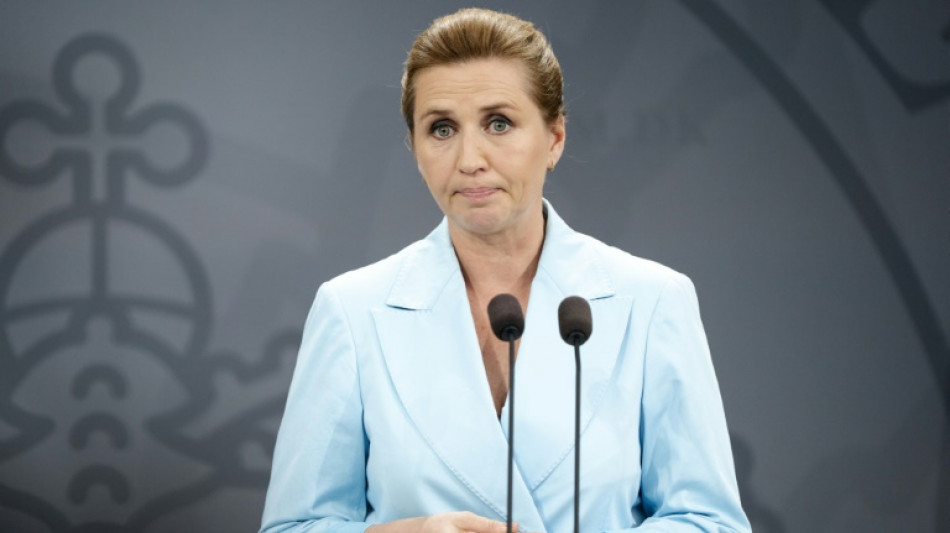
Danes reluctant to embrace retirement at 70 / Photo: Mads Claus Rasmussen - Ritzau Scanpix/AFP/File

 Trump's photo of Xi greeting carries signs of AI

 First US trial against TikTok to open Monday

 French literary prize removes novel from longlist after AI claims

 Trump accuser E. Jean Carroll finally has her damages

 Heavy fighting, internet disruption as Ethiopia conflict rages

 Asian markets mixed after oil gains

 UN approves resolution on dealing with rising sea levels

 Global stocks mostly fall as oil prices and bond yields rise
 Starbucks to close 250 more cafes in North America

 Stocks fall as oil prices rise and bonds back under pressure

 Top ECB official to resign to take up IMF role

 Eviction of pensioner puts Spain housing crisis in spotlight

 Average EU diesel price hits record 2.23 euros a litre: AFP analysis

 Whitetip Investments Marks 10 Years of Regulation, Transparency & Responsible Trading

 Stocks fall, oil prices rise as global bonds under pressure
 Hungary detects invasive spotted lanternfly for first time in EU

 Forex Expo Dubai 2026 Breaks Guinness World Record Again With 23,816 Attendees

 Asian markets fall on US-China jitters as leaders meet

 As Moscow steps up attacks, Kyiv residents brace for harsh winter

 Markets mixed as China's Xi arrives for US talks
 Archaeological 'breakthrough' could confirm origins of Paris

 Australian PM says OpenAI hacked government health website

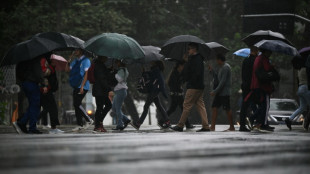 Rio breaks record for rainiest September amid powerful El Nino

 Mandela Digital Extends Early Access Programme to 11 February 2027 Following Strong Response

 McDonald's to boost franchisees as inflation weighs on consumers

On paper, Kirsten Evans is among the first group of Danes who have to wait until age 70 to retire with a full pension, but she has no intention of waiting that long.
Denmark's parliament in May adopted a law raising the retirement age to 70 by 2040, from the current age of 67.
But Evans, a 53-year-old bank employee with a solid financial footing, said she plans to retire around 65 or 66 -- even if it means she won't earn a full pension.
"I think 70 is old," she told AFP. "You want to benefit on the other end and still have a good life afterwards," she said.
As many Western countries grapple with how to stretch pensions to cover ageing populations, Denmark indexed the official retirement age to life expectancy in 2006 and has revised it every five years.
In 2030, the retirement age will increase to 68 and in 2035, it will rise to 69.
But those born after December 31, 1970 -- including Evans -- will have to wait until age 70.
- Widening gap -
Few people actually work to the legal retirement age in Denmark.
In 2022, when the official retirement age was 67, the actual average retirement age was around 64, according to the Organisation for Economic Cooperation and Development (OECD).
About 20 percent of retirees in Denmark retire because they can't find a job or are too sick to continue, according to Aske Juul Lassen, an ethnologist at the University of Copenhagen who specialises in senior working life.
"For those 20 percent, it makes a big difference whether the retirement age rises again," he said, stressing that "inequities are rising with age".
The gap risks widening between those able to retire early thanks to strong finances and others, said Damoun Ashournia, chief economist at the Danish Trade Union Confederation.
"Very few people actually retire at the official retirement age. But that is not an opportunity our members have," Ashournia said.
Camilla Rasmussen, a 37-year-old union member who works as a gastroenterology nurse at a Copenhagen hospital, is convinced that she will not be physically able to work until age 70.
"That would be really hard for me, walking 10,000 steps every day," she said.
"If I'm here when I'm 70, I think it's not fair for the patients," she added.
"Already today, we see that two-thirds of our members have retired prior to the official retirement age. And that's due to them being worn out and doing hard physical work," Ashournia said.
- System review -
Denmark's pension system is made up of several parts. There is a universal public pension, currently set at 7,198 kroner ($1,130) per month, plus two complementary employer-funded pensions invested in pension funds—one mandatory and one optional.
Finally, some people also save money privately for retirement.
Ashournia said he believed that raising the retirement age to 70 was the only way to finance Denmark's cradle-to-grave welfare state.
"As the population ages and life expectancy increases, if we want to deliver the same public services we do today, we need to secure public finances," he said.
However, he criticized the automatic five-year increases in the retirement age, a practice in place since 2006.
Under these rules, the retirement age in 2070 will be 74.
For Erik Simonsen, deputy head of the Confederation of Danish Employers, this is the only way forward.
"It would be the most intelligent way to go on, to keep the system. So the older we get, then we have to work a little bit more," Simonsen said.
Danish Prime Minister Mette Frederiksen, 47, has said she believes a review of the system will be needed once the retirement age hits 70.
"We no longer believe that the retirement age should be increased automatically," she told daily Berlingske in August 2024.
In line with a review by a government-appointed working group, the Danish Trade Union Confederation said it would like to see a slowdown in the rate of increases.
"In the future, we can raise it by only half a year for every year that life expectancy increases," said Ashournia.
P.Schmidt--CPN