China's economy likely grew 5.2% in Q2 despite trade war: AFP poll / Photo: STR - AFP

 Trump's photo of Xi greeting carries signs of AI

 First US trial against TikTok to open Monday

 French literary prize removes novel from longlist after AI claims
 Trump accuser E. Jean Carroll finally has her damages
 Heavy fighting, internet disruption as Ethiopia conflict rages

 Asian markets mixed after oil gains

 UN approves resolution on dealing with rising sea levels

 Global stocks mostly fall as oil prices and bond yields rise

 Starbucks to close 250 more cafes in North America

 Stocks fall as oil prices rise and bonds back under pressure

 Top ECB official to resign to take up IMF role

 Eviction of pensioner puts Spain housing crisis in spotlight
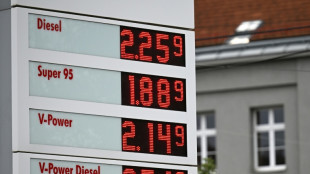 Average EU diesel price hits record 2.23 euros a litre: AFP analysis

 Whitetip Investments Marks 10 Years of Regulation, Transparency & Responsible Trading

 Stocks fall, oil prices rise as global bonds under pressure

 Hungary detects invasive spotted lanternfly for first time in EU

 Forex Expo Dubai 2026 Breaks Guinness World Record Again With 23,816 Attendees

 Asian markets fall on US-China jitters as leaders meet
 As Moscow steps up attacks, Kyiv residents brace for harsh winter

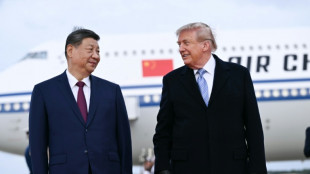 Markets mixed as China's Xi arrives for US talks

 Archaeological 'breakthrough' could confirm origins of Paris

 Australian PM says OpenAI hacked government health website

 Rio breaks record for rainiest September amid powerful El Nino

 Mandela Digital Extends Early Access Programme to 11 February 2027 Following Strong Response

 McDonald's to boost franchisees as inflation weighs on consumers

China's economy is expected to have expanded more than five percent in the second quarter thanks to strong exports, analysts say, but they warned Donald Trump's trade war could cause a sharp slowdown in the final six months.
The world's second-largest economy is fighting a multi-front battle to sustain growth, a challenge made more difficult by the US president's tariff campaign.
Trump has imposed levies on China and most other major trading partners since returning to office in January, threatening Beijing's exports just as it becomes more reliant on them to stimulate economic activity.
Washington and Beijing have sought to de-escalate their trade spat after reaching a framework for a deal at talks in London last month, but observers warn of lingering uncertainty.
Official data on Tuesday will show how China's overall economy fared during the April-June period as leaders worked to shield the country from external pressures while encouraging consumers to spend up.
An AFP survey of analysts forecasts data on Tuesday will show a 5.2 percent expansion of gross domestic product in the second quarter compared with last year, with many anticipating slower growth in the next six months.
"Ultimately, external trade alone cannot offset the drag from weak domestic demand," Sarah Tan, an economist at Moody's Analytics, told AFP.
"Without stronger, sustained policy support and structural reforms to boost household incomes and confidence, China's recovery risks further loss of momentum in the second half," Tan said.
- Export surge -
Data released this week showed that consumer prices edged up in June, barely snapping a four-month deflationary dip, but factory gate prices dropped at their fastest clip in nearly two years.
The producer price index, which measures the price of wholesale goods as they leave the factory, declined 3.6 percent year-on-year last month, extending a years-long negative run.
"Deflationary pressures haven't abated and labour market indicators continue to underwhelm," Betty Wang, lead economist at Oxford Economics, told AFP.
"We remain somewhat cautious on the outlook" for the rest of the year, Wang said.
China's exports reached record heights last year, offering a lifeline to the economy as pressures elsewhere mounted.
Overseas shipments likely remained strong in the second quarter this year, with analysts pointing to a surge caused by foreign buyers frontloading purchases to prepare for future trade turbulence under Trump.
"April was particularly good for exports given the high US import tariffs that month," Alicia Garcia-Herrero, Chief Economist for Asia Pacific at Natixis, told AFP.
The strong performance led to an upward revision of their forecast for China's second-quarter growth, she said, but warned that it "should be much weaker" for the rest of the year.
Many economists argue that China needs to shift towards a growth model propelled more by domestic consumption than the traditional key drivers of infrastructure investment, manufacturing and exports.
- 'Profitless' growth -
Beijing has introduced a slew of measures since last year in a bid to boost spending, including a consumer goods trade-in subsidy scheme that briefly lifted retail activity.
However, Tan said the scheme did little to address the causes of consumer caution "such as stagnant income growth, weak job security and fragile sentiment".
Beijing is targeting an overall expansion of around five percent this year -- the same as last year but a figure considered ambitious by many experts.
First-quarter growth came in at 5.4 percent, beating forecasts and putting the economy on a positive trajectory.
"While the headline GDP growth may exceed five percent year-on-year in (the first half of 2025), it has been driven by manufacturing and exports," wrote Larry Hu and Yuxiao Zhang, economists at Macquarie.
"But as domestic demand remains weak, this growth has been deflationary, jobless and profitless," they added.
Beijing's bid to achieve its official growth goal this year hinges on how it manages its trade relationship with Washington, as well as additional efforts to boost domestic spending such as lowering interest rates.
Some experts say that better-than-expected growth could lead it to avoid adopting the deep reforms needed to put its economy on a more sustainable footing.
"Without a strong policy stimulus, it's hard to escape the ongoing deflationary spiral," wrote Hu and Zhang.
"However, a policy bazooka is unlikely until exports slow down significantly.
"This is because policymakers only want to hit the five percent growth target, not overachieve it," they said.
Y.Uduike--CPN