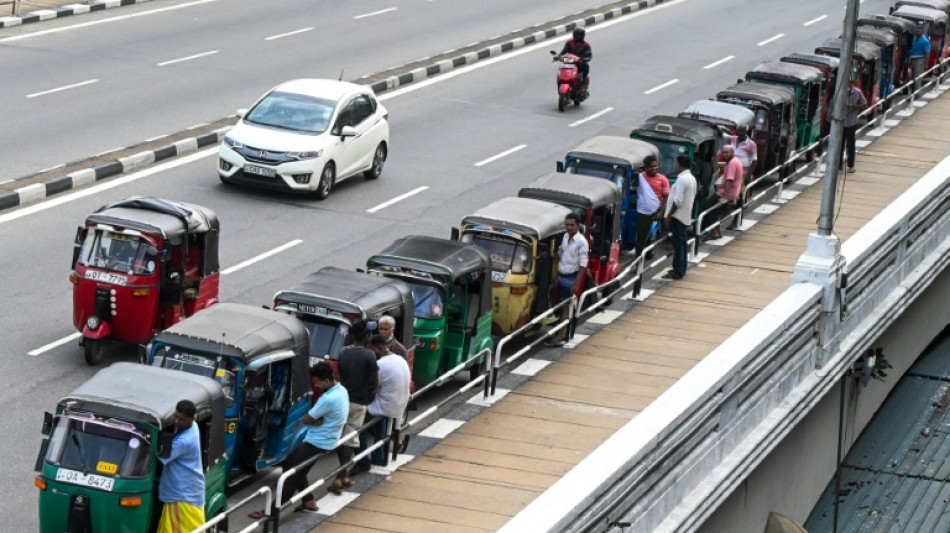
How Sri Lanka's economy went into a tailspin / Photo: ISHARA S. KODIKARA - AFP

 Kenya's economy faces climate change risks: World Bank
 World stocks mostly slide, consolidating Fed-fuelled gains
 UK's king shares 'good news' that cancer treatment will be reduced in 2026
 Salah admired from afar in his Egypt home village as club tensions swirl
 Iran frees child bride sentenced to death over husband's killing: activists
 France updates net-zero plan, with fossil fuel phaseout
 EU agrees recycled plastic targets for cars

 British porn star fined, faces imminent Bali deportation
 Indonesia floods were 'extinction level' for rare orangutans
 Japan bear victim's watch shows last movements
 French indie 'Clair Obscur' dominates Game Awards
 Asian markets track Wall St record after Fed cut

 Vaccines do not cause autism: WHO
 'In her prime': Rare blooming of palm trees in Rio

 OpenAI beefs up GPT models in AI race with Google

 Cyclone causes blackout, flight chaos in Brazil's Sao Paulo

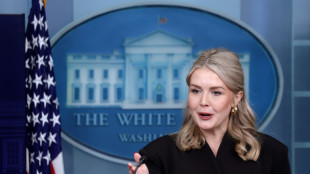 US bringing seized tanker to port, as Venezuela war threats build

 Time magazine names 'Architects of AI' as Person of the Year
 OpenAI, Disney to let fans create AI videos in landmark deal
 Thyssenkrupp pauses steel production at two sites citing Asian pressure
 Stocks mixed as US rate cut offset by Fed outlook, Oracle earnings
 Breakout star: teenage B-girl on mission to show China is cool
 Austria set to vote on headscarf ban in schools
 AI's $400 bn problem: Are chips getting old too fast?
 US stocks rise, dollar retreats as Fed tone less hawkish than feared
Sri Lanka is suffering its worst economic crisis since its independence from Britain in 1948.
Months of lengthy blackouts and acute shortages of food, fuel and medicines have infuriated the public, with huge protests demanding the government's resignation turning violent this week.
AFP reviews the origins of the snowballing economic calamity in the South Asian island nation:
- White elephants -
Sri Lanka has spent big on questionable infrastructure projects backed by Chinese loans that added to its already unsustainable debt.
In southern Hambantota district, a massive deep-sea port haemorrhaged money from the moment it began operations, losing $300 million in six years.
Nearby are other Chinese-backed extravagances: a huge conference centre, largely unused since it opened, and a $200 million airport that at one point was unable to earn enough money to pay its electricity bill.
The projects were pushed by the powerful Rajapaksa family, which has dominated Sri Lanka's politics for much of the past two decades.
- Unsustainable tax cuts -
President Mahinda Rajapaksa was voted out of office in 2015 partly due to a backlash against his government's infrastructure drive, which was mired in graft claims.
His younger brother Gotabaya succeeded him four years later, promising economic relief and tough action on terrorism after the island's deadly 2019 Easter Sunday attacks.
Days after taking office, Gotabaya appointed Mahinda prime minister and unveiled the biggest tax cuts in Sri Lanka's history, worsening chronic budget deficits.
Ratings agencies soon downgraded the country out of concern that the public debt was spiralling out of control, making it harder for the government to secure new loans.
- Pandemic hit -
The tax cuts were spectacularly ill-timed: just a few months later, the coronavirus began spreading around the world.
International tourist arrivals dropped to zero and remittances from Sri Lankans working abroad dried up -- two economic pillars the government relied upon to service its debt.
Without these sources of overseas cash, the Rajapaksa administration began using its stockpiles of foreign exchange to make loan repayments.
- Fertiliser ban -
Sri Lanka was soon burning through its foreign reserves at an alarming rate, prompting authorities in 2021 to ban several imports including -- critically -- fertiliser and agricultural chemicals farmers need to grow their crops.
The government sold this policy as part of an effort for Sri Lanka to become the world's first completely organic farming nation, but its effects were disastrous.
As much as a third of the country's agricultural fields were left fallow by farmers and the resulting drop in yields hit the production of tea -- a vital export earner.
The policy was eventually abandoned at the end of 2021 after protests from agricultural workers and skyrocketing food prices.
- Shortages and blackouts -
By late 2021, Sri Lanka's reserves had shrunk to $2.7 billion, down from $7.5 billion when Rajapaksa took office two years earlier.
Traders began struggling to source foreign currency to buy imported goods.
Food staples such as rice, lentils, sugar and milk powder began disappearing from shelves, forcing supermarkets to ration them.
Then gas stations started running out of petrol and kerosene, and utilities could not purchase enough oil to meet the demand for electricity.
Long queues now form each day around the country by people waiting hours to buy scant supplies of fuel, while blackouts keep much of the capital Colombo in darkness each night.
- Debt and default -
President Rajapaksa appointed a new central bank chief in April, who soon announced that Sri Lanka would default on its $51 billion foreign debt to save money for essential imports.
The move failed to shore up Sri Lanka's deteriorating finances, and it only had around $50 million in useable foreign exchange at the start of May.
The country is now in negotiations for an International Monetary Fund bailout.
Mahinda Rajapaksa, the prime minister, resigned on Monday in an effort to placate the public after weeks of protests over government mismanagement.
But central bank chief Nandalal Weerasinghe said Wednesday that unless a new administration took charge soon, the country was facing an imminent economic collapse.
"No one will be able to save Sri Lanka at that stage," he said.
U.Ndiaye--CPN