
Thousands flee as cyclone heads towards Bangladesh / Photo: Munir UZ ZAMAN - AFP

 Kenya's economy faces climate change risks: World Bank

 Chipmaker Kioxia reports AI-driven 45-fold surge in quarterly net profit

 Far right and far left battle for power in polarised Berlin

 The last trio: S.Africa's zoo elephants await their fate
 Oil industry sees war windfall but girds for political blowback

 Amazon beats expectations with cloud and AI growth

 Blowout Microsoft results lift US stocks as oil retreats

 'Beginning of the end': Relief but no party as French wildfire winds down
 Southern Europe 'becoming more flammable' in hotter climate, experts say

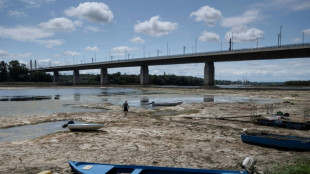 Mammoth bones found on parched bed of Danube in Bulgaria

 MEXC Lists Grvt (GRVT) with $60,000 Worth of GRVT and 10,000 USDT in Airdrop+ Rewards
 George and Amal Clooney flee French home due to wildfire

 MEXC Ventures Supports Alpha Arena's APAC Debut at Coinfest Bali

 AI data centre supplier Zhongji InnoLight slips on Hong Kong debut

 May, June heatwaves caused 2,877 extra deaths in England: govt

 BMW profit down a third as carmaker plans job cuts

 Seoul extends losses as most Asian markets drop, oil rises again

 Gambling.com Group Is Now Grandstand

 Meet the astronomer digging into the Milky Way's 'fossils'

 AI data centre supplier Zhongji InnoLight falls on Hong Kong debut

 Samsung operating profit up 1,800% in second quarter on AI boom

 Japanese population below 120 million for first time in decades

 US actor Jared Leto denies latest accusations of sexual assault

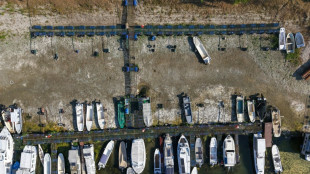 Danube drops to 'historic lows' as fresh heatwave hits

 BTS pulls out of Grammys after Asian pop category introduction

Tens of thousands of Bangladeshis left their coastal villages Sunday for concrete storm shelters further inland as the low-lying nation prepared for the expected landfall of an intense cyclone, officials said.
Cyclone Remal is set to hit the southern coast and parts of neighbouring India on Sunday evening, with Bangladesh's weather department predicting crashing waves and howling gales with gusts of up to 130 kilometres (81 miles) per hour.
Cyclones have killed hundreds of thousands of people in Bangladesh in recent decades, but the number of superstorms hitting its low-lying, densely populated coast have increased sharply -- from one a year to as many as three -- due to the impact of climate change.
"The cyclone could unleash a storm surge of up to 12 feet (four metres) above normal astronomical tide, which can be dangerous," senior weather official Muhammad Abul Kalam Mallik told AFP.
Most of Bangladesh's coastal areas are a metre or two above sea level and high storm surges can devastate villages.
Authorities have raised the danger signal to its highest level, warning fishermen against going to the sea and triggering an evacuation order for those in at-risk areas.
- Ferry sinks -
As people fled, police said that a heavily laden ferry carrying more than 50 passengers -- double its capacity -- was swamped by rough waters and sank near Mongla, a port in the expected path of the storm.
"At least 13 people were injured and were taken to a hospital," local police chief Mushfiqur Rahman Tushar told AFP, adding that other boats plucked the passengers to safety.
"Our plan is to evacuate hundreds of thousands of people from unsafe and vulnerable homes to the cyclone shelters," the government's disaster management secretary Kamrul Hasan told AFP.
The authorities have mobilised tens of thousands of volunteers to alert people to the danger.
He said some 4,000 cyclone shelters have been readied along the country's lengthy coast on the Bay of Bengal, with the cyclone expected to hit a 220-kilometre stretch from India's Sagar Island to Khepupara in Bangladesh.
The state-run Bangladesh Meteorological Department said Cyclone Remal would make landfall Sunday between 6:00 pm and midnight (1200-1800 GMT).
- 'Vulnerable' -
In addition to the villagers and fishermen, many of the multi-storey centres have space to shelter their cattle, buffaloes and goats, as well as their pets.
"Some 78,000 volunteers have been mobilised to alert coastal people and evacuate the vulnerable people," Hasan said.
Helal Mahmud Sharif, the chief government administrator of Khulna province, told AFP some 20,000 people had been evacuated to shelters in the most vulnerable coastal regions.
Another 15,000 people and about 400 domesticated animals have been evacuated in the coastal Patuakhali and Bhola districts.
On the low-lying Bhashan Char island, which is home to 36,000 Rohingya refugees from Myanmar, 57 cyclone centres have been readied, deputy refugee commissioner Mohammad Rafiqul Haque told AFP.
The country's three seaports and the airport in the second-largest city Chittagong were closed, officials said.
India's Kolkata airport closed from noon Sunday until Monday morning "predicted heavy winds and heavy to very heavy rainfall", airport authorities said, while beaches near the area have been ordered shut.
While scientists say climate change is fuelling more storms, better forecasting and more effective evacuation planning have dramatically reduced the death toll.
In the Great Bhola Cyclone in November 1970 an estimated half a million people died -- mostly drowned by the storm surge.
In May last year, Cyclone Mocha became the most powerful storm to hit Bangladesh since Cyclone Sidr in November 2007.
Sidr killed more than 3,000 people and caused billions of dollars in damage.
Last October, at least two people were killed and nearly 300,000 fled their homes for storm shelters when Cyclone Hamoon hit the country's southeastern coast.
P.Petrenko--CPN