In Tajikistan, climate migrants flee threat of fatal landslides / Photo: - - AFP

 Kenya's economy faces climate change risks: World Bank
 British oil giant BP aims to sell North Sea business

 China factory activity slides as leaders seek spending boost

 Tech rebound fuels record-breaking rally in South Korean stocks

 Cables and cooling bring AI windfall to Indian suppliers

 Anthropic's models gained unauthorized 'real-world' access during testing

 Apple tops estimates in CEO Cook's final quarter, but shares fall

 Milei demands expulsion of foreigners expressing 'hate' against Argentina

 Italy's Po River valley on drought alert

 Prada profits pinched as growth hard to chase

 Stocks climb on earnings and rates, oil retreats

 US economic growth slows in second quarter, missing expectations

 Russia adds Telegram founder Durov to 'terrorist' blacklist

 Stocks diverge on earnings, as oil steadies

 Eurozone economy grows despite Middle East war

 Singapore group will develop 'most promising' Ebola vaccine

 Shell profit surges as Mideast war fuels oil prices

 Car maker Stellantis says back in profit in second quarter

 Samsung quarterly operating profit up 1,800% on AI boom

 South Korean stocks bounce after rout, oil holds gains on Mideast woes

 South Korea's women web sleuths fight AI deepfake porn

 Anything but programmable: New cost-efficient EC-power-supply-series for the DIN rail by CAMTEC PS
 Meta misses profit expectations, sticks to massive AI spending

 Campari - king of the spritz - hopes to conquer American heartland
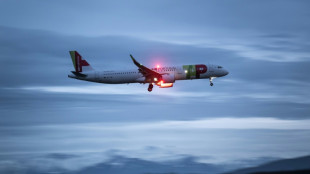 Air France-KLM and Lufthansa bid for Portugal's TAP airline

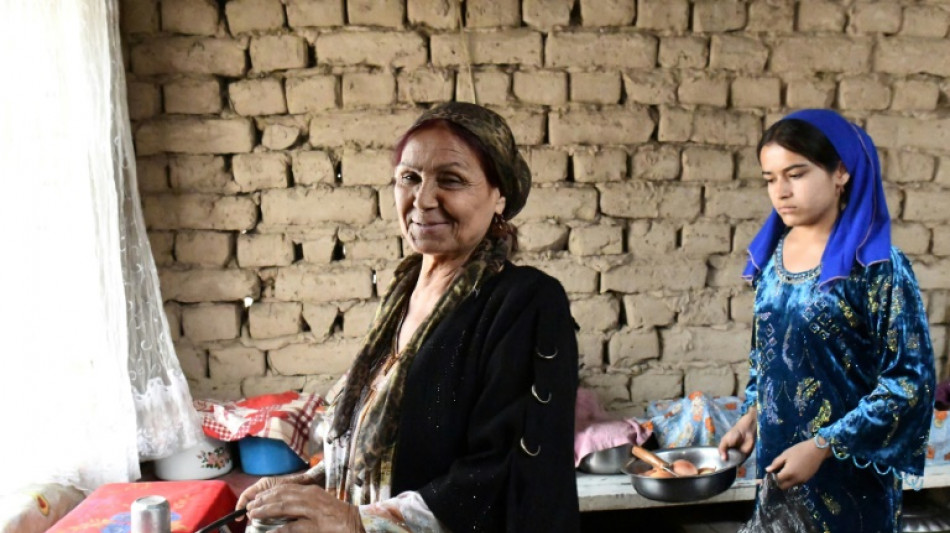
Peeling onions in her new home, Yodgoroy Makhmaliyeva recalled the terrifying moment four years ago when a landslide buried her family home in mountainous Tajikistan.
Heavy snow and rain, she said, sent a deluge of rocks, water and mud crashing into the house in the Central Asian country estimated to be among the most vulnerable to effects of climate change.
"We had lived in fear until the day the mountain collapsed and destroyed our house," the 61-year-old said, wearing a shimmering headscarf.
Makhmaliyeva and her husband Jamoliddin had feared a torrent of earth would destroy their home, and are now among thousands of Tajiks displaced by a growing number of natural disasters.
Authorities in the ex-Soviet country of around 10 million believe hundreds of thousands live in regions threatened by mudslides, landslides, avalanches, floods and earthquakes.
They have made relocating people to safety a priority -- a daunting task for one of the world's poorest countries.
The Makhmaliyevs were rehoused in a new village in the Khuroson district, some 70 kilometres (43 miles) south of the capital Dushanbe.
Rows of modest homes built for "ecological migrants" lined a road surrounded by fields, with mountain peaks dotting the horizon.
- 'Did not know where we will live' -
Makhmaliyev recounted that the couple's old home had already survived several mudslides before it was levelled in early 2020.
"We spent a week digging out everything that was covered in dirt while we lived in a tent," the retired music teacher said.
"We didn't know where we were going to live," his wife Makhmaliyeva added.
One year later the couple were allotted their home in the village designated for people threatened by natural disasters.
Tajikistan says it relocated 45,000 people between 2000 and 2017, and that tens of thousands of others are waiting their turn.
The issue is pressing. Authorities say 557 emergency situations linked to natural disasters in last year alone killed 51 people.
- 'Huge material damage' -
The couple said the village where they look after six grandchildren is comfortable. Their own children are working in Russia like millions of other Tajiks.
Sitting on a bench embracing four small children, Makhmaliyev thanked President Emomali Rakhmon, who has ruled the tightly-controlled country since 1992, for the new family home.
Rakhmon has repeatedly underlined the huge financial and material damage his country suffers each year due to natural disasters.
He has even urged the population to stockpile food because of how vulnerable the country is to the negative effects of climate change.
A large portrait of the 71-year-old leader was plastered on the entrance of the village.
- 'Houses for future displaced' -
In a field across the road from the Makhmaliyevs, construction was ongoing to house new arrivals.
"It's houses for future displaced people," Murotbek Murodov, a uniformed officer with the emergency situations ministry, told AFP.
He said 67 new residential buildings were being built after a "natural disaster" hit another village.
"Approximately 900 village residents were evacuated," he said, adding those displaced were due to be rehoused in Khuroson.
"The aim is to put all residents in risk zones to safer places," he added.
- 'Thousands of danger zones' -
Murodov said there were more than 1,000 "dangerous zones" in the country that people needed to be removed from.
A United Nations report on climate change published this year said Tajikistan is the "most exposed" of all Central Asian countries.
The World Bank, meanwhile, has said that "natural catastrophes are a serious threat to economic stability" in the country, estimating that they caused more than $1.8 billion in damage between 1992 and 2019.
In the safety of his new home, Makhmaliyev ploughed a small garden as workers nearby laid foundations for new houses that would soon house Tajikistan's newest climate migrants.
U.Ndiaye--CPN