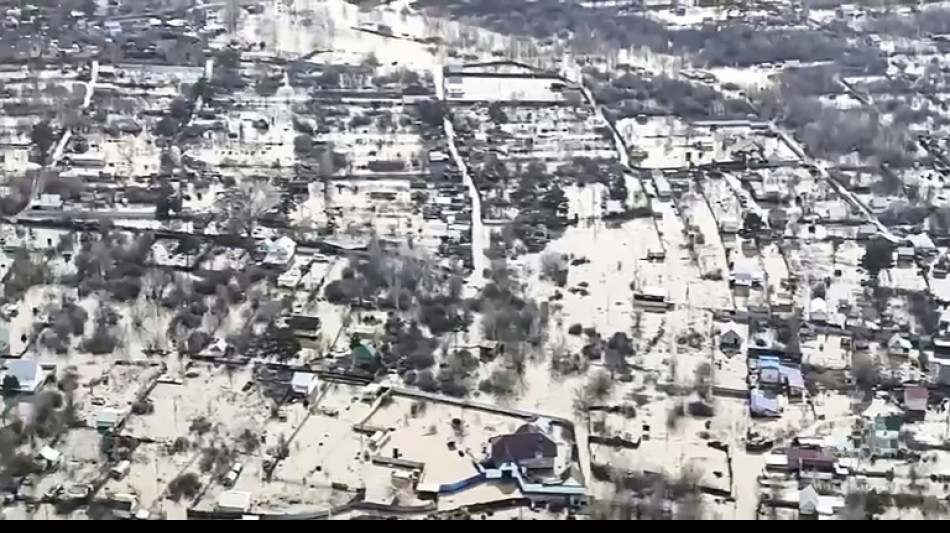
Kazakhstan and Russia battle huge floods / Photo: Handout - RUSSIAN EMERGENCY SITUATIONS MINISTRY/AFP

 Kenya's economy faces climate change risks: World Bank
 British oil giant BP aims to sell North Sea business

 China factory activity slides as leaders seek spending boost

 Tech rebound fuels record-breaking rally in South Korean stocks

 Cables and cooling bring AI windfall to Indian suppliers

 Anthropic's models gained unauthorized 'real-world' access during testing

 Apple tops estimates in CEO Cook's final quarter, but shares fall

 Milei demands expulsion of foreigners expressing 'hate' against Argentina

 Italy's Po River valley on drought alert

 Prada profits pinched as growth hard to chase

 Stocks climb on earnings and rates, oil retreats

 US economic growth slows in second quarter, missing expectations

 Russia adds Telegram founder Durov to 'terrorist' blacklist

 Stocks diverge on earnings, as oil steadies

 Eurozone economy grows despite Middle East war

 Singapore group will develop 'most promising' Ebola vaccine

 Shell profit surges as Mideast war fuels oil prices

 Car maker Stellantis says back in profit in second quarter

 Samsung quarterly operating profit up 1,800% on AI boom

 South Korean stocks bounce after rout, oil holds gains on Mideast woes

 South Korea's women web sleuths fight AI deepfake porn

 Anything but programmable: New cost-efficient EC-power-supply-series for the DIN rail by CAMTEC PS

 Meta misses profit expectations, sticks to massive AI spending

 Campari - king of the spritz - hopes to conquer American heartland
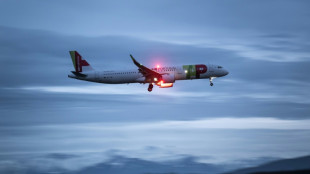 Air France-KLM and Lufthansa bid for Portugal's TAP airline

Water levels in overflowing rivers were still rising on Tuesday in swathes of Russia and Kazakhstan that have been hit by massive floods, as cities braced for a new peak in the southern Urals and western Siberia.
Both Astana and Moscow have called the floods the worst in decades, introducing a state of emergency as water covered entire cities and villages.
More than 90,000 people have been evacuated from the rising water -- mostly in Kazakhstan.
The Kremlin said the situation remains "difficult" in large parts of Russia but insisted that President Vladimir Putin has -- so far -- no plans to visit the zone.
The neighbours have pledged to cooperate on battling the floods.
"Since the beginning of the floods, more than 86,000 people have been rescued and evacuated," the Kazakh government said on Tuesday.
It said that 8,472 of the evacuees were in temporary housing, with the rest believed to be in safe places in the community.
Kazakhstan also said it had taken 81,000 animals to safety. Five of the massive Central Asian country's 17 regions were affected, with around six rivers rising fast.
Russia said it had evacuated more than 6,500 people, mostly in the Orenburg region.
The Ural and Tobol rivers were rising fast -- threatening the regional hub of Orenburg and the western Siberian city of Kurgan.
The Orenburg region has been the most hard-hit Russian area, with the Ural river already flooding the city of Orsk almost entirely.
Orenburg is a city of 550,000 people near the Kazakh border and was bracing for the peak of the flood, expected on Wednesday.
Its mayor Sergei Salmin warned that the flooding would be "unprecedented".
Authorities said the river had reached nine metres deep in Orenburg -- just 30 centimetres away from "critical" levels.
Russian media published images of it approaching the city's high-rise apartment blocks.
- Western Siberia braces for floods -
Authorities have warned of forced evacuations in Orenburg if residents do not cooperate.
Russian Emergency Situations Minister Alexander Kurenkov was in the Orenburg region on Tuesday. His ministry published images of him flying over the flood zones, showing vast expanses of water stretching to the horizon and villages submerged.
He is then due to visit Siberia's Kurgan and Tyumen regions, where rivers are also swelling.
In Kurgan, a city near Kazakhstan, authorities on Tuesday said that 689 people have been evacuated away from the overflowing Tobol river.
The mayoral office in Kurgan -- a city of around 300,000 people -- said the floods could reach the local airport.
In one village in the Kurgan region, Zverinogolovsk, the water levels of the Tobol river rose 74 centimetres in just two hours, Russian media reported.
Emergency services in Kurgan published a video of rescuers reaching villagers by boat.
- Putin 'not physically there' -
The Kremlin has said Putin has no plans to visit the zone but stressed that the floods are "at the centre of the president's attention".
The Russian leader has throughout his long rule shied away from difficult public meetings.
"Putin is not physically there but he is constantly in this topic," Putin's spokesman Dmitry Peskov told reporters.
"He works on these topics the whole day," he added, saying: "At the moment there is no plan for a trip to the region."
Small, rare protests erupted in flooded Orsk on Monday over the government's response to the disaster, with some residents calling on Putin to help with compensations.
Russia's exiled opposition slammed the official response and Putin's decision not to visit the affected zones.
"He doesn't even come to the place of the tragedy," Yulia Navalnaya, the widow of late Russian opposition leader Alexei Navalny, said on X.
C.Peyronnet--CPN