Top Europe court to issue landmark climate verdicts / Photo: FREDERICK FLORIN - AFP/File

 Kenya's economy faces climate change risks: World Bank
 British oil giant BP aims to sell North Sea business

 China factory activity slides as leaders seek spending boost
 Tech rebound fuels record-breaking rally in South Korean stocks
 Cables and cooling bring AI windfall to Indian suppliers
 Anthropic's models gained unauthorized 'real-world' access during testing

 Apple tops estimates in CEO Cook's final quarter, but shares fall

 Milei demands expulsion of foreigners expressing 'hate' against Argentina

 Italy's Po River valley on drought alert

 Prada profits pinched as growth hard to chase

 Stocks climb on earnings and rates, oil retreats

 US economic growth slows in second quarter, missing expectations

 Russia adds Telegram founder Durov to 'terrorist' blacklist

 Stocks diverge on earnings, as oil steadies

 Eurozone economy grows despite Middle East war
 Singapore group will develop 'most promising' Ebola vaccine

 Shell profit surges as Mideast war fuels oil prices

 Car maker Stellantis says back in profit in second quarter

 Samsung quarterly operating profit up 1,800% on AI boom

 South Korean stocks bounce after rout, oil holds gains on Mideast woes

 South Korea's women web sleuths fight AI deepfake porn

 Anything but programmable: New cost-efficient EC-power-supply-series for the DIN rail by CAMTEC PS

 Meta misses profit expectations, sticks to massive AI spending

 Campari - king of the spritz - hopes to conquer American heartland
 Air France-KLM and Lufthansa bid for Portugal's TAP airline

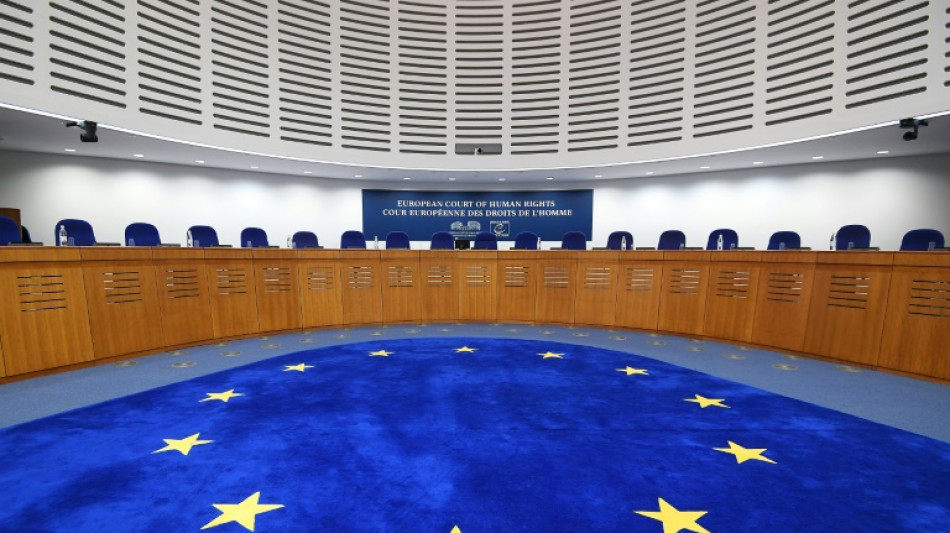
Europe's top rights court is Tuesday to decide in three separate cases if states are doing enough in the face of global warming in rulings that could force them to do more.
The European Court of Human Rights, part of the 46-member Council of Europe, is from 10:30 am (0830 GMT) to rule on whether governments' climate change policies are violating the European Convention on Human Rights.
All three cases accuse European governments of inaction or insufficient action in their measures against global warming.
In a sign of the importance of the issue, the cases have all been treated as priority by the Grand Chamber of the ECHR, whose 17 judges can set a potentially crucial legal precedent.
It will be the first time the court has issued a ruling on climate change.
While several European states, including France, have already been condemned by domestic courts for not fulfilling commitments related to global warming, the ECHR could go further and make clear new fundamental rights.
The challenge lies in ensuring "the recognition of an individual and collective right to a climate that is as stable as possible, which would constitute an important legal innovation", said lawyer and former French environment minister Corinne Lepage, who is defending one of the cases.
- 'Turning point' -
The court's position "may mark a turning point in the global struggle for a liveable future," said lawyer Gerry Liston of the NGO Global Legal Action Network.
"A victory in any of the three cases could constitute the most significant legal development on climate change for Europe since the signing of the Paris 2015 Agreement" that set new targets for governments to reduce emissions, he said.
Even if the convention does not contain any explicit provision relating to the environment, the court has already ruled based on Article 8 of the convention -- the right to respect for private and family life -- an obligation of states to maintain a "healthy environment", in cases relating to waste management or industrial activities.
Of the three cases to be decided on Tuesday, the first is brought by the Swiss association of Elders for Climate Protection -- 2,500 women aged 73 on average -- and four of its members who have also put forward individual complaints.
They complain about "failings of the Swiss authorities" in terms of climate protection, which "would seriously harm their state of health".
Damien Careme, former mayor of the northern French coastal town of Grande-Synthe, in his case attacks the "deficiencies" of the French state, arguing they pose the risk of his town being submerged under the North Sea.
In 2019, he filed a case at France’s Council of State -- its highest administrative court -- alleging "climate inaction" on the part of France.
The court ruled in favour of the municipality in July 2021, but rejected a case he'd brought in his own name, leading Careme to take it to the ECHR.
- 'For benefit of all' -
The third case was brought by a group of six Portuguese, aged 12 to 24, inspired to act after fires ravaged their country in 2017.
Their case is not only against Portugal, but also 31 other states -- every EU country, plus Norway, Switzerland, Turkey, the United Kingdom and Russia.
Almost all European countries belong to the Council of Europe, not just EU members.
Russian was expelled from the council after its invasion of Ukraine but cases against Moscow are still heard at the court.
The ECHR hears cases only when all domestic appeals have been exhausted.
Its rulings are binding, although there have been problems with the compliance of certain states such as Turkey.
The three cases rely primarily on articles in the convention that protect the "right to life" and the "right to respect for private life".
But the court will only issue a precedent-setting verdict if it determines that these cases have exhausted all remedies at the national level.
H.Cho--CPN