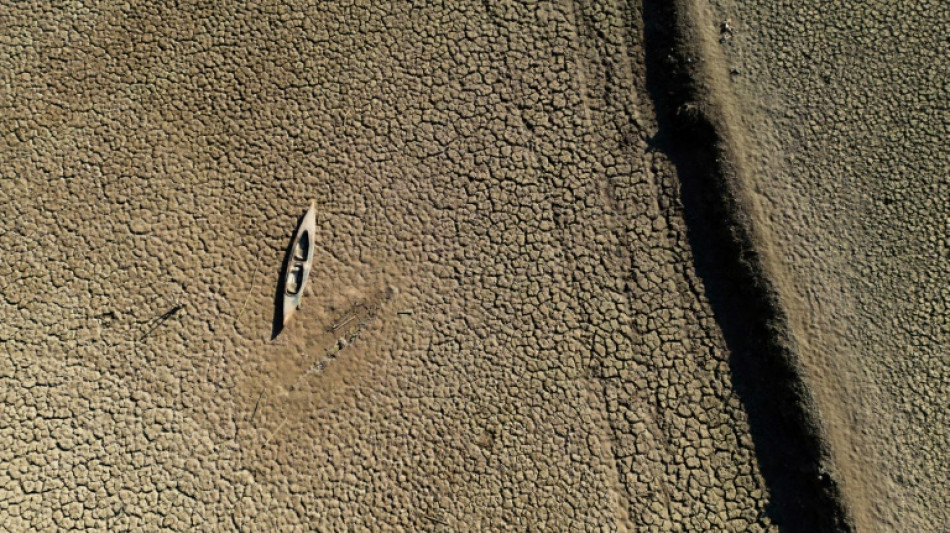
Europe must do more against 'catastrophic' climate risks: EU / Photo: PAU BARRENA - AFP

 Kenya's economy faces climate change risks: World Bank

 Japan probe made closest-ever asteroid flyby: space agency
 British oil giant BP aims to sell North Sea business
 China factory activity slides as leaders seek spending boost
 Tech rebound fuels record-breaking rally in South Korean stocks
 Cables and cooling bring AI windfall to Indian suppliers
 Anthropic's models gained unauthorized 'real-world' access during testing

 Apple tops estimates in CEO Cook's final quarter, but shares fall

 Milei demands expulsion of foreigners expressing 'hate' against Argentina

 Italy's Po River valley on drought alert

 Prada profits pinched as growth hard to chase

 Stocks climb on earnings and rates, oil retreats

 US economic growth slows in second quarter, missing expectations

 Russia adds Telegram founder Durov to 'terrorist' blacklist

 Stocks diverge on earnings, as oil steadies

 Eurozone economy grows despite Middle East war
 Singapore group will develop 'most promising' Ebola vaccine

 Shell profit surges as Mideast war fuels oil prices

 Car maker Stellantis says back in profit in second quarter

 Samsung quarterly operating profit up 1,800% on AI boom

 South Korean stocks bounce after rout, oil holds gains on Mideast woes

 South Korea's women web sleuths fight AI deepfake porn

 Anything but programmable: New cost-efficient EC-power-supply-series for the DIN rail by CAMTEC PS

 Meta misses profit expectations, sticks to massive AI spending

 Campari - king of the spritz - hopes to conquer American heartland
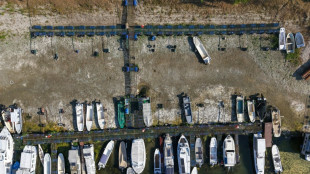
Europe could suffer "catastrophic" consequences from climate change if it fails to take urgent and decisive action to adapt to risks, a new EU analysis warned Monday.
Areas in southern Europe are most at risk, the European Environment Agency (EEA) said in its first report on the risks the continent faces from climate change, driven by human burning of fossil fuels.
The dangers include fires, water shortages and their effects on agricultural production, while low-lying coastal regions face threats of flooding, erosion and saltwater intrusion.
"Many of these risks have already reached critical levels and could become catastrophic without urgent and decisive action," the agency said.
That doesn't mean northern Europe is spared the negative impact, as floods in Germany and forest fires in Sweden have demonstrated in recent years.
"Extreme heat, drought, wildfires, and flooding, as experienced in recent years, will worsen in Europe even under optimistic global warming scenarios and affect living conditions throughout the continent," the EEA warned.
"These events are the new normal," EEA director Leena Yla-Mononen told a press briefing ahead of the report's release.
"It should be the wake-up call. The final wake-up call," she added.
The report lists 36 risks related to climate in Europe, 21 of which demand more immediate action and eight were "particularly urgent."
At the top of the list were risks to ecosystems, mainly relating to coastal and marine ones.
- Heatwaves -
For instance, the combination of heat waves as well as acidification and oxygen depletion of the seas and other human-caused factors such as pollution and eutrophication -- meaning an excess of nutrients which collapses aquatic ecosystems -- as well as fishing threaten marine ecosystems, the report noted.
"This can result in substantial biodiversity loss, including mass mortality events, and declines in ecosystem services," it said.
Hans-Martin Fussel, an expert on climate impacts at the EEA, pointed to specifically to the risk of recurring heatwaves, which can pose direct health risks and a threat to ecosystems.
"Often in Europe, they're combined with droughts. And this is a dangerous combination for infrastructure, for water supply," Fussel told AFP.
European governments and populations should unanimously recognise the risks and make it a priority to do more, faster, to prepare for them, according to the EEA.
"We need to do more, to have stronger policies," Yla-Mononen stressed.
Despite the alarm, the agency also acknowledged "considerable progress" made "in understanding the climate risks they are facing and preparing for them" among member states.
"However, implementing effective actions may have been hampered by things such as competing priorities, unclear risk ownership or insufficient investment funds," Fussel said.
On Tuesday, the European Commission is due to publish a report on climate risks in the EU.
"The timing is not a coincidence; indeed, we worked under considerable pressure to have our work finished as an input to their communication," Fussel said.
P.Gonzales--CPN