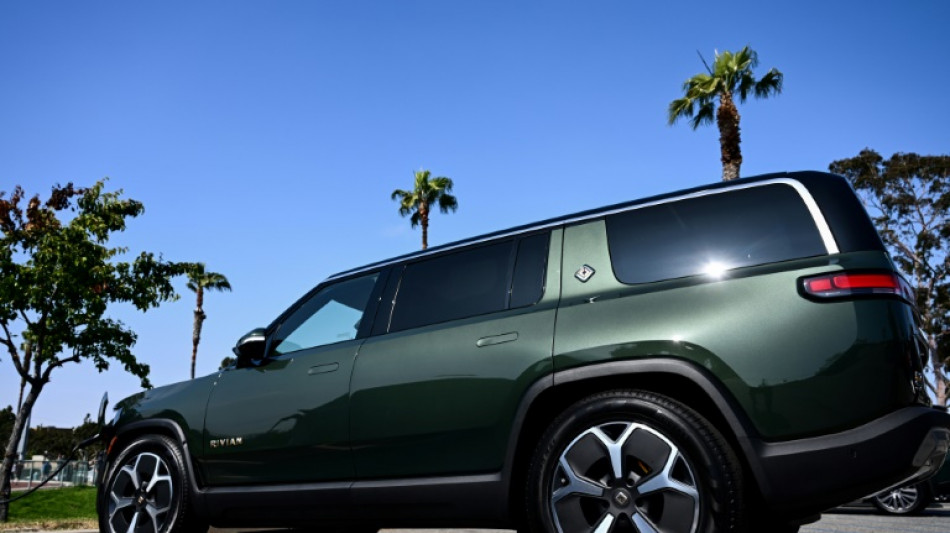
Hit them in the pocket: how cities are going after SUVs / Photo: Patrick T. Fallon - AFP/File

 Kenya's economy faces climate change risks: World Bank

 Profits surge at US oil giant amid Iran war supply shock

 Stock markets rally on tech rebound

 France, Spain assess scorched terrain as new wildfires threaten other regions
 Chipmaker Kioxia reports AI-driven 45-fold surge in quarterly net profit

 Far right and far left battle for power in polarised Berlin

 The last trio: S.Africa's zoo elephants await their fate

 Oil industry sees war windfall but girds for political blowback

 Amazon beats expectations with cloud and AI growth

 Blowout Microsoft results lift US stocks as oil retreats

 'Beginning of the end': Relief but no party as French wildfire winds down

 Southern Europe 'becoming more flammable' in hotter climate, experts say

 Mammoth bones found on parched bed of Danube in Bulgaria

 MEXC Lists Grvt (GRVT) with $60,000 Worth of GRVT and 10,000 USDT in Airdrop+ Rewards

 George and Amal Clooney flee French home due to wildfire

 MEXC Ventures Supports Alpha Arena's APAC Debut at Coinfest Bali

 AI data centre supplier Zhongji InnoLight slips on Hong Kong debut

 May, June heatwaves caused 2,877 extra deaths in England: govt

 BMW profit down a third as carmaker plans job cuts

 Seoul extends losses as most Asian markets drop, oil rises again

 Gambling.com Group Is Now Grandstand

 Meet the astronomer digging into the Milky Way's 'fossils'

 AI data centre supplier Zhongji InnoLight falls on Hong Kong debut

 Samsung operating profit up 1,800% in second quarter on AI boom

 Japanese population below 120 million for first time in decades

Two decades after London began moves to clamp down on sports utility vehicles, Parisians on Sunday will vote on whether to squeeze the gas-guzzlers out of town by tripling their parking fees.
The proposal by Paris's Socialist mayor Anne Hidalgo is the most radical by a big city in the fight against the big cars, blamed for driving up emissions, being a menace to pedestrians and generally taking up too much space.
The number of SUVs on the roads have shot up nearly sevenfold since 2010, to about 330 million worldwide.
They consume around 20 percent more fuel than a typical medium-sized car, the International Energy Agency said in a 2023 report, and emitted nearly one billion tonnes of carbon dioxide (CO2) in 2022, around twice Brazil's total emissions.
- London leads the charge -
The backlash against SUVs and monster pickups dates back to the 2000s, when the suburban rich began migrating en masse from sedans to king-of-the-road behemoths previously used for rough terrain.
Dubbed "stock exchange tractors" in Norway or "suburban assault vehicles" in Britain the car-trucks became much-maligned status symbols.
A key breakthrough in the bid to regulate emissions in big cities came in 2003 when London's left-wing mayor Ken Livingstone introduced a congestion charge for vehicles entering the city centre.
A year later he took aim specifically at SUVs, criticising those who used them to drive children to school as "complete idiots" and saying the vehicles should be banned from the school run.
- Guerrilla tactics -
Inspired by London, Paris first floated a clampdown on the most polluting vehicles.
But the project was shelved in 2005 after fierce opposition from motoring associations.
In 2007, authorities in Dublin picked up the issue and proposed to double parking charges for SUVs. They were also forced to back down after public outcry.
Eco-vigilantes in countries including France and Sweden stepped into the fray with campaigns of mass SUV tyre deflations between 2005 and 2007.
In the past few years, they have grown more radical, with a British group called The Tyre Extinguishers drilling holes in the tyres of dozens of SUVs.
- Punitive parking, registration fees -
With the Earth's warming reaching critical levels and SUVs blamed for increasing pedestrian deaths in the United States, legislators are back on the anti-SUV warpath.
Last year, Washington DC ramped up its registration fees for extra-large SUVs, requiring owners of vehicles weighing over 6,000 pounds (around 2,700 kilogrammes) to pay $500 (460 euros) annually, almost seven times the cost for a typical sedan.
New York is also mulling an increase in its weight-based registration fees.
In Germany, the crusading Green mayor of the southern city of Tuebingen, which aims to become climate neutral by 2030, increased parking rates for SUVs by 600 percent in 2022, declaring them unnecessary for city living.
But another Germany city, Freiburg, had to row back on a rise in parking fees for longer vehicles after it was thrown out by the Federal Administrative Court.
Meanwhile, London has been made into an "ultra-low emission zone", with cars that do not meet its emissions targets paying £12.50 ($16) a day to enter the capital.
Parking charges in London and in other councils, including Bath and North East Somerset, have also introduced emissions-based parking fees.
A.Samuel--CPN
