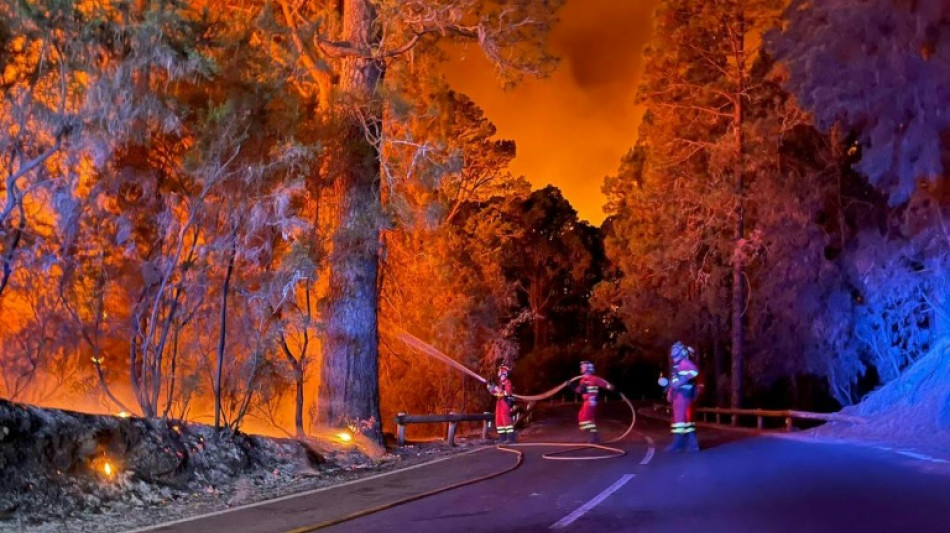
Looming heat and wind threaten to stoke Spain's island wildfires / Photo: Handout - UME/AFP

 iPhone 18預購後出現可疑扣款 四間銀行調查未授權交易

 Galaxy Tab S12系列效果圖曝光 Ultra擬配雙鏡頭及瀏海螢幕

 Altman tells Fortune OpenAI will not go public in 2026

 ستاندرد آند بورز تثبت تصنيف السعودية عند A+

 Steven Strogatz weighs AI mathematics advances and their consequences for researchers

 Venezuelans outside Caracas say capital not sharing blackout burden

 Anthropic boss calls for slowing pace of AI development

 BRICS nations urge 'maximum restraint' in Middle East war

 Europe eyes battle over 'pervert' AI glasses

 Children in flood-hit Nepal grapple with loss, cling to hope

 Venice Film Festival: A look back on the highlights

 DR Congo school fire stampede death toll rises to 26: UNICEF

 Dance Fitness Tempe Announces Expansion of Accessible Digital Movement Programs

 Europe saw record summer air traffic despite Mideast war: Eurocontrol

 Relatives of 9/11 victims hit out at Saudi Arabia -- and US leaders

 Relative of 9/11 victim unleashes searing attack on Saudi Arabia

 Czech antitrust office lets Turkey's Pegasus Airlines buy Smartwings

 Investors on edge as energy costs, surging bond yields roil markets

 UK lawmakers to vote again on failed assisted dying bill

 Yemen's Houthis complete takeover of Bab al-Mandab area: govt official to AFP

 Fast-pace dance takes I.Coast's working-class streets by storm

 Fans celebrate Celine Dion's Paris return with giant karaoke

 Appreciation, anger await as Trump heads to Irish golf resort

 Putin arrives in India for BRICS summit coloured by wars

 Carney says in touch with Trump, Canada ready for 'fair' trade deal

Spanish firefighters were set to deploy extra aircraft in their battle against raging Tenerife wildfires on Saturday, as renewed heat and wind threatened recent progress in bringing the blaze under control.
The blaze, which has forced 4,500 people to flee, broke out late Tuesday in a mountainous area of the holiday island.
Officials say it is the most "complex fire" to hit the Canary Islands in 40 years.
Friday's firefighting efforts "progressed well, although the fire is still out of control", Canary Islands regional president Fernando Clavijo told reporters in a late-night briefing.
The blaze has so far destroyed 5,000 hectares (more than 12,300 acres) of land and has a perimeter of 50 kilometres (30 miles), he said.
Montserrat Roman, head of civil protection for the seven-island archipelago, said more than 225 firefighters would continue efforts during the night to tackle the fire, which had already affected 10 municipalities.
On Saturday, 19 aerial units would be drafted in to continue the work, which was likely to be complicated by high temperatures and "strong gusts of wind", she said.
More than 4,500 people had been evacuated, but the number stuck inside their homes had fallen to just under 1,700 after a confinement order was lifted for some 2,200 residents as conditions eased in La Esperanza near the airport, she said earlier.
During the day, officials said there had been a "favourable evolution" on the main front of the fire, which had advanced more slowly and predictably overnight, making it easier for crews to tackle the flames.
"Overnight the fire and the weather behaved normally," said Clavijo, explaining that the wind, the temperature and the behaviour of the fire on the first two nights had been "highly unusual".
Although air humidity levels rose overnight and the winds eased, helping firefighters' efforts, forecasters warned the mercury was set to soar again over the weekend in Tenerife.
- Visible from space -
The fire has generated a pillar of smoke nearly four kilometres high that is visible on satellite pictures and has risen above the summit of Mount Teide, the volcano that towers over the island.
Reaching a height of 3,715 metres (12,200 feet), Teide is Spain's highest peak and a popular tourist destination, but all roads to the national park were closed on Thursday and would remain shut, the authorities said.
The focal point of the fire lies some 20 kilometres away on the steeply forested slopes below, with the blaze sending clouds of ash across much of the island.
"This is probably the most complex fire we've ever had in the Canary Islands in at least the past 40 years," Clavijo said Thursday, citing the topography of the area, the high temperatures and winds that change direction frequently.
The blaze broke out after the archipelago suffered a heatwave that left many areas tinder-dry.
As global temperatures rise due to climate change, scientists have warned heatwaves will become more frequent and intense.
So far this year, EFFIS figures show almost 76,000 hectares have been ravaged by 340 fires in Spain, one of the European countries most vulnerable to climate change.
L.K.Baumgartner--CPN