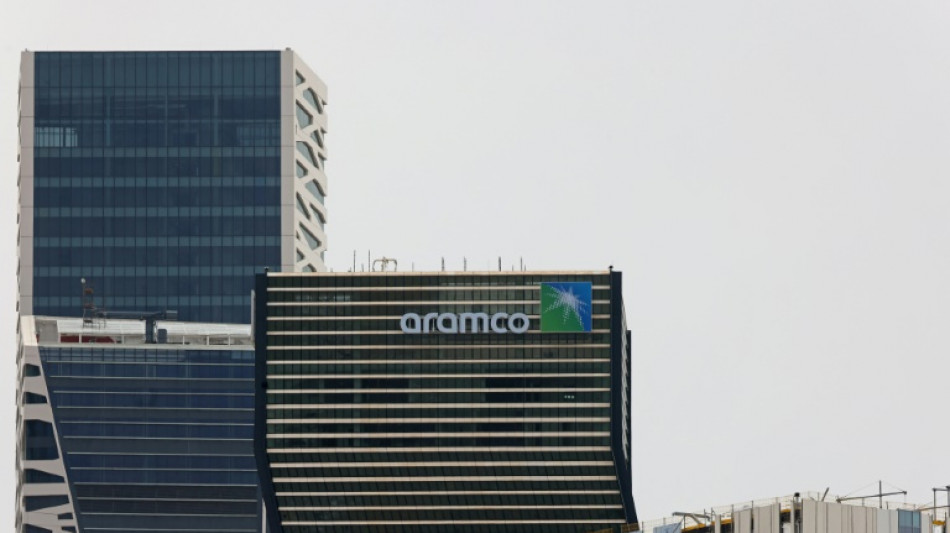
Saudi Aramco Q2 profits drop 38% on lower prices: statement / Photo: Fayez Nureldine - AFP

 iPhone 18預購後出現可疑扣款 四間銀行調查未授權交易

 Galaxy Tab S12系列效果圖曝光 Ultra擬配雙鏡頭及瀏海螢幕

 Altman tells Fortune OpenAI will not go public in 2026

 ستاندرد آند بورز تثبت تصنيف السعودية عند A+

 Steven Strogatz weighs AI mathematics advances and their consequences for researchers

 Venezuelans outside Caracas say capital not sharing blackout burden

 Anthropic boss calls for slowing pace of AI development

 BRICS nations urge 'maximum restraint' in Middle East war

 Europe eyes battle over 'pervert' AI glasses

 Children in flood-hit Nepal grapple with loss, cling to hope

 Venice Film Festival: A look back on the highlights

 DR Congo school fire stampede death toll rises to 26: UNICEF

 Dance Fitness Tempe Announces Expansion of Accessible Digital Movement Programs

 Europe saw record summer air traffic despite Mideast war: Eurocontrol

 Relatives of 9/11 victims hit out at Saudi Arabia -- and US leaders

 Relative of 9/11 victim unleashes searing attack on Saudi Arabia

 Czech antitrust office lets Turkey's Pegasus Airlines buy Smartwings

 Investors on edge as energy costs, surging bond yields roil markets

 UK lawmakers to vote again on failed assisted dying bill

 Yemen's Houthis complete takeover of Bab al-Mandab area: govt official to AFP

 Fast-pace dance takes I.Coast's working-class streets by storm

 Fans celebrate Celine Dion's Paris return with giant karaoke

 Appreciation, anger await as Trump heads to Irish golf resort

 Putin arrives in India for BRICS summit coloured by wars

 Carney says in touch with Trump, Canada ready for 'fair' trade deal

Oil firm Saudi Aramco on Monday announced profits of $30.08 billion for the second quarter, a sharp fall from the same period last year when prices surged after Russia invaded Ukraine.
The 38 percent year-on-year decline "mainly reflected the impact of lower crude oil prices and weakening refining and chemicals margins," the largely state-owned company said in a statement published on the Saudi stock exchange.
The decline followed a drop of 19.25 percent in first-quarter net profit.
"Our strong results reflect our resilience and ability to adapt through market cycles," CEO Amin Nasser said.
"We continue to demonstrate our long-standing ability to meet the needs of customers around the world with high levels of reliability," Nasser said, announcing the timing of an additional dividend.
"For our shareholders, we intend to start distributing our first performance-linked dividend in the third quarter," he said.
Production from the world's biggest crude exporter was down after Riyadh in April announced cuts of 500,000 barrels per day, part of a coordinated move with other oil powers to slash supply by more than one million bpd in a bid to prop up prices.
In June, the Saudi energy ministry announced a further voluntary cut of one million bpd which took effect in July and has been extended through September.
The kingdom's daily production is now approximately nine million bpd, far below its reported daily capacity of 12 million bpd.
Aramco is the main source of revenue for Crown Prince Mohammed bin Salman's sweeping economic and social reform programme known as Vision 2030, which aims to shift the economy away from fossil fuels.
Analysts say the kingdom needs oil to be priced at around $80 per barrel to balance its budget.
Prices are now above that threshold, a sign that the recent supply cuts are starting to have the desired effect.
The US benchmark West Texas Intermediate crude for September delivery traded Monday at $82.54 and European benchmark Brent crude futures were just below $86.
Following Russia's invasion of Ukraine in February 2022, oil peaked at more than $130 dollars per barrel.
- 'Phenomenal figures' -
The cuts "show the lengths to which the kingdom will go to defend oil prices, as a slumping market for its lifeblood commodity is damaging to its ambitious economic diversification efforts," said Herman Wang, associate director for oil news at S&P Global Commodity Insights.
Aramco is undertaking investments to ramp up national production capacity to 13 million bpd by 2027.
"It's an expensive proposition for Aramco to hold production capacity offline in the name of OPEC+ cuts, but the hope is that the sacrifice being made now will pay off in the end with higher prices," Wang said, referring to the Organization of the Petroleum Exporting Countries, headed by Riyadh, and their 10 allies led by Moscow.
Aramco reported record profits totalling $161.1 billion last year, allowing the kingdom to notch up its first annual budget surplus in nearly a decade.
Yet those "were phenomenal figures driven by a very particular set of geopolitical factors and Saudi Arabia's leadership can't have been predicating Vision 2030 spending on such results," said Jamie Ingram, senior editor at the Middle East Economic Survey (MEES).
"Higher revenues would of course be favoured by officials, but Saudi Arabia still has very low debt levels and strong reserves that it can tap into," the expert said.
Saudi Arabia owns 90 percent of Aramco's shares.
In December 2019, the firm floated 1.7 percent of its shares on the Saudi bourse, generating $29.4 billion in the world's biggest initial public offering.
In mid-April, Saudi Arabia announced it was transferring a four percent chunk of Aramco shares, worth nearly $80 billion, to Sanabil Investments, a firm controlled by the kingdom's Public Investment Fund (PIF), one of the world's biggest sovereign wealth funds with more than $620 billion in assets.
An earlier transfer of four percent of Aramco shares last year went directly to the PIF.
D.Goldberg--CPN