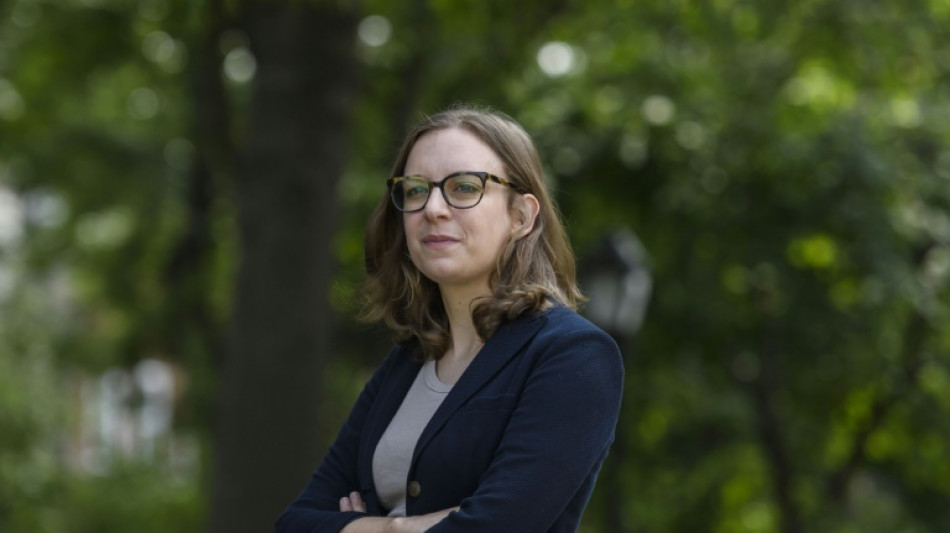
Top climate fundraiser offers defense of disruptive protests / Photo: ANGELA WEISS - AFP

 iPhone 18預購後出現可疑扣款 四間銀行調查未授權交易

 Galaxy Tab S12系列效果圖曝光 Ultra擬配雙鏡頭及瀏海螢幕

 Altman tells Fortune OpenAI will not go public in 2026

 ستاندرد آند بورز تثبت تصنيف السعودية عند A+

 Steven Strogatz weighs AI mathematics advances and their consequences for researchers

 Venezuelans outside Caracas say capital not sharing blackout burden

 Anthropic boss calls for slowing pace of AI development

 BRICS nations urge 'maximum restraint' in Middle East war

 Europe eyes battle over 'pervert' AI glasses

 Children in flood-hit Nepal grapple with loss, cling to hope

 Venice Film Festival: A look back on the highlights

 DR Congo school fire stampede death toll rises to 26: UNICEF

 Dance Fitness Tempe Announces Expansion of Accessible Digital Movement Programs

 Europe saw record summer air traffic despite Mideast war: Eurocontrol

 Relatives of 9/11 victims hit out at Saudi Arabia -- and US leaders

 Relative of 9/11 victim unleashes searing attack on Saudi Arabia

 Czech antitrust office lets Turkey's Pegasus Airlines buy Smartwings

 Investors on edge as energy costs, surging bond yields roil markets

 UK lawmakers to vote again on failed assisted dying bill

 Yemen's Houthis complete takeover of Bab al-Mandab area: govt official to AFP

 Fast-pace dance takes I.Coast's working-class streets by storm

 Fans celebrate Celine Dion's Paris return with giant karaoke

 Appreciation, anger await as Trump heads to Irish golf resort

 Putin arrives in India for BRICS summit coloured by wars

 Carney says in touch with Trump, Canada ready for 'fair' trade deal

For years, Margaret Klein Salamon labored behind the scenes to try to convince politicians about the existential threat posed by climate change.
Today, she has changed her approach: the American activist is in charge of a fund that exclusively finances groups engaging in civil disobedience.
It's the "most effective way to change policy fast, and public opinion," the 37-year-old New Yorker told AFP during an interview in her Brooklyn neighborhood.
Salamon is the executive director of the Climate Emergency Fund, which was founded in 2019 by the filmmaker Rory Kennedy -- niece of the late president -- and Getty family heiress Aileen Getty.
Its board of directors includes Adam McKay, director of the satirical film about climate, "Don't Look Up," who is also the biggest donor.
In 2022, the fund distributed $5 million to groups such as Just Stop Oil, Extinction Rebellion, Scientist Rebellion, and more.
These are the groups behind some of the most eye-catching recent climate protests: gluing their hands to roads or airport runways, disrupting sports events or throwing soup or paint at works of art protected by glass.
Such actions have drawn anger and accusations of harming the wider cause.
But Salamon, author of "Facing the Climate Emergency," stands by the headline-grabbing protests.
"Social science and history both are very clear, that disruptive activism is the fastest way to create transformative change," says the Harvard graduate.
"Which tactics of the civil rights movement or the suffragettes or the AIDS movement went too far?" she argues, provocatively.
For her, the arguments against just don't hold water. "I would like to actually hear from someone who says, 'I used to care about climate change, but now that these protesters have used these tactics, I no longer do.'"
- 'Emergency mode' -
The goal, she says, is to make the issue as visible as possible, so that it is present in the minds of voters. And to broaden a sense of "climate emergency," that she believes is "contagious."
"Humans evaluate risk socially, not rationally," explains the trained psychologist, who made a complete career shift shortly after witnessing the devastation caused by Hurricane Sandy in New York City in 2012.
For example if a fire alarm goes off in an office, people take their cues from others and generally stay calm and assume it's a drill, unless told emphatically otherwise, particularly by someone in leadership.
Such mass awareness can happen "pretty quickly," she argues, and trigger a shift into "emergency mode."
That's what it'll take for a massive mobilization of resources she believes, like what happened during the Second World War or during the Covid pandemic.
Activists want to break the "mass delusion of normalcy" among those members of the public that remain passive and disengaged.
They're also targeting the decision-makers themselves, with very concrete results, she argues.
Joe Manchin, a US senator whose vote was key to passing Joe Biden's signature climate law, was followed by protesters for months, blocking his car, his boat, and more. The fund spent around $200,000 to support them.
Salamon is under no illusion that the protests alone were enough to sway the West Virginia lawmaker. But even if they were "two percent of the reason," for passage of the Inflation Reduction Act, which comes with $370 billion in climate investments, "just think about that return on investment."
- 'Not a popularity contest' -
While there has been a large influx of money into the climate space, not enough has been directed towards activism, warns Salamon.
What she calls the "reformist gradualist movement," that works "within the system" and is embodied by groups like Greenpeace, has been the dominant force for decades.
But for new groups, she quickly became aware of the significance of fundraising -- "a very unpopular" role, in her words, but one in which she found herself to be highly effective.
Ironically, she's not personally drawn to protests. Having never been arrested, she says she has nothing but admiration for the "incredibly brave" demonstrators on the ground, some of whom have gone to prison.
She condemns growing repression by governments towards climate dissidents, stressing that the groups supported by the Climate Emergency Fund are committed to being nonviolent.
But she's not worried if public sentiment isn't always in favor. "It's not a popularity contest," she says.
"We're sleepwalking off of a cliff -- and the activists are shaking us, trying to wake us up," she says. No one likes being shaken, but inaction will lead to a far worse outcome.
M.García--CPN