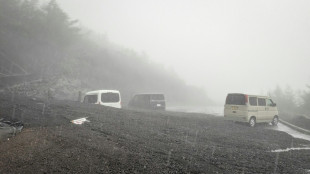
Japan issues heatstroke alerts as temperatures soar / Photo: Richard A. Brooks - AFP

 iPhone 18預購後出現可疑扣款 四間銀行調查未授權交易

 Galaxy Tab S12系列效果圖曝光 Ultra擬配雙鏡頭及瀏海螢幕

 Altman tells Fortune OpenAI will not go public in 2026
 ستاندرد آند بورز تثبت تصنيف السعودية عند A+
 Steven Strogatz weighs AI mathematics advances and their consequences for researchers

 Venezuelans outside Caracas say capital not sharing blackout burden

 Anthropic boss calls for slowing pace of AI development

 BRICS nations urge 'maximum restraint' in Middle East war

 Europe eyes battle over 'pervert' AI glasses

 Children in flood-hit Nepal grapple with loss, cling to hope

 Venice Film Festival: A look back on the highlights

 DR Congo school fire stampede death toll rises to 26: UNICEF

 Dance Fitness Tempe Announces Expansion of Accessible Digital Movement Programs

 Europe saw record summer air traffic despite Mideast war: Eurocontrol

 Relatives of 9/11 victims hit out at Saudi Arabia -- and US leaders

 Relative of 9/11 victim unleashes searing attack on Saudi Arabia

 Czech antitrust office lets Turkey's Pegasus Airlines buy Smartwings

 Investors on edge as energy costs, surging bond yields roil markets

 UK lawmakers to vote again on failed assisted dying bill

 Yemen's Houthis complete takeover of Bab al-Mandab area: govt official to AFP

 Fast-pace dance takes I.Coast's working-class streets by storm

 Fans celebrate Celine Dion's Paris return with giant karaoke

 Appreciation, anger await as Trump heads to Irish golf resort

 Putin arrives in India for BRICS summit coloured by wars

 Carney says in touch with Trump, Canada ready for 'fair' trade deal

Japan issued heatstroke alerts Sunday to tens of millions of people as near-record high temperatures scorched swathes of the country, while torrential rain pummelled other regions.
National broadcaster NHK warned viewers that the heat was at life-threatening levels, as temperatures soared to nearly 40 degrees Celsius (104 degrees Fahrenheit) in some places, including the capital Tokyo.
"Please stay hydrated and use air conditioners appropriately, and refrain from outings that seem difficult," a news presenter said.
The government issued heatstroke alerts for 20 of the country's 47 prefectures, mainly in the east and southwest, affecting tens of millions of people.
Heat can kill by inducing heatstroke, which damages the brain, kidneys and other organs, but it can also trigger other conditions such as a heart attack or breathing problems.
Kiryu city in Gunma prefecture, north of Tokyo, saw the mercury reach 39.7C while Hachioji in western Tokyo reached 38.9C, according to the Japan Meteorological Agency.
Japan's highest temperature ever recorded was 41.1C, which was first recorded in Kumagaya city, in Saitama, in 2018 and then matched in Hamamatsu city, Shizuoka, in 2020.
Some places experienced their highest temperatures in more than four decades on Sunday, including Hirono town in Fukushima prefecture with 37.3C, and hot spring resort city Nasushiobara with 35.4C, according to the weather agency's data.
Meanwhile, torrential rain continued to lash northern Japan, where flooding and at least one landslide have been recorded.
A man was found dead in a car submerged in a rice field in Akita prefecture, police told AFP, a week after seven people were killed in similar weather in the country's southwest.
Since last weekend, a heavy band of precipitation has dumped record-breaking amounts of rain in some parts of Japan, causing rivers to overflow and sodden earth to collapse in landslides.
Japan is experiencing its annual rainy season, which often brings heavy downpours, and sometimes results in flooding and landslides, as well as casualties.
But scientists say climate change is intensifying the risk of heavy rains in Japan and elsewhere because a warmer atmosphere holds more water.
Y.Uduike--CPN