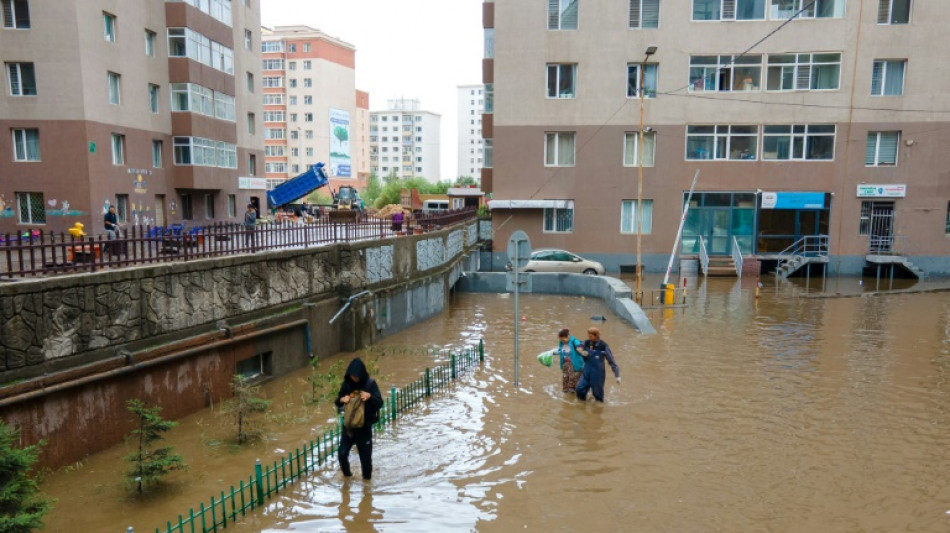
Hundreds flee homes after flooding in Mongolia capital / Photo: BYAMBASUREN BYAMBA-OCHIR - AFP

 iPhone 18預購後出現可疑扣款 四間銀行調查未授權交易

 Galaxy Tab S12系列效果圖曝光 Ultra擬配雙鏡頭及瀏海螢幕

 Altman tells Fortune OpenAI will not go public in 2026
 ستاندرد آند بورز تثبت تصنيف السعودية عند A+

 Steven Strogatz weighs AI mathematics advances and their consequences for researchers

 Venezuelans outside Caracas say capital not sharing blackout burden

 Anthropic boss calls for slowing pace of AI development

 BRICS nations urge 'maximum restraint' in Middle East war

 Europe eyes battle over 'pervert' AI glasses

 Children in flood-hit Nepal grapple with loss, cling to hope

 Venice Film Festival: A look back on the highlights

 DR Congo school fire stampede death toll rises to 26: UNICEF

 Dance Fitness Tempe Announces Expansion of Accessible Digital Movement Programs

 Europe saw record summer air traffic despite Mideast war: Eurocontrol

 Relatives of 9/11 victims hit out at Saudi Arabia -- and US leaders

 Relative of 9/11 victim unleashes searing attack on Saudi Arabia

 Czech antitrust office lets Turkey's Pegasus Airlines buy Smartwings

 Investors on edge as energy costs, surging bond yields roil markets

 UK lawmakers to vote again on failed assisted dying bill

 Yemen's Houthis complete takeover of Bab al-Mandab area: govt official to AFP

 Fast-pace dance takes I.Coast's working-class streets by storm

 Fans celebrate Celine Dion's Paris return with giant karaoke

 Appreciation, anger await as Trump heads to Irish golf resort

 Putin arrives in India for BRICS summit coloured by wars

 Carney says in touch with Trump, Canada ready for 'fair' trade deal

Hundreds of people in Mongolia's capital have fled their homes as heavy flooding inundated basement apartments, with authorities placing the city on high alert Wednesday.
Swathes of Asia have been hit by extreme weather that scientists say has been exacerbated by climate change, with over a dozen killed by heavy rain in China since Monday.
In traditionally dry Ulaanbaatar this week, heavy rains have inundated rivers, flooding basement apartments and trapping cars.
Residents of Bayanzurkh District living near the river Selbe told AFP they had been working since the early hours to boost the height of a local dam and stem rising waters caused by heavy rain.
"Our neighbours started to bring dirt and rocks from other places to add more layers on the dam at 3 am," said a 40-year-old resident of one of the worst-affected areas, who gave his name as Delgersaikhan.
"The river level reached the dam at 1 am last night, so we've been working all night and managed to prevent our apartment from getting flooded," he added.
Electricity has also been cut in some buildings as a precaution, with state news agency Montsame reporting that a number of roads in the capital have been closed.
The rain is set to continue for another two days, according to the country's weather agency.
The government declared a "high alert" in Ulaanbaatar on Wednesday, with Prime Minister Luvsannamsrai Oyun-Erdene ordering "necessary measures" be taken in response.
Mongolia is traditionally cold and dry, and annual precipitation ranges from 50 to 400 millimetres -- leaving the capital's infrastructure, including the sewage system, ill-equipped to deal with sustained heavy rain.
D.Philippon--CPN