We may be underestimating the climate risk to crops: researchers / Photo: SCOTT OLSON - GETTY IMAGES NORTH AMERICA/AFP

 iPhone 18預購後出現可疑扣款 四間銀行調查未授權交易

 Galaxy Tab S12系列效果圖曝光 Ultra擬配雙鏡頭及瀏海螢幕

 Altman tells Fortune OpenAI will not go public in 2026
 ستاندرد آند بورز تثبت تصنيف السعودية عند A+

 Steven Strogatz weighs AI mathematics advances and their consequences for researchers

 Venezuelans outside Caracas say capital not sharing blackout burden

 Anthropic boss calls for slowing pace of AI development

 BRICS nations urge 'maximum restraint' in Middle East war

 Europe eyes battle over 'pervert' AI glasses

 Children in flood-hit Nepal grapple with loss, cling to hope

 Venice Film Festival: A look back on the highlights

 DR Congo school fire stampede death toll rises to 26: UNICEF

 Dance Fitness Tempe Announces Expansion of Accessible Digital Movement Programs

 Europe saw record summer air traffic despite Mideast war: Eurocontrol

 Relatives of 9/11 victims hit out at Saudi Arabia -- and US leaders

 Relative of 9/11 victim unleashes searing attack on Saudi Arabia

 Czech antitrust office lets Turkey's Pegasus Airlines buy Smartwings

 Investors on edge as energy costs, surging bond yields roil markets

 UK lawmakers to vote again on failed assisted dying bill

 Yemen's Houthis complete takeover of Bab al-Mandab area: govt official to AFP

 Fast-pace dance takes I.Coast's working-class streets by storm

 Fans celebrate Celine Dion's Paris return with giant karaoke

 Appreciation, anger await as Trump heads to Irish golf resort

 Putin arrives in India for BRICS summit coloured by wars

 Carney says in touch with Trump, Canada ready for 'fair' trade deal

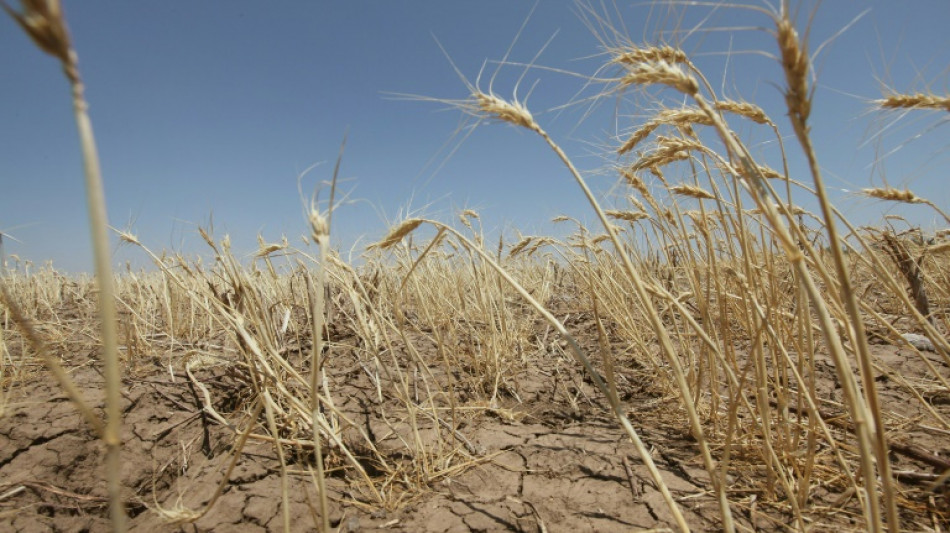
The risks of harvest failures in multiple global breadbaskets have been underestimated, according to a study Tuesday that researchers said should be a "wake up call" about the threat climate change poses to our food systems.
Food production is both a key source of planet-warming emissions and highly exposed to the effects of climate change, with climate and crop models used to figure out just what the impacts could be as the world warms.
In the new research published in Nature Communications, researchers in the United States and Germany looked at the likelihood that several major food producing regions could simultaneously suffer low yields.
These events can lead to price spikes, food insecurity and even civil unrest, said lead author Kai Kornhuber, a researcher at Columbia University and the German Council on Foreign Relations.
By "increasing the concentration of greenhouse gases, we are entering this uncharted water where we are struggling to really have an accurate idea of what type of extremes we're going to face," he told AFP.
"We show that these types of concurring events are really largely underestimated."
The study looked at observational and climate model data between 1960 and 2014, and then at projections for 2045 to 2099.
Researchers first looked at the impact of the jet stream -- the air currents that drive weather patterns in many of the world's most important crop producing regions.
They found that a "strong meandering" of the jet stream, flowing in big wave shapes, has particularly significant impacts on key agricultural regions in North America, Eastern Europe and East Asia, with a reduction in harvests of up to seven percent.
The researchers also found that this had been linked to simultaneous crop failures in the past.
One example was in 2010, when the fluctuations of the jet stream were linked to both extreme heat in parts of Russia and devastating floods in Pakistan, which both hurt crops, Kornhuber said.
- Risk assessment -
The study also looked at how well computer models assess these risks and found that while they are good at showing the atmospheric movement of the jet stream, they underestimate the magnitude of the extremes this produces on the ground.
Kornhuber said the study should be a "a wake up call in terms of our uncertainties" of the impacts of climate change on the food sector, with more frequent and intense weather extremes and increasingly complicated combinations of extremes.
"We need to be prepared for these types of complex climate risks in the future and the models at the moment seem to not capture this," he said.
On Monday, United Nations' human rights chief Volker Turk warned of a "truly terrifying" dystopian future of hunger and suffering as climate change-driven extremes hit crops, livestock and crucial ecosystems.
He told a UN debate on the right to food that more than 828 million people faced hunger in 2021 and climate change could increase that by 80 million by mid-century, and slammed world leaders for short term thinking.
A.Levy--CPN