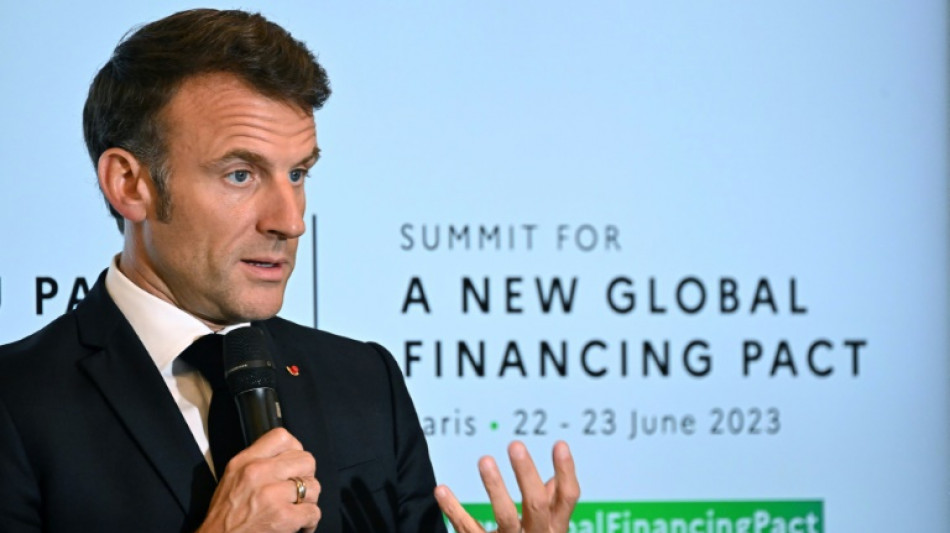
Climate finance summit wraps up eyeing bigger progress / Photo: Emmanuel DUNAND - POOL/AFP

 iPhone 18預購後出現可疑扣款 四間銀行調查未授權交易

 Galaxy Tab S12系列效果圖曝光 Ultra擬配雙鏡頭及瀏海螢幕

 Altman tells Fortune OpenAI will not go public in 2026
 ستاندرد آند بورز تثبت تصنيف السعودية عند A+

 Steven Strogatz weighs AI mathematics advances and their consequences for researchers

 Venezuelans outside Caracas say capital not sharing blackout burden

 Anthropic boss calls for slowing pace of AI development

 BRICS nations urge 'maximum restraint' in Middle East war

 Europe eyes battle over 'pervert' AI glasses

 Children in flood-hit Nepal grapple with loss, cling to hope

 Venice Film Festival: A look back on the highlights

 DR Congo school fire stampede death toll rises to 26: UNICEF

 Dance Fitness Tempe Announces Expansion of Accessible Digital Movement Programs

 Europe saw record summer air traffic despite Mideast war: Eurocontrol

 Relatives of 9/11 victims hit out at Saudi Arabia -- and US leaders

 Relative of 9/11 victim unleashes searing attack on Saudi Arabia

 Czech antitrust office lets Turkey's Pegasus Airlines buy Smartwings

 Investors on edge as energy costs, surging bond yields roil markets

 UK lawmakers to vote again on failed assisted dying bill

 Yemen's Houthis complete takeover of Bab al-Mandab area: govt official to AFP

 Fast-pace dance takes I.Coast's working-class streets by storm

 Fans celebrate Celine Dion's Paris return with giant karaoke

 Appreciation, anger await as Trump heads to Irish golf resort

 Putin arrives in India for BRICS summit coloured by wars

 Carney says in touch with Trump, Canada ready for 'fair' trade deal

A global summit seeking to overhaul the international financial system wraps up Friday after taking small steps towards easing the debt burden of developing nations weighed down by climate and economic crises.
While host country France pitched the conference as a consensus-building exercise, leaders are under pressure to produce clear outcomes from the two-day meeting as economies stagger under growing debt after successive crises in recent years.
The summit comes amid growing recognition of the scale of the financial challenges ahead, with warnings that the world's ability to curb global warming at tolerable levels is reliant on a massive increase in clean energy investment in developing countries.
With trust in short supply over broken climate financing promises from richer countries, developing nations are looking for tangible progress.
The V20 group of countries on the climate front lines -- which now includes 58 member nations -- has said restructuring the global financial system to align with climate targets must be completed by 2030.
"We come to Paris to identify the common humanity that we share and the absolute moral imperative to save our planet and to make it liveable," said Barbados Prime Minister Mia Mottley, whose Caribbean island nation is threatened by rising sea levels and tropical storms.
She has become a powerful advocate for revamping the role of the World Bank and International Monetary Fund in an era of climate crisis.
Barbados has put forward a detailed plan for how to fix the global financial system to help developing countries invest in clean energy and boost resilience to climate impacts.
One key announcement came from IMF director Kristalina Georgieva, who said a pledge to shift $100 billion of liquidity-boosting "special drawing rights" into a climate and poverty fund had been met.
World Bank president Ajay Banga said the lender would introduce a "pause" mechanism on debt repayments for countries hit by a crisis so they could "focus on what matters" and "stop worrying about the bill that is going to come".
Separately, Senegal was promised 2.5 billion euros ($2.7 billion) by a group of wealthy nations and multilateral development banks to help the west African country reduce its dependence on fossil fuels.
And Zambia, which defaulted on its debt after the Covid pandemic broke out, secured some financial relief as its main lender China and other creditors agreed to restructure $6.3 billion in loans.
On Twitter, Zambian President Hakainde Hichilema called it a "significant milestone in our journey towards economic recovery & growth".
- Turning 'billions to trillions' -
But much more is needed to help developing countries combat climate change.
Macron said he was hopeful that a pledge to deliver $100 billion a year in climate finance to poorer nations by 2020 would finally be fulfilled this year -- although actual confirmation the money has been delivered will take months if not years.
This week, the International Energy Agency said annual investment just for clean energy in these countries will need to jump to nearly $2 trillion within a decade.
This is crucial to keep alive the Paris Agreement goal of limiting global warming to "well below" two degrees Celsius since pre-industrial times, and below 1.5C if possible.
Ideas for how to turn "billions to trillions" for these climate and development goals include using multilateral development banks to help unlock climate investments, as well as taxation on fossil fuel profits and financial transactions to raise climate funds.
France backs the idea of an international tax on carbon emissions from shipping, with hopes for a breakthrough at a meeting of the International Maritime Organization in July.
Countries also want disaster clauses added to new debt arrangements to allow a country to pause repayments for two years after an extreme weather event.
A.Leibowitz--CPN