As Arctic warms, caribou and muskoxen slow biodiversity loss / Photo: SAUL LOEB - POOL/AFP/File

 اليورو يستقر في البنوك المصرية وأعلى سعر للبيع 59.85 جنيه

 الأرصاد السعودية تتوقع سيولاً وأمطاراً رعدية في خمس مناطق

 Lights out in Laos as electricity exports surge

 Steven Strogatz weighs AI mathematics advances and their consequences for researchers

 Anthropic boss calls for AI slowdown, Altman and Musk agree

 French IT giant Capgemini sells subsidiary after row over ICE links

 Quebec Brokerage Qubit Insurance Announces New Data on Coverage Shortfalls as Rebuilding Costs Rise

 Lady Gaga welcomes first child with fiance: US media

 Bhutan business bets on hazelnuts for farming future

 'Widow's Bay' and 'The Pitt' are favorites for Emmys night

 Coastal erosion forces cancellation of California music festival

 Argentina's Dirty War rears its head in Venice film

 UK lawmakers throw out bill to legalise assisted dying

 US inflation steady in August, fueling Fed rate hike expectations

 New York marks 25th anniversary of 9/11 attacks

 Nepal flood reconstruction bill to be $4.78 bn: foreign ministry

 JUMO and Standard Bank launch Social Finance Framework to scale inclusive finance in Africa

 Doomsday tech: could AI really kill us all?

 French comedy show 'Call my agent' makes film comeback

 It's all coming back: Celine Dion fans gear up for Paris return

 Researchers eye AI revolution in natural disaster forecasts

 US braces for inflation report that may push Fed to hike rates

 Musk threatens legal action over documentary

 Latin America fact-check group asks Meta not to replace verification practice

 AI Risks to Enter 60–80% of Liability and Cyber Insurance Underwriting by 2028, ScienceSoft Predicts

Rapidly warming conditions in the Arctic and the loss of sea ice caused by climate change are driving a steep decline in biodiversity, including among plants, fungi and lichen.
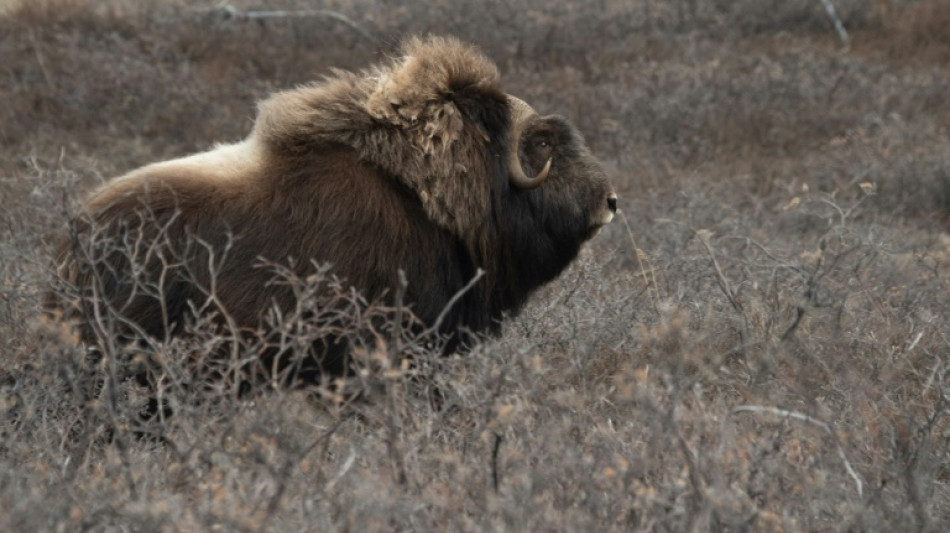
But a new study out Thursday in Science found the presence of caribou and muskoxen help to reduce the rate of loss by roughly half, suggesting the large herbivores have an under-recognized role as ecosystem climate defenders.
Co-author Christian John of the University of California, Santa Barbara told AFP the results showed that "in some cases 'rewilding' (reintroduction of large herbivores) may be an effective approach to combating negative effects of climate change on tundra diversity."
The paper was the result of a 15-year-long experiment that began in 2002 near Kangerlussuaq, a small settlement of around 500 people in western Greenland.
An international team of scientists used steel fencing to set up 800-square-meter plots, or about a fifth of an acre, to exclude or include herbivores and measure the impact on the surrounding environment.
They also used "passive warming chambers," which act like miniature greenhouses to raise the temperature a few degrees, to see how biodiversity might fare under conditions even warmer than today. Herbivores were given access to some warmed plots and not others.
Each day, the team hiked for miles to tally up the ungulates.
"There were a lot of demands to the job, working long hours hiking across uneven terrain, living in a tent under a sun that doesn't set, all the while with the ubiquitous whine of mosquitos in the background," said John.
"But at the end of the day, none of these challenges ever overshadowed the joy of seeing the first caribou calf of the year."
Sadly, tundra community diversity declined across the board over the course of the study, both as a direct result of warming but also changing precipitation patterns associated with melting ice, and the increasing shrub cover in the tundra squeezing out other species.
However, "tundra community diversity dropped at almost double the rate in plots where herbivores were excluded compared to plots where herbivores were able to graze," said John.
In the warmed plots, the difference was yet more dramatic. Diversity declined by about 0.85 species per decade when herbivores were excluded, whereas this decline was only about 0.33 species per decade when they were allowed to graze.
The scientists attributed this to herbivores keeping species such as shrubs, dwarf birch and gray willow in check so that other plants could better flourish.
"Efforts focused on maintenance or enhancement of large herbivore diversity may therefore under certain conditions help mitigate climate change impacts on at least one important element of ecosystem health and function: tundra diversity," wrote the team.
X.Wong--CPN