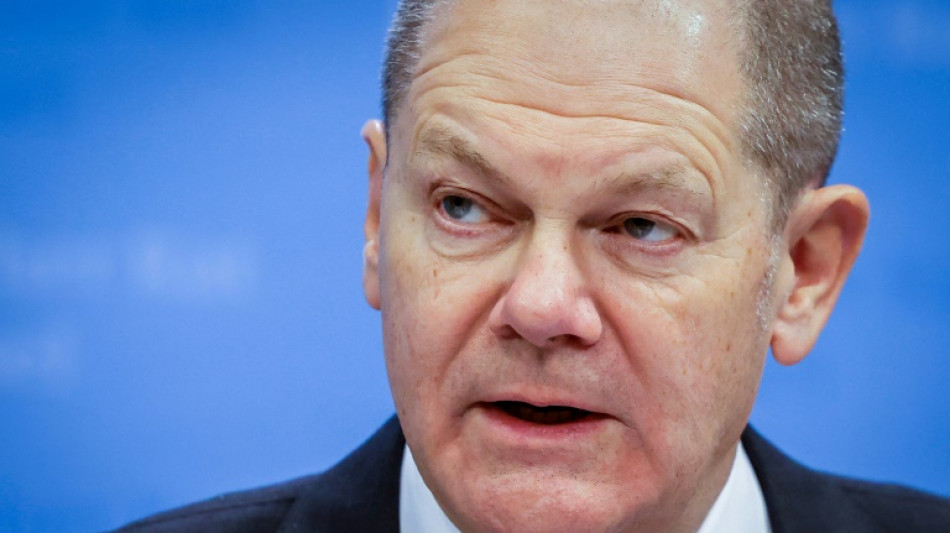
Scholz looks to quell coalition divisions / Photo: Ludovic MARIN - AFP

 اليورو يستقر في البنوك المصرية وأعلى سعر للبيع 59.85 جنيه
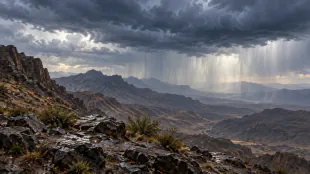 الأرصاد السعودية تتوقع سيولاً وأمطاراً رعدية في خمس مناطق
 Lights out in Laos as electricity exports surge

 Steven Strogatz weighs AI mathematics advances and their consequences for researchers

 Anthropic boss calls for AI slowdown, Altman and Musk agree

 French IT giant Capgemini sells subsidiary after row over ICE links

 Quebec Brokerage Qubit Insurance Announces New Data on Coverage Shortfalls as Rebuilding Costs Rise

 Lady Gaga welcomes first child with fiance: US media

 Bhutan business bets on hazelnuts for farming future

 'Widow's Bay' and 'The Pitt' are favorites for Emmys night

 Coastal erosion forces cancellation of California music festival

 Argentina's Dirty War rears its head in Venice film

 UK lawmakers throw out bill to legalise assisted dying

 US inflation steady in August, fueling Fed rate hike expectations

 New York marks 25th anniversary of 9/11 attacks

 Nepal flood reconstruction bill to be $4.78 bn: foreign ministry

 JUMO and Standard Bank launch Social Finance Framework to scale inclusive finance in Africa

 Doomsday tech: could AI really kill us all?

 French comedy show 'Call my agent' makes film comeback

 It's all coming back: Celine Dion fans gear up for Paris return

 Researchers eye AI revolution in natural disaster forecasts

 US braces for inflation report that may push Fed to hike rates

 Musk threatens legal action over documentary

 Latin America fact-check group asks Meta not to replace verification practice

 AI Risks to Enter 60–80% of Liability and Cyber Insurance Underwriting by 2028, ScienceSoft Predicts

German Chancellor Olaf Scholz will battle on Sunday to put out the fires threatening his government as the three-way coalition meets for crisis talks on a growing series of disputes.
A little more than a year after taking office, the relationship between Scholz's Social Democrats (SPD) and his governing partners, the Greens and the pro-business FDP, looks more strained than ever.
Earlier this week, Vice Chancellor and Economy Minister Robert Habeck of the Greens accused the FDP of blocking progress, while the FDP's deputy chief Wolfgang Kubicki compared the Green politician to Russian President Vladimir Putin.
Kubicki later apologised but the damaging row underlines the state of the three-way coalition -- the first in Germany's post-war history.
The alliance got off to a good start in December 2021 under the motto of their coalition agreement -- "Dare for more progress".
It was put to a tough test when Russia invaded Ukraine just two months on, upending decades of German economic and political certainties.
But tensions have since soared -- particularly between the Greens and the FDP.
The two are unnatural bedfellows, with the former set on environmental commitments to phase out nuclear energy and combustion engines, and the latter promoting very different economic policies.
It could not be "that in a coalition of progress only one coalition partner is responsible for progress and the others for preventing progress", Habeck said at a Green party event during the week.
- Boiling over -
Sunday's talks would be a good opportunity to "overcome blockages" on key issues, Habeck also told broadcaster ARD, blasting the coalition's record and policy leaks.
At the root of Habeck's discontent is a controversial project put forward by his ministry to ban the installation of new oil and gas boilers from 2024 -- a year earlier than previously planned.
The accelerated move from fossil fuels to greener technologies such as heat pumps would be accompanied by a multi-billion-euro package of financial support for switchers, Habeck has promised.
But the idea has caused ructions within the coalition, with critics underlining the costs involved.
"The plans must go back to the drawing board and be fundamentally revised," Finance Minister and FDP leader Christian Lindner said after a policy draft was leaked to German daily Bild.
Habeck's determination had something in common with Putin, Kubicki said. Both, he declared, had "a similar belief that the state, the leader, the chosen one, knows better than the people what is good for them".
As tempers frayed, SPD general secretary said the partners needed to "find a new way of working".
"This is an appeal to all three parties in government -- these public arguments must stop now," he said.
- 'Explosive material' -
The boiler bust-up is only one item on a growing list of disagreements, including pension reform, child benefits and cuts to red tape.
The parties agreed to speed up the approval process for key projects to revitalise Germany's creaking infrastructure.
But while the FDP would like to see support for more new motorways, the Greens want to privilege more climate-friendly projects.
The FDP have also rallied opposition against European Union plans to ban cars with internal combustion engines from 2035, insisting on a future for alternative engine fuels -- another idea strongly opposed by the Greens.
Spending demands from across government -- including more money for Germany's sclerotic armed forces -- have made the maths harder for the finance minister.
Lindner, who has insisted on a return to Germany's strict constitutional spending limits, was forced earlier in March to push back the publication of spending plans for 2024 due to a lack of agreement.
Divisions over the budget threaten to bring an end to the coalition, if Scholz fails to back his finance minister, political scientist Juergen Falter told Bild.
Much of the coalition's discord could be traced back to the fact that "the ideas of the Greens and the FDP simply do not fit together", he said.
Bringing their opposing views together was always going to be difficult, according to Falter.
"Three-way alliances automatically have more explosive material," he said.
H.Müller--CPN