Tornado hits southern California as wild weather continues / Photo: Patrick T. Fallon - AFP

 اليورو يستقر في البنوك المصرية وأعلى سعر للبيع 59.85 جنيه

 الأرصاد السعودية تتوقع سيولاً وأمطاراً رعدية في خمس مناطق

 Lights out in Laos as electricity exports surge

 Steven Strogatz weighs AI mathematics advances and their consequences for researchers

 Anthropic boss calls for AI slowdown, Altman and Musk agree

 French IT giant Capgemini sells subsidiary after row over ICE links

 Quebec Brokerage Qubit Insurance Announces New Data on Coverage Shortfalls as Rebuilding Costs Rise

 Lady Gaga welcomes first child with fiance: US media

 Bhutan business bets on hazelnuts for farming future

 'Widow's Bay' and 'The Pitt' are favorites for Emmys night

 Coastal erosion forces cancellation of California music festival

 Argentina's Dirty War rears its head in Venice film

 UK lawmakers throw out bill to legalise assisted dying

 US inflation steady in August, fueling Fed rate hike expectations

 New York marks 25th anniversary of 9/11 attacks

 Nepal flood reconstruction bill to be $4.78 bn: foreign ministry

 JUMO and Standard Bank launch Social Finance Framework to scale inclusive finance in Africa

 Doomsday tech: could AI really kill us all?

 French comedy show 'Call my agent' makes film comeback

 It's all coming back: Celine Dion fans gear up for Paris return

 Researchers eye AI revolution in natural disaster forecasts

 US braces for inflation report that may push Fed to hike rates

 Musk threatens legal action over documentary

 Latin America fact-check group asks Meta not to replace verification practice

 AI Risks to Enter 60–80% of Liability and Cyber Insurance Underwriting by 2028, ScienceSoft Predicts

A tornado tore through a southern California city Wednesday, ripping roofs off buildings and throwing cars around, as the state's ongoing winter weather drama turned even wilder.
A swirling mass of wind -- of the kind usually seen in the Midwest -- raked the city of Montebello near Los Angeles, breaking windows and sending residents scurrying to safety.
"I was driving... and I saw this tornado in front of me and had to reverse out," one local business owner told broadcaster KTLA.
"The tornado took off the roof of the building. All the windows of the cars are shattered. Cars were destroyed, it was just a mess."
Footage showed what appeared to be roofing material circling above industrial buildings in the city, which lies just a few miles (kilometers) from downtown Los Angeles.
Aerial pictures in the aftermath showed holes in several roofs, pipes and installations twisted and broken, and cars seemingly pushed out of their parking bays.
"I saw cars just swiveling through the streets and it was just the craziest thing I've ever seen," the business owner said.
The National Weather Service said it was investigating the event, which it called "a weak tornado," and another in Carpinteria, near Santa Barbara.
"A weak, narrow tornado briefly touched down in the Sandpiper Village mobile home park in Carpinteria on the evening of Tuesday, March 21," the NWS said.
"It damaged around 25 mobile home units and there was minor tree damage to the cemetery adjacent to the mobile home park."
Tornadoes -- violently rotating columns of air that touch the ground -- are nature's most violent storms, the NWS says.
They can pack winds of up to 300 miles (480 kilometers) an hour and can tear through a neighborhood in seconds.
Preliminary NWS estimates suggest these two events had winds up to 85 miles an hour.
Nevertheless, "this is a pretty significant tornado by (California) standards since it hit a populated area, clearly caused damage, and may have caused injuries," meteorologist Daniel Swain said on Twitter.
- 'Long haul' -
The tornadoes came at the tail end of an intense storm that ripped through California, downing trees and knocking out power to hundreds of thousands of people as it dumped heavy rain and snow.
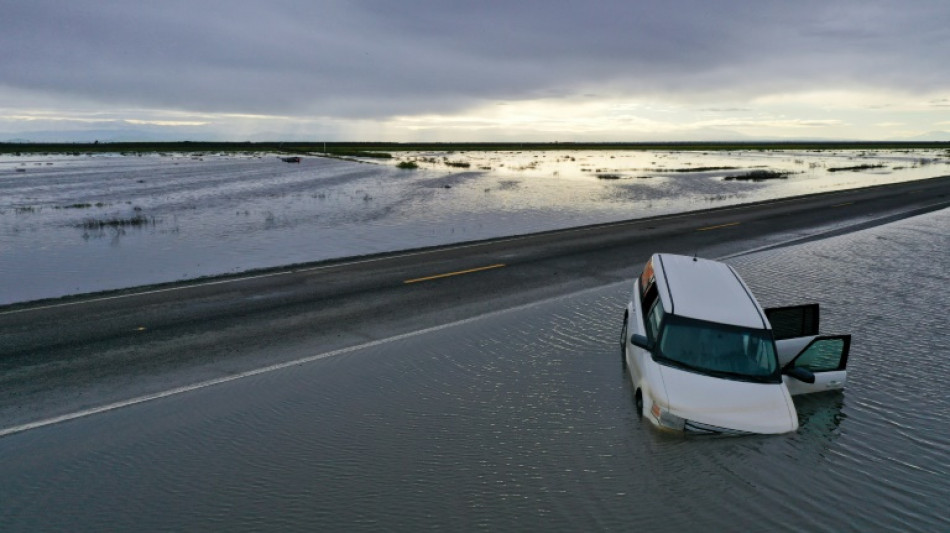
Huge swathes of the state remain on flood watch, with a big tract of land in Tulare County under water.
More than 700 buildings have been damaged, said Carrie Monteiro, spokeswoman for Tulare County's Emergency Operations Center, according to the Los Angeles Times.
Utility companies will need to assess possible damage to water, waste and electrical systems before anyone can be given the green light for returning home.
"We're in for a long haul here in Tulare County," she said.
Over the last few months, the state has been hit by a dozen atmospheric rivers -- ribbons of moisture that chug in from the Pacific Ocean.
They have dumped trillions of gallons (liters) of water -- rain and snow -- on a part of the country that has been suffering from a decades-long historic drought.
Water managers say that while regional reservoirs are looking much healthier now than they have for several years, the situation could quickly reverse if next winter is as dry as the last one.
Scientists say human-caused climate change exacerbates extreme weather, making dry periods drier and wet times much wetter.
D.Avraham--CPN