Malawi cyclone toll jumps to 190 as hopes for survivors dwindle / Photo: Jack McBrams - AFP

 ستاندرد آند بورز تثبت تصنيف السعودية عند A+
 Lights out in Laos as electricity exports surge

 Steven Strogatz weighs AI mathematics advances and their consequences for researchers

 Anthropic boss calls for AI slowdown, Altman and Musk agree

 French IT giant Capgemini sells subsidiary after row over ICE links

 Quebec Brokerage Qubit Insurance Announces New Data on Coverage Shortfalls as Rebuilding Costs Rise

 Lady Gaga welcomes first child with fiance: US media

 Bhutan business bets on hazelnuts for farming future

 'Widow's Bay' and 'The Pitt' are favorites for Emmys night

 Coastal erosion forces cancellation of California music festival

 Argentina's Dirty War rears its head in Venice film

 UK lawmakers throw out bill to legalise assisted dying

 US inflation steady in August, fueling Fed rate hike expectations

 New York marks 25th anniversary of 9/11 attacks

 Nepal flood reconstruction bill to be $4.78 bn: foreign ministry

 JUMO and Standard Bank launch Social Finance Framework to scale inclusive finance in Africa

 Doomsday tech: could AI really kill us all?

 French comedy show 'Call my agent' makes film comeback

 It's all coming back: Celine Dion fans gear up for Paris return

 Researchers eye AI revolution in natural disaster forecasts

 US braces for inflation report that may push Fed to hike rates

 Musk threatens legal action over documentary

 Latin America fact-check group asks Meta not to replace verification practice

 AI Risks to Enter 60–80% of Liability and Cyber Insurance Underwriting by 2028, ScienceSoft Predicts

 Tribal Launches Campfire, Letting Business and Technical Teams Build on Salesforce Together

The death toll in Malawi from Cyclone Freddy nearly doubled to 190 on Tuesday after the record-breaking storm unleashed floods and landslips in its second strike on Africa in less than three weeks.
After brewing off Australia in early February, Freddy traversed the Indian Ocean, making landfall on southeastern Africa in late February and returning at the weekend to deliver a second punch.
"The death toll has risen from 99… to 190, with 584 injured and 37 reported missing," Malawi's Department of Disaster Management Affairs said in a statement.
Relief workers said they expected the tally to rise.
"The situation is very dire," said Guilherme Botelho, emergency project coordinator for Doctors Without Borders (MSF).
"There are many casualties, either wounded, missing or dead, and the numbers will only increase in the coming days."
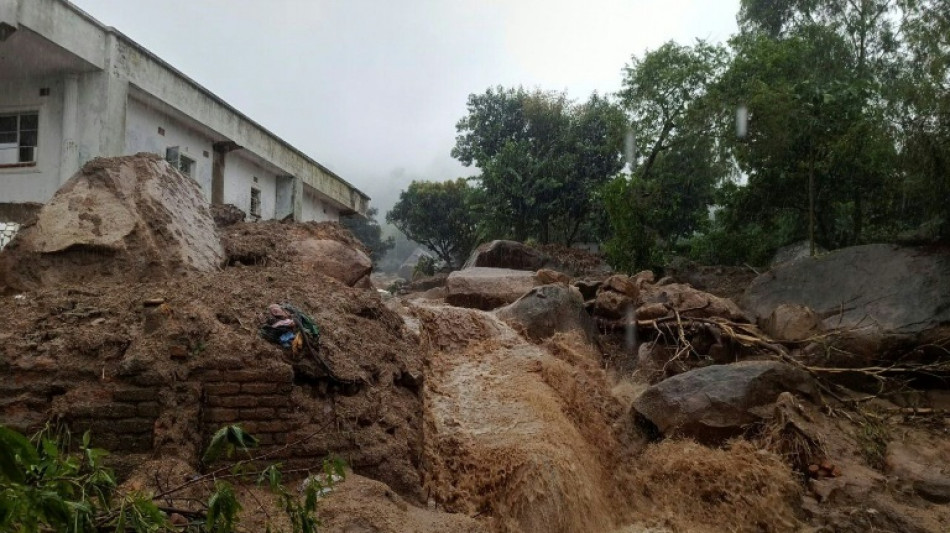
Many people perished in mudslides that washed away homes in the country's commercial capital, Blantyre.
Across the country, nearly 59,000 people have been affected, and more than 19,000 displaced.
In Chilobwe, a township on Blantyre's outskirts, survivors milled about in disbelief, looking at flattened houses and structures as rain continued to fall.
Many believed there were still people trapped beneath the muddy rubble of earthen bricks -- but there were no rescuers in sight.
John Witman, in his 80s, dressed in a raincoat and woollen hat with his 10 family members in tow, stood in front of what was his son-in-law's house. There were just rocks left and gushing water, for the house had been washed away.
"I wish that we could find him, and find closure. We feel helpless because no one is here to help us -- we don't know what to do," he told AFP.
In Chimkwankhunda, a district a few kilometres (miles) away, Steve Panganani Matera, wearing a high-visibility green jacket, pointed to a mound of mud.
"There were plenty of houses, but they are all gone," said Matera.
"There are plenty of bodies down there in the mud, plenty of bodies."
- Deadly loop -
Cyclone Freddy reached landlocked Malawi early on Monday morning after sweeping through Mozambique at the weekend.
Last week it unofficially broke the World Meteorological Organization's benchmark as the longest-lasting tropical cyclone on record, set in 1994 for a 31-day storm named John.
Researchers will now study whether Freddy is the new titleholder, a process likely to take months.
Freddy began life off the north Australian coast, becoming a named storm on February 6.
It crossed the entire southern Indian Ocean and made landfall in Madagascar on February 21, traversing the island before reaching Mozambique on February 24, claiming nearly two dozen lives in both countries and affecting nearly 400,000 people.
It then returned to the Indian Ocean, refuelled on the warmth of its waters, and came back much more powerful at the weekend.
Meteorologists say that cyclones that track across the entire Indian Ocean are very infrequent -- the last such occurrences were in 2000 -- and Freddy's loopback is even more exceptional.
"It's a very rare thing that these cyclones feed themselves over and over again," said climate expert and professor Coleen Vogel at South Africa's University of the Witwatersrand.
"People aren't expecting them to come back again once they’ve hit already."
"Climate change is starting to show impacts over these systems," Vogel said, adding however that more research was needed to say this with greater confidence.
The cyclone has piled more woes on a country grappling with the deadliest cholera outbreak in its history, which has killed over 1,600 people since last year.
Fears of a cholera resurgence after the outbreak started in the aftermath of another tropical storm, Ana last year, have been exacerbated by vaccines shortages.
A.Samuel--CPN