Climate change may have toppled Hittite Empire: study / Photo: STR - AFP/File

 ستاندرد آند بورز تثبت تصنيف السعودية عند A+
 Lights out in Laos as electricity exports surge

 Steven Strogatz weighs AI mathematics advances and their consequences for researchers

 Anthropic boss calls for AI slowdown, Altman and Musk agree

 French IT giant Capgemini sells subsidiary after row over ICE links

 Quebec Brokerage Qubit Insurance Announces New Data on Coverage Shortfalls as Rebuilding Costs Rise

 Lady Gaga welcomes first child with fiance: US media

 Bhutan business bets on hazelnuts for farming future

 'Widow's Bay' and 'The Pitt' are favorites for Emmys night

 Coastal erosion forces cancellation of California music festival

 Argentina's Dirty War rears its head in Venice film

 UK lawmakers throw out bill to legalise assisted dying

 US inflation steady in August, fueling Fed rate hike expectations

 New York marks 25th anniversary of 9/11 attacks

 Nepal flood reconstruction bill to be $4.78 bn: foreign ministry

 JUMO and Standard Bank launch Social Finance Framework to scale inclusive finance in Africa

 Doomsday tech: could AI really kill us all?

 French comedy show 'Call my agent' makes film comeback

 It's all coming back: Celine Dion fans gear up for Paris return

 Researchers eye AI revolution in natural disaster forecasts

 US braces for inflation report that may push Fed to hike rates

 Musk threatens legal action over documentary

 Latin America fact-check group asks Meta not to replace verification practice

 AI Risks to Enter 60–80% of Liability and Cyber Insurance Underwriting by 2028, ScienceSoft Predicts

 Tribal Launches Campfire, Letting Business and Technical Teams Build on Salesforce Together

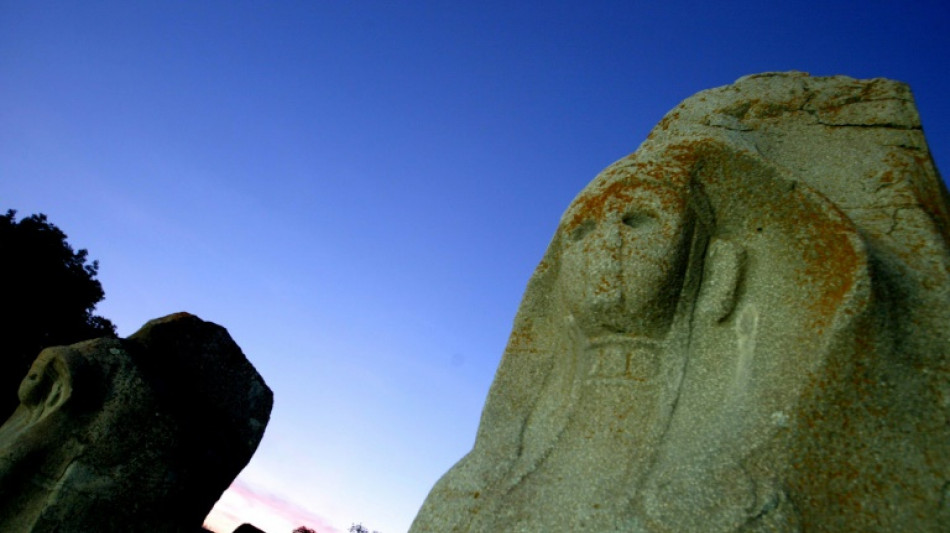
Three years of extreme drought may have brought about the collapse of the mighty Hittite Empire around 1200 BC, researchers have said, linking the plight of the fallen civilisation to the modern world's climate crisis.
The Hittites dominated Anatolia in modern-day Turkey for nearly 500 years, even rivalling the power of the Egyptian Empire for a period.
They were one of several influential ancient civilisations in the Eastern Mediterranean and Near East which were all toppled or severely weakened at around the same time, bringing the curtain down on the Bronze Age.
The Hittites mysteriously abandoned their capital and religious centre Hattusa around 1200 BC, when the royal line died out and written historical documents dried up.
The empire's centuries-old political and cultural structures ended "quite rapidly," Sturt Manning, an archaeologist at Cornell University in the United States and lead author of a new study, told AFP.
There are several theories for what was behind the "Late Bronze Age collapse", including attacks from naval raiders called the "Sea Peoples", epidemics and famines -- as well as a 300-year change to a drier, cooler climate.
But exactly what triggered the demise of these empires has remained unclear.
- 'Existential threat' -
Now, for the Hittites at least, the answer may have come inscribed in the rings of ancient juniper wood.
The juniper comes from one of the world's oldest wooden structures, found at the Phrygian capital of Gordion in central Turkey as part of the excavation of a king's tomb in the 1950s.
By analysing the rings of the juniper wood, the researchers were able to reconstruct climate conditions more than 3,000 years ago.
In semi-arid Central Anatolia, "the major threat to growth for most plants in the region is a lack of water," Manning said.
Narrower tree rings indicate drier years, when a lack of water meant the trees did not grow much.
The rings showed three-straight years -- 1198 BC to 1196 BC -- with "unusually" low growth, suggesting a prolonged and particularly severe drought, according to the study published in the journal Nature on Wednesday.
The researchers suggested that the drought caused severe food shortages, particularly for the land-locked parts of the central Hittite kingdom, which depended on grain and livestock.
The food shortages could have led to political, economic and social unrest, ultimately bringing about the end of the empire.
Manning warned that current global warming means the modern world could face a "multi-year existential threat" similar to the one that affected the Hittites.
Muge Durusu-Tanriover, an archaeologist at Temple University in Philadelphia who was not involved in the study, hailed it as "groundbreaking".
"Now that we know a major climate event might have tipped the Hittite empire beyond its point of no return, there are more questions to ask about climate change, its impact on states and society and, most crucially, what can be learnt from the past during our current climate crisis," she said in a Nature comment piece.
St.Ch.Baker--CPN