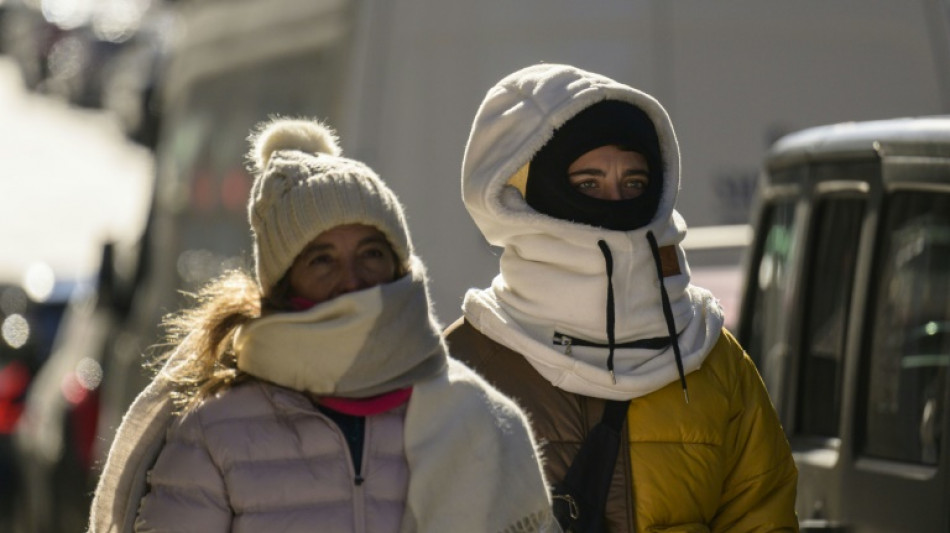
Arctic blast breaks US wind-chill record / Photo: ANGELA WEISS - AFP

 ستاندرد آند بورز تثبت تصنيف السعودية عند A+
 Lights out in Laos as electricity exports surge

 Steven Strogatz weighs AI mathematics advances and their consequences for researchers

 Anthropic boss calls for AI slowdown, Altman and Musk agree

 French IT giant Capgemini sells subsidiary after row over ICE links

 Quebec Brokerage Qubit Insurance Announces New Data on Coverage Shortfalls as Rebuilding Costs Rise

 Lady Gaga welcomes first child with fiance: US media

 Bhutan business bets on hazelnuts for farming future

 'Widow's Bay' and 'The Pitt' are favorites for Emmys night

 Coastal erosion forces cancellation of California music festival

 Argentina's Dirty War rears its head in Venice film

 UK lawmakers throw out bill to legalise assisted dying

 US inflation steady in August, fueling Fed rate hike expectations

 New York marks 25th anniversary of 9/11 attacks

 Nepal flood reconstruction bill to be $4.78 bn: foreign ministry

 JUMO and Standard Bank launch Social Finance Framework to scale inclusive finance in Africa

 Doomsday tech: could AI really kill us all?

 French comedy show 'Call my agent' makes film comeback

 It's all coming back: Celine Dion fans gear up for Paris return

 Researchers eye AI revolution in natural disaster forecasts

 US braces for inflation report that may push Fed to hike rates

 Musk threatens legal action over documentary

 Latin America fact-check group asks Meta not to replace verification practice

 AI Risks to Enter 60–80% of Liability and Cyber Insurance Underwriting by 2028, ScienceSoft Predicts

 Tribal Launches Campfire, Letting Business and Technical Teams Build on Salesforce Together

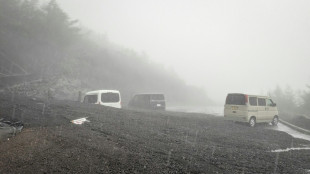
An Arctic blast that brought "frostquakes" to parts of the United States saw the country record its lowest ever wind-chill temperature, meteorologists said Saturday.
Atop Mount Washington in the northeastern state of New Hampshire, the wind-chill factor reached minus 78 degrees Celsius (minus 108 degrees Fahrenheit) overnight, the National Weather Service (NWS) said.
The service's office in the town of Gray, Maine, said in a tweet that it set a new US record for the lowest wind-chill temperature in the United States.
CNN reported that it broke the previous record of minus 76 C set in Alaska.
The previous low at Mount Washington was minus 74 C, recorded there in 2004, the Weather Channel said.
At almost 6,300 feet (1,920 meters), Mount Washington is the highest peak in the northeastern US and is known for having some of the world's worst weather.
Temperatures of minus 43 C and wind gusts of over 110 miles per hour (177 kmh) combined for the historic low.
The NWS office in Caribou, Maine, said a wind chill of minus 51 C was recorded in the small town of Frenchville, just south of the border with Canada.
The office said they had received reports of "frostquakes," also called "cryoseisms," in the region.
"Just like earthquakes, (they) generate tremors, thundering sensations. These are caused by sudden cracks in frozen soil or underground water when it's very cold," the NWS office wrote on Twitter.
Ahead of the blast, it had warned of an "epic, generational Arctic outbreak."
The NWS said the chills would be "something northern and eastern Maine has not seen since similar outbreaks in 1982 and 1988."
"Most stations are forecast to see their lowest wind chills in decades or, in some cases, the lowest ever recorded," the service added.
It warned that frostbite to exposed skin can occur within five minutes in such conditions.
"The dangers of being caught unprepared without shelter from the elements and without proper winter survival gear cannot be stressed enough," the service wrote.
The NWS said the blast brought temperatures 10 to 30 degrees Fahrenheit below average over parts of the US Northeast and the coastal Mid-Atlantic.
Extreme weather warnings covering several million people were in effect across much of New England, Quebec and eastern Canada.
A wind chill factor of minus 41 C was measured at Montreal International Airport.
The Hydro Quebec energy company said the polar blast had sparked record high electricity consumption late Friday and urged customers to turn down their heating by a degree or two.
In New York City, a "code blue" regulation was in effect, meaning no homeless shelter could turn anyone anyway.
In New York's Central Park, the mercury dipped to minus 16 C, the NWS said.
Wind-chill temperatures fell below minus 34 C in Boston, where public schools were closed Friday as a precautionary measure.
Warmer air is due to move into the region late on Sunday.
H.Müller--CPN