France destroys seaside flats threatened by coastal erosion / Photo: PHILIPPE LOPEZ - AFP

 ستاندرد آند بورز تثبت تصنيف السعودية عند A+

 Lights out in Laos as electricity exports surge

 Steven Strogatz weighs AI mathematics advances and their consequences for researchers

 Anthropic boss calls for AI slowdown, Altman and Musk agree

 French IT giant Capgemini sells subsidiary after row over ICE links

 Quebec Brokerage Qubit Insurance Announces New Data on Coverage Shortfalls as Rebuilding Costs Rise

 Lady Gaga welcomes first child with fiance: US media

 Bhutan business bets on hazelnuts for farming future

 'Widow's Bay' and 'The Pitt' are favorites for Emmys night

 Coastal erosion forces cancellation of California music festival

 Argentina's Dirty War rears its head in Venice film

 UK lawmakers throw out bill to legalise assisted dying

 US inflation steady in August, fueling Fed rate hike expectations

 New York marks 25th anniversary of 9/11 attacks

 Nepal flood reconstruction bill to be $4.78 bn: foreign ministry

 JUMO and Standard Bank launch Social Finance Framework to scale inclusive finance in Africa

 Doomsday tech: could AI really kill us all?

 French comedy show 'Call my agent' makes film comeback

 It's all coming back: Celine Dion fans gear up for Paris return

 Researchers eye AI revolution in natural disaster forecasts

 US braces for inflation report that may push Fed to hike rates

 Musk threatens legal action over documentary

 Latin America fact-check group asks Meta not to replace verification practice

 AI Risks to Enter 60–80% of Liability and Cyber Insurance Underwriting by 2028, ScienceSoft Predicts

 Tribal Launches Campfire, Letting Business and Technical Teams Build on Salesforce Together

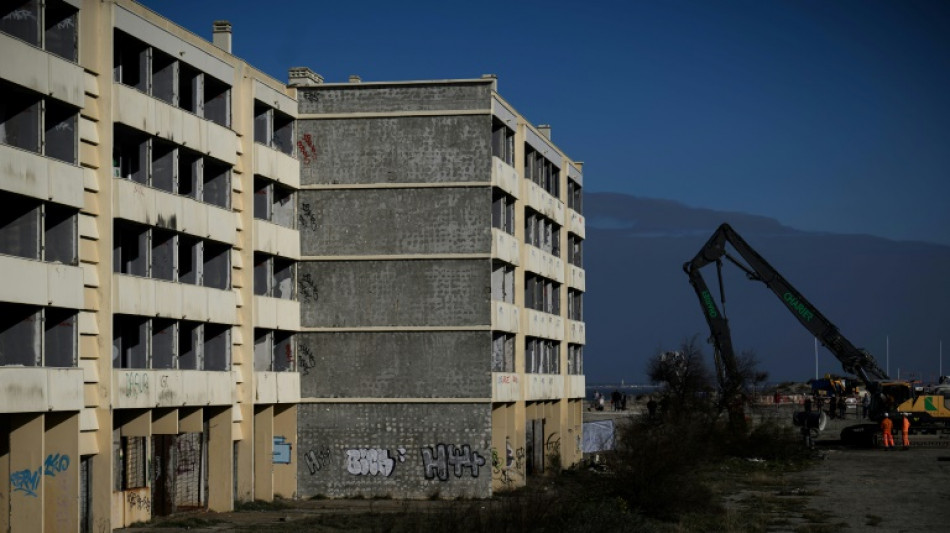
French authorities on Friday started demolishing a seaside block of flats that has come to symbolise the country's battle against climate change-linked coastal erosion.
When the four-storey building was built behind the beach in the southwestern Gironde region in 1967, it stood 200 metres (220 yards) away from the shoreline.
But its 75 or so flats in the town of Soulac-sur-Mer had to be evacuated in 2014 after the sea crept up to within 20 metres of the structure.
Local authorities scrambled to rid the building of asbestos in the following years, before a huge mechanical digger took a swing at its facade on Friday, as several former residents looked on.
"It's the memories of four generations" that are being destroyed, said 76-year-old Vincent Duprat, one of the home owners.
The sea "has taken back what is rightfully hers".
Environment Minister Christophe Bechu said the demolition was a sign of "what the rising waters and coastal erosion have is store for lots of other areas along the French coastline".
By 2100, 20 percent of the coastline and up to 50,000 homes would be affected, he said.
Erosion is a natural phenomenon that has helped shape our continents over millennia.
But scientists say it is being accelerated by the warming of the planet, exacerbated by rising sea levels brought about by melting ice caps and glaciers, and by the more powerful waves that warmer oceans hold.
The sandy beaches of the Bay of Biscay between France and Spain are expected to recede by 50 metres by 2050, the Observatory of the Nouvelle-Aquitaine Coastline says.
But climate change and rising sea levels could increase this by an extra 20 metres in some areas, the Observatory's Nicolas Bernon said.
In 2020, after a seven-year legal battle, a court ruled that French authorities should compensate families who had been forced to evacuate the building in Soulac-sur-Mer to the tune of 70 percent of the original value of their homes.
T.Morelli--CPN