Coin Press - Latin America’s age trap

NYSE - LSE
RBGPF 8.69% 67.35 $
CMSC 0.36% 22.1 $
RIO 1.51% 90.86 $
GSK 0.53% 52.75 $
BTI 0.06% 60.07 $
CMSD 0.4% 22.4 $
BCE 0.41% 21.407 $
NGG 0.51% 82.74 $
RELX 1.31% 32.495 $
BCC 5% 76.04 $
RYCEF 0% 19.25 $
AZN -3.53% 172.4 $
BP 1.2% 39.02 $
JRI 0% 13.03 $
VOD 11.23% 14.735 $

Latin America’s age trap


Latin America has spent generations thinking of demography as a problem of abundance. Governments built schools for swelling classes, cities spread to absorb millions of new residents, and economists worried about whether jobs, housing and food production could keep pace with a rapidly expanding population. That assumption now belongs to the past. The region is entering an era in which there will be fewer children, a slower-growing workforce and many more older people, and the transition is unfolding far faster than most political systems are prepared to admit.

The shift is already measurable. Fertility in Latin America has fallen to about 1.8 children per woman and has remained below the replacement level of 2.1 since 2015. The Caribbean is lower still, at roughly 1.5. In 2024, Latin America and the Caribbean had about 663 million inhabitants, nearly 26 million fewer than projections made at the beginning of the century had anticipated. The population is now expected to peak at about 730 million in 2053 before beginning a long decline.

A peak in the middle of the century does not sound like an immediate emergency. That is precisely why the risk is easy to underestimate. Demographic crises rarely arrive as a single shock. They emerge through thousands of local changes: maternity wards with fewer patients, primary schools with empty desks, small towns losing young adults, companies unable to recruit skilled staff, pension systems collecting too little and families trying to care for elderly relatives with fewer hands available.

Latin America does not yet have the lowest fertility in the world, and it is not yet the oldest region. Parts of East Asia have much lower birth rates, while Europe already has a substantially larger elderly population. The reason Latin America’s predicament could prove harsher is the sequence in which the change is occurring. The region is ageing before it has become broadly prosperous, before much of its workforce has entered formal employment and before durable welfare states have been built. Europe grew old after decades of industrialisation, capital accumulation and the expansion of tax-funded social protection. Several East Asian economies face extreme demographic contraction, but many entered it with high savings, advanced infrastructure, strong education systems and highly productive firms. Latin America is approaching the same pressure with weak productivity growth, deeply unequal access to public services, fragile fiscal positions and labour markets in which informality remains normal rather than exceptional.

The speed of the transformation leaves little room for complacency. In 1950, about 41 per cent of the region’s population was under the age of 15. By 2024, that share had fallen to 22.5 per cent. In the same year, roughly 65 million people were aged 65 or older, representing 9.9 per cent of the population. By 2050, that group is projected to reach about 138 million and almost 19 per cent of the total. The median age, just 18 in 1950, reached 31 in 2024 and is expected to approach 40 by mid-century.

This is not simply a story about people refusing to have children. Much of the fertility decline reflects social progress. Infant mortality has fallen, contraception has become more accessible, women have gained education and economic independence, and adolescent pregnancy has declined sharply. Families no longer need many births to ensure that several children survive to adulthood. Women are also more able to decide whether and when motherhood fits their lives.

The trouble is that institutions have not adapted to the freedom and expectations of modern adulthood. In many cities, secure housing is expensive, formal jobs are scarce, commuting is exhausting and childcare is limited. Parenthood can carry a severe career penalty, especially for women, while domestic and caring responsibilities remain distributed unequally. Young adults often spend years moving between temporary work, informal employment and dependence on relatives before they feel able to form a household.

Low fertility therefore reflects both choice and constraint. Some people do not want children. Others want fewer than previous generations. Many would like to become parents but postpone the decision because the economic and practical conditions never appear sufficiently stable. The postponement of first births explains part of the fall, but not all of it. Completed family size is also declining, meaning that later births are not fully compensating for those deferred in early adulthood.

Chile offers one of the clearest warnings. Its fertility rate fell to about 1.03 children per woman in 2024, below Japan’s level and dramatically lower than it had been only a decade earlier. Uruguay now records far fewer births than deaths. Cuba is losing population through the combined effects of low fertility, ageing and large-scale emigration. Brazil and Mexico still have enormous populations, but their national size conceals shrinking school cohorts and ageing communities across many states and municipalities. Central America remains younger on average, yet fertility there is falling rapidly as well.

The economic consequences will not be determined by headcounts alone. A smaller workforce can support a larger retired population if each worker becomes more productive, if more women enter well-paid employment, if healthy older people remain active and if technology raises output. Demographic decline is not an automatic sentence to recession. It becomes dangerous when productivity stagnates and institutions fail to mobilise the people who are already present.

Latin America enters this test with a serious structural weakness. Nearly 47 per cent of employed people were working informally in the first half of 2025. Among young workers, the share was about 56 per cent. Informal work often means low and unstable earnings, limited training, weak legal protection and irregular or nonexistent pension contributions. It also narrows the tax base from which governments must finance health care, pensions and long-term support. For decades, a relatively large working-age population offered the region a demographic dividend. There were more potential workers in relation to children and older dependants, creating an opportunity for faster growth and higher savings. Yet a dividend is only an opportunity, not a guarantee. Much of it was consumed during years of modest investment, unequal education and poor productivity. The favourable age structure is now beginning to close before the region has completed the economic transformation it was supposed to finance.

The labour force will continue to grow for some time at regional level, but more slowly and with an older profile. Young cohorts entering employment will become smaller. Employers will face recruitment problems in areas that require technical skills, health professionals, teachers and care workers. Rural districts and smaller cities may lose working-age residents even while major metropolitan areas remain crowded. National averages will therefore hide acute local decline.

Ageing will also expose the weaknesses of pension systems designed around continuous formal employment. The basic arithmetic is unforgiving. More people will draw benefits for longer periods, while growth in the number of contributors will slow. Yet raising contribution rates, reducing benefits or delaying retirement is politically difficult in societies where many people already receive inadequate support and where physically demanding work makes longer careers unrealistic.

Pension coverage has expanded, including through non-contributory schemes, but adequacy remains a major problem. Around 43 per cent of older people receive pension income that is insufficient to meet minimum consumption needs. Roughly a quarter of people aged 65 and over were still participating in the labour market in 2024. For some, work in later life is a welcome source of purpose and income. For many others, it is not active ageing but economic necessity.

Health systems face a related challenge. Longer lives are a major achievement, but longevity does not automatically mean more years in good health. Diabetes, cardiovascular disease, cancer, dementia and disability will demand sustained treatment, rehabilitation and assistance with daily life. Systems that remain divided between public programmes, employment-based insurance and private provision often deliver fragmented care precisely when older patients need continuity.

The most immediate strain may appear not in hospitals or treasury accounts but inside homes. Long-term care remains limited or absent in much of the region, so families provide most assistance to elderly and disabled relatives. Women perform a disproportionate share of this work, often reducing paid hours or leaving employment altogether. That response becomes less viable as families become smaller, adult children migrate and more women participate in the labour market.

The region’s need for professional long-term care workers could nearly triple by 2050. Without planning, the result will be a severe shortage of trained staff, a larger burden on unpaid carers and widening inequality between households that can purchase private support and those that cannot. A demographic model built on the assumption that daughters and daughters-in-law will provide unlimited free care is already breaking down.

Migration complicates the picture. Latin America is simultaneously a region of emigration, immigration and large movements within its own borders. The departure of young adults can accelerate ageing in countries and communities of origin, leaving older relatives behind and draining scarce professional skills. Remittances may protect household incomes, but money sent from abroad cannot provide daily physical care.

For receiving countries, migration can slow workforce decline and bring younger taxpayers into the system. It is not, however, a demographic switch that governments can simply turn on. Migrants need legal status, housing, language support where relevant, recognition of qualifications and access to formal employment. Poor integration can reproduce the same informality that already weakens public finances. Migration can redistribute population across the region, but it cannot reverse low fertility everywhere at once.

Political incentives may make preparation harder. Older voters will form a growing share of electorates and will understandably defend pensions, health services and financial security. Younger households will demand affordable housing, education, childcare and better employment. Governments with limited revenue may present these needs as a competition between generations. That would be a costly mistake. Families span generations, and underinvestment in children today produces less productive workers and weaker pension finances tomorrow. The decline in the number of children also creates an opportunity. Smaller cohorts make it possible to spend more effectively on each child, improve early development, repair weak schools and expand technical education. A country with fewer young people cannot afford to waste their potential through poor teaching, malnutrition, violence or exclusion from employment. Human capital must replace population growth as the main engine of expansion.

Policy should begin by abandoning the illusion that a cash payment for each birth can restore the family patterns of the twentieth century. One-off bonuses may change the timing of some births, but they do not resolve insecure work, expensive housing, inadequate childcare or the unequal division of care. Coercive or moralising pronatalism is even more dangerous. It treats women’s autonomy as the problem while ignoring the economic conditions that make desired parenthood difficult.

A more credible family policy would make having children compatible with a modern life. That means reliable childcare, paid leave for both mothers and fathers, protection against workplace discrimination, predictable hours, affordable housing and reproductive health services. It also means reducing the burden of care that falls on women. Supporting families is not the same as demanding larger families. The objective should be to close the gap between the number of children people want and the number they believe they can responsibly raise.

The second priority is productivity and formalisation. Governments need tax and social insurance systems that make formal employment easier for small firms and portable for workers who change jobs. Better technical education, digital infrastructure, access to finance and competition can help productive businesses expand. Higher female employment would soften workforce decline, but only if jobs provide sufficient pay and if childcare and eldercare are available.

Pension reform must combine financial sustainability with social legitimacy. A universal floor can protect older people from poverty, while contributory benefits should reward formal work without excluding those whose careers were interrupted by unemployment, care or informality. Retirement ages may need gradual adjustment as healthy life expectancy rises, but rules should recognise differences in health, occupation and lifetime income. A construction worker and an office professional cannot be treated as though ageing affects them in the same way.

Health policy must move towards prevention, primary care and the management of chronic disease long before old age. Long-term care should be treated as essential social infrastructure rather than a private family matter. Training carers, setting quality standards, supporting home and community services and giving respite to family members would create employment while allowing more women to remain in paid work.

Older workers will also need a different labour market. Lifelong learning, flexible hours, anti-discrimination rules and adapted workplaces can help people remain productive voluntarily. The purpose is not to compel everyone to work indefinitely. It is to remove barriers that force capable people out while protecting those whose health or occupations make continued employment unreasonable.

Latin America still has time, but not much. The region remains younger than Europe, and its total labour force has not yet begun a broad decline. That creates a final window in which reforms can be introduced before fiscal pressure intensifies. Waiting until the 2040s would mean attempting to build care systems, repair pensions and raise productivity after the ratio of workers to older dependants has already deteriorated sharply. The demographic crisis could become the worst of all not because Latin America will necessarily have the fewest babies or the oldest citizens, but because it risks combining rapid ageing with unfinished development. The decisive variable is no longer fertility alone. It is institutional readiness.

A smaller and older population need not be poorer, lonelier or less dynamic. It can be healthier, more productive and better educated. Reaching that outcome requires governments to treat demography as a central economic issue rather than a distant social trend. Latin America does not need to force people to have children. It needs to make ordinary adulthood viable, parenthood compatible with aspiration and old age secure. Demography is not destiny, but prolonged political delay can make it feel like one.



Featured


Long live Ukraine - Хай живе Україна - Да здравствует Украина

Es lebe die Ukraine - Да здравствует Украина - Long live Ukraine - Хай живе Україна - Nech žije Ukrajina - Länge leve Ukraina - תחי אוקראינה - Lang leve Oekraïne - Да живее Украйна - Elagu Ukraina - Kauan eläköön Ukraina - Vive l'Ukraine - Ζήτω η Ουκρανία - 乌克兰万岁 - Viva Ucrania - Ať žije Ukrajina - Çok yaşa Ukrayna - Viva a Ucrânia - Trăiască Ucraina - ウクライナ万歳 - Tegyvuoja Ukraina - Lai dzīvo Ukraina - Viva l'Ucraina - Hidup Ukraina - تحيا أوكرانيا - Vivat Ucraina - ขอให้ยูเครนจงเจริญ - Ucraina muôn năm - ژوندی دی وی اوکراین - Yashasin Ukraina - Озак яшә Украина - Živjela Ukrajina - 우크라이나 만세 - Mabuhay ang Ukraine - Lenge leve Ukraina - Nyob ntev Ukraine - Да живее Украина - გაუმარჯოს უკრაინას - Hidup Ukraine - Vivu Ukrainio - Længe leve Ukraine - Živjela Ukrajina - Жыве Украіна - Yaşasın Ukrayna - Lengi lifi Úkraína - Lank lewe die Oekraïne

Stargate project, Trump and the AI war...

In a dramatic return to the global political stage, former President Donald J. Trump, as the current 47th President of the United States of America, has unveiled his latest initiative, the so-called ‘Stargate Project,’ in a bid to cement the United States’ dominance in artificial intelligence and outpace China’s meteoric rise in the field. The newly announced programme, cloaked in patriotic rhetoric and ambitious targets, is already stirring intense debate over the future of technological competition between the world’s two largest economies.According to preliminary statements from Trump’s team, the Stargate Project will consolidate the efforts of leading American tech conglomerates, defence contractors, and research universities under a centralised framework. The former president, who has long championed American exceptionalism, claims this approach will provide the United States with a decisive advantage, enabling rapid breakthroughs in cutting-edge AI applications ranging from military strategy to commercial innovation.“America must remain the global leader in technology—no ifs, no buts,” Trump declared at a recent press conference. “China has been trying to surpass us in AI, but with this new project, we will make sure the future remains ours.”Details regarding funding and governance remain scarce, but early indications suggest the initiative will rely heavily on public-private partnerships, tax incentives for research and development, and collaboration with high-profile venture capital firms. Skeptics, however, warn that the endeavour could fan the flames of an increasingly militarised AI race, raising ethical concerns about surveillance, automation of warfare, and data privacy. Critics also question whether the initiative can deliver on its lofty promises, especially in the face of existing economic and geopolitical pressures.Yet for its supporters, the Stargate Project serves as a rallying cry for renewed American leadership and an antidote to worries over China’s technological ascendancy. Proponents argue that accelerating AI research is paramount if the United States wishes to preserve not just military supremacy, but also the economic and cultural influence that has typified its global role for decades.Whether this bold project will succeed—or if it will devolve into a symbolic gesture—remains to be seen. What is certain, however, is that the Stargate Project has already reignited debate about how best to safeguard America’s strategic future and maintain the balance of power in the fast-evolving arena of artificial intelligence.

Putin's peace threshold

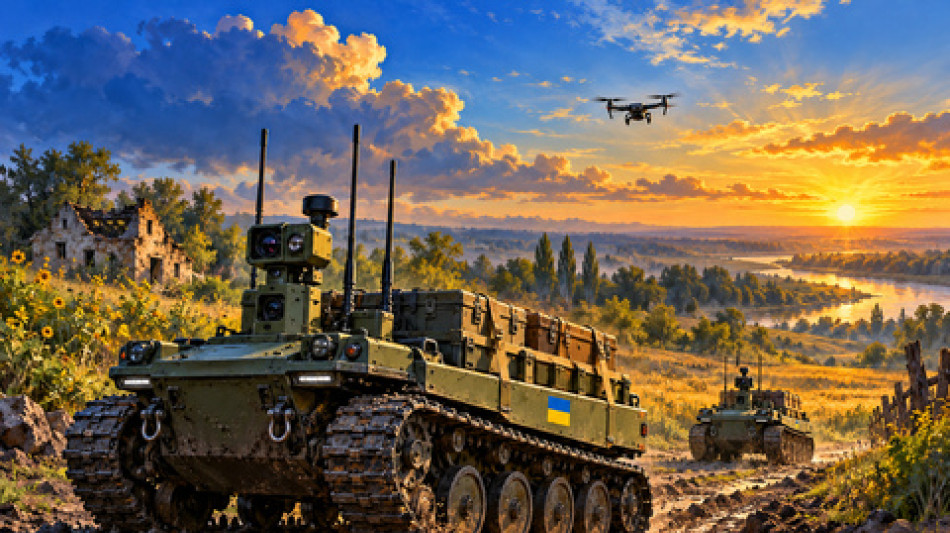
The language of peace has returned to the war in Ukraine, but its meaning is becoming harder, not easier, to read. Donald Trump says a settlement may be closer than it appears. Vladimir Putin again describes Russia as ready for a political solution. Volodymyr Zelenskyy has offered direct talks and argues that sustained pressure can create the conditions for diplomacy. Yet the conduct of the war tells a less reassuring story.Russia is intensifying missile and drone attacks on Ukrainian cities. It has not accepted a ceasefire along the existing front. Moscow continues to demand control of the whole Donbas, including Ukrainian-held territory that Russian forces have not captured. Putin has spoken of compromise, but his definition still appears to require Ukraine to make the decisive concession before meaningful negotiations begin. That contradiction is the central fact of the present moment. Putin may be considering negotiation. He may even be examining possible routes out of the war. Neither necessarily means that he is prepared to accept peace on terms that preserve Ukraine's sovereignty, provide credible security, and prevent a renewed invasion after a pause. The question is therefore not whether the Kremlin is using the vocabulary of peace. It is whether the balance of military, economic, and political pressure has changed enough to alter Putin's underlying calculation.A war reaching back into RussiaUkraine's expanding long-range strike campaign has created the most serious pressure on Russia's home front since the full-scale invasion began. Refineries, oil depots, pumping stations, ports, military-industrial sites, and transport links have been hit at a tempo that Russia's air defences have struggled to contain. What was once a war presented to much of the Russian public as distant and controlled is increasingly visible in disrupted fuel supplies, queues at filling stations, export restrictions, and emergency measures.The energy campaign matters because oil and fuel occupy two positions at once in Russia's war system. They generate state revenue, and they sustain the military machine. Damage to refining capacity does not automatically deprive Russia of crude oil, nor does it immediately bankrupt the state. It does, however, force the Kremlin to make increasingly awkward choices between domestic consumption, military requirements, exports, repairs, and the protection of a vast industrial network.By early July, Russian petrol production was estimated to cover only about two thirds of seasonal demand. The government had restricted fuel exports and turned to additional imports and stock releases. Russian oil production forecasts were revised downwards for this year and next, while repeated attacks exposed the limits of protecting every refinery, port, and storage site across the world's largest country.This is not the economic collapse sometimes predicted since 2022. Russia retains reserves, coercive control, access to external markets, and an industrial base adapted to wartime priorities. It can still finance destruction on a vast scale. Nevertheless, the margin for error is narrowing. The broader economy is stagnating under the weight of high borrowing costs, labour shortages, inflationary pressure, weaker energy revenue, and military expenditure. The budget deficit has run above its annual target. Civilian sectors face competition for workers, capital, components, and transport capacity. War production can increase measured output while leaving households and non-military businesses poorer, less productive, and more vulnerable.For Putin, the danger is not simply a bad economic statistic. It is the gradual erosion of the social bargain that has sustained his rule: political passivity in exchange for order, predictable living standards, and the impression that the state remains in command. Fuel shortages are politically sensitive because they are immediate, widely shared, and difficult to disguise. They turn an abstract war into a daily inconvenience and a visible failure of administration.Even so, economic pain should not be confused with imminent political collapse. Putin's approval remains substantial, public dissent is tightly constrained, and the state possesses extensive tools of repression and patronage. Authoritarian systems can absorb costs that would destabilise a more open government. Pressure can encourage compromise, but it can also intensify repression and deepen a leader's determination to avoid the appearance of defeat.The battlefield has denied Putin an easy victoryRussia still occupies a large part of Ukraine and retains major advantages in manpower, artillery, missile production, and the ability to tolerate losses. Those realities are essential to any sober assessment. The Kremlin has not reached the negotiating table from a position of military helplessness. Yet the war has also denied Putin the decisive victory that was meant to justify its cost. Russian advances along the long eastern front have slowed. Ukrainian drones, mines, dispersed fortifications, and rapidly evolving battlefield surveillance have reduced the value of numerical superiority. Assault groups can gain ground, but often at severe cost and in increments too small to transform the strategic picture.The remaining Ukrainian-held part of Donetsk is especially important. Moscow presents full control of the Donbas as both an inevitable military outcome and a minimum political requirement. In practice, the towns and defensive lines still held by Ukraine form a difficult belt of fortified urban terrain. Capturing it would demand time, materiel, and soldiers on a scale that could require a more politically dangerous mobilisation.This explains why a ceasefire along the present line remains unattractive to Putin. It would leave his most frequently stated territorial objective incomplete. It would also freeze the evidence that, after years of warfare and extraordinary casualties, Russia had failed to subjugate Ukraine or conquer all the territory it claimed to have annexed.For the Russian Dictator Vladimir Putn (73), the Donbas is no longer only a military objective. It has become a test of personal authority and regime credibility. The war has been woven into the state's account of Russia's destiny, its confrontation with the West, and Putin's place in history. A settlement that looks like an unfinished campaign could therefore threaten the political narrative on which continued sacrifice has been justified. This is why battlefield frustration can produce two opposite outcomes. It can make negotiation rational because the cost of further gains becomes excessive. It can also make escalation emotionally and politically attractive because compromise would expose how limited those gains have been.Recent Russian behaviour points more strongly towards the second possibility. Large aerial attacks have continued even while peace has been discussed. June brought the highest monthly civilian casualty toll since the early phase of the invasion, with at least 265 civilians killed and more than 1,800 injured. Further heavy attacks struck Kyiv and other cities around the NATO summit in Ankara. Such operations do not prove that diplomacy is impossible, but they show that Moscow is still using mass violence to improve its position rather than preparing public opinion for mutual compromise.Negotiation is not the same as peaceThe diplomatic record since 2025 offers a useful warning. Renewed contacts have produced prisoner exchanges, technical discussions, and competing memoranda. These are valuable, particularly for families awaiting the return of captives. They have not resolved the fundamental conflict over territory, sovereignty, security guarantees, and Ukraine's future alignment. Putin says Russia is willing to negotiate on the basis of earlier understandings reached in talks with the United States and in previous Russian-Ukrainian discussions. The difficulty is that Moscow's interpretation of those understandings remains highly demanding. Ukraine is expected to surrender the rest of the Donbas, accept a permanently restricted strategic position, and trust that Russia will observe a settlement after repeatedly violating Ukraine's borders and earlier agreements.Kyiv cannot treat that as a neutral peace formula. Withdrawing from defensible territory would expose additional cities and transport routes. Formal territorial concessions made under force would create immense constitutional and political problems. Most importantly, a ceasefire without enforceable security guarantees could provide Russia with time to rebuild, rearm, and attack again from more favourable positions.Ukraine also pays a terrible price for continuing the war. Its cities remain vulnerable to ballistic missiles and mass drone attacks. Air-defence interceptors are scarce. Military recruitment is politically difficult. Families have endured death, displacement, occupation, and repeated attacks on energy infrastructure. No responsible analysis should romanticise endurance or assume that time carries no cost for Kyiv. That is why Zelenskyy's willingness to discuss direct talks matters. Ukraine is not rejecting diplomacy as such. It is rejecting a process in which the outcome is predetermined by Russian demands and in which a temporary pause substitutes for durable security.The distinction is crucial. A leader can enter negotiations for many reasons other than a desire for peace. Talks can be used to divide allies, delay new sanctions, constrain an opponent's military operations, improve international standing, or secure a pause for rearmament. They can also be used to transform battlefield control into political recognition. Putin has used diplomacy instrumentally throughout his rule. Any fresh initiative must therefore be judged less by conciliatory phrases than by decisions that carry a cost for Moscow. Three changes would be difficult to dismiss as mere theatre. The first would be acceptance of a monitored ceasefire without requiring Ukraine to abandon territory it still controls. The second would be a sustained reduction in long-range attacks on civilian centres and energy systems. The third would be a willingness to negotiate directly with Ukraine on security arrangements that include credible enforcement rather than vague assurances. None of those changes is yet visible.Western support has altered the timetableThe diplomacy is unfolding against a renewed Western effort to strengthen Ukraine. NATO members pledged 70 billion euros in military equipment, assistance, and training for 2026, together with commitments to maintain at least an equivalent level in 2027. Europe and Canada now finance most of the security assistance, reducing the immediate risk that a single political decision in Washington could end Ukraine's ability to resist.The Ankara summit also produced a warmer public relationship between Trump and Zelenskyy than many expected. Discussions about licensing Ukrainian production of Patriot interceptors and expanding joint defence manufacturing could become strategically important, although they will not solve Ukraine's immediate shortage of missiles. Building complex air-defence systems takes time, secure facilities, components, and sustained industrial co-operation.For Moscow, the political message may matter as much as the hardware. The assumption that Western support would steadily disintegrate has not been vindicated. European governments are spending more, defence production is expanding, and Ukraine's domestic arms industry has demonstrated an ability to reach targets far inside Russia.This changes the negotiating horizon. If Putin believed that another year of war would leave Ukraine isolated and militarily exhausted, delay would favour Moscow. If another year instead brings more Ukrainian drones, deeper European involvement, lower Russian energy revenue, and further strain on manpower, delay becomes less attractive. Trump's role remains unpredictable but potentially decisive. He has channels to both presidents, a preference for dramatic agreements, and considerable leverage over weapons, sanctions, and diplomatic recognition. His optimism can create momentum, but it can also encourage premature claims of progress. A settlement built around speed rather than enforceability would risk producing an armistice that merely schedules the next war. The strongest negotiating position for Washington and Europe is therefore not to promise peace at any price. It is to convince both sides, and especially Moscow, that continued aggression will not deliver better terms.The point of no returnThe phrase suggests a single dramatic moment, but wars of attrition rarely turn so neatly. The point of no return is more likely to be a convergence of pressures: the failure to capture the remaining Donbas at acceptable cost, repeated disruption of Russian energy infrastructure, a widening budget burden, the prospect of another mobilisation, and evidence that Western assistance will continue beyond the next political season.Ukraine is trying to create that convergence. Its deep strikes are designed not merely to damage individual facilities but to undermine the Kremlin's expectation that time is an ally. Western commitments serve the same purpose. They tell Putin that the price of waiting may rise faster than the value of any additional territory he hopes to seize.Yet this strategy carries danger. Leaders do not always respond to narrowing options with moderation. Putin may conclude that he must escalate before Russia's position deteriorates further. He may broaden attacks, intensify mobilisation, or attempt to frighten European states into limiting support for Kyiv. The closer the Kremlin comes to recognising that its original aims are unattainable, the greater the temptation to redefine escalation as proof of resolve.That makes the next stage unusually delicate. Pressure is necessary because Russia has shown little willingness to compromise when it expects military success. Pressure alone is insufficient because a cornered nuclear power must also be offered a credible route towards de-escalation that does not reward conquest. A workable process would probably begin with a verifiable cessation of attacks, extensive monitoring, and rapid mechanisms to investigate violations. It would need continued military support for Ukraine during negotiations, not as an alternative to them. Sanctions relief would have to be phased and reversible. Prisoners and unlawfully transferred civilians would need to be returned. The status of occupied territory might remain unresolved for years, but the use of force to change borders could not be legitimised.Above all, any agreement would require security guarantees strong enough to change Moscow's future calculation. Paper promises failed Ukraine before. The next arrangement would need capabilities, commitments, and consequences that remain credible after leaders and governments change.Is Putin finally considering peace?He is almost certainly considering the rising cost of rejecting it. That is a meaningful development, but it is not the same as accepting peace. Russia is under pressure, not defeated. Ukraine has gained leverage, but remains exposed. The Kremlin's public language has softened at moments, while its military conduct has hardened. Putin continues to seek a settlement that would confirm Russian gains, force Ukraine to surrender additional land, and leave Moscow with room to dictate the next phase of European security.The true threshold will be crossed only when the Russian leadership concludes that another season of war cannot improve its position enough to justify the human, economic, and political cost. The deep-strike campaign, the fuel crisis, slower battlefield progress, and firmer Western backing may be bringing that calculation closer. For now, however, Putin appears to be testing the price of peace rather than accepting its principle. The possibility of negotiation is real. Evidence of a genuine strategic decision to end the war is not.