-
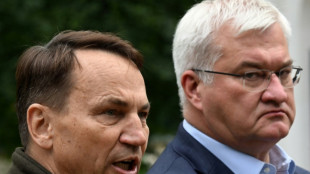 Poland, Ukraine slam Russian strikes near border as 'escalation'
-
Trump administration reluctant to slow AI, Democrats see urgent need
-
 iPhone 18預購後出現可疑扣款 四間銀行調查未授權交易
-
Can We Predict Volcanic Eruptions Like Weather? Scientists Seek Unified Physics

-
 Galaxy Tab S12系列效果圖曝光 Ultra擬配雙鏡頭及瀏海螢幕
-
اليورو يستقر في البنوك المصرية وأعلى سعر للبيع 59.85 جنيه

-
 Altman tells Fortune OpenAI will not go public in 2026
-
ستاندرد آند بورز تثبت تصنيف السعودية عند A+

-
 الأرصاد السعودية تتوقع سيولاً وأمطاراً رعدية في خمس مناطق
-
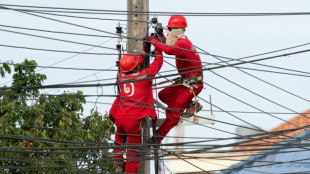
Lights out in Laos as electricity exports surge
-
 Steven Strogatz weighs AI mathematics advances and their consequences for researchers
-
Anthropic details Claude misuse as US targets major illicit online marketplace

-
 Venezuelans outside Caracas say capital not sharing blackout burden
-
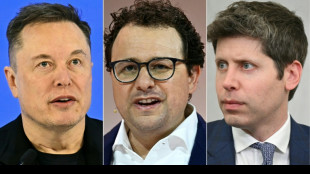
Anthropic boss calls for AI slowdown, Altman and Musk agree

-
 Anthropic boss calls for slowing pace of AI development
-
French IT giant Capgemini sells subsidiary after row over ICE links
-
 BRICS nations urge 'maximum restraint' in Middle East war
-
Quebec Brokerage Qubit Insurance Announces New Data on Coverage Shortfalls as Rebuilding Costs Rise

-
 Europe eyes battle over 'pervert' AI glasses
-
Lady Gaga welcomes first child with fiance: US media

-
 Children in flood-hit Nepal grapple with loss, cling to hope
-
Bhutan business bets on hazelnuts for farming future

-
 Venice Film Festival: A look back on the highlights
-
'Widow's Bay' and 'The Pitt' are favorites for Emmys night

-
 DR Congo school fire stampede death toll rises to 26: UNICEF
-
Coastal erosion forces cancellation of California music festival

-
 Dance Fitness Tempe Announces Expansion of Accessible Digital Movement Programs
-
Argentina's Dirty War rears its head in Venice film

-
 Europe saw record summer air traffic despite Mideast war: Eurocontrol
-
UK lawmakers throw out bill to legalise assisted dying

-
 Relatives of 9/11 victims hit out at Saudi Arabia -- and US leaders
-
US inflation steady in August, fueling Fed rate hike expectations

-
 Relative of 9/11 victim unleashes searing attack on Saudi Arabia
-
New York marks 25th anniversary of 9/11 attacks

-
 Czech antitrust office lets Turkey's Pegasus Airlines buy Smartwings
-
Nepal flood reconstruction bill to be $4.78 bn: foreign ministry

-
 Investors on edge as energy costs, surging bond yields roil markets
-
JUMO and Standard Bank launch Social Finance Framework to scale inclusive finance in Africa

-
 UK lawmakers to vote again on failed assisted dying bill
-
Doomsday tech: could AI really kill us all?

-
 Yemen's Houthis complete takeover of Bab al-Mandab area: govt official to AFP
-
French comedy show 'Call my agent' makes film comeback

-
 Fast-pace dance takes I.Coast's working-class streets by storm
-
It's all coming back: Celine Dion fans gear up for Paris return

-
 Fans celebrate Celine Dion's Paris return with giant karaoke
-
Researchers eye AI revolution in natural disaster forecasts

-
 Appreciation, anger await as Trump heads to Irish golf resort
-
US braces for inflation report that may push Fed to hike rates

-
 Putin arrives in India for BRICS summit coloured by wars
-
Musk threatens legal action over documentary

Global finance in few hands
More than fifteen years after the collapse of the housing bubble unleashed the worst financial crisis since the Great Depression, the institutions at the heart of the disaster have not only survived but thrived. The implosion exposed how private credit rating agencies stamped complex mortgage products as ultra‑safe, fuelling a boom that came crashing down. Yet those agencies continue to dominate the ratings business, while a handful of enormous asset managers exert unprecedented influence over companies and markets. This concentration of power raises profound questions about who ultimately controls the flow of money and risk in the global economy.
How rating agencies misjudged risk and kept their grip
Credit rating agencies are supposed to act as impartial referees that assess the probability that borrowers – whether governments, corporations or securitized vehicles – will repay their debts. During the lead‑up to the 2008 crisis, however, the leading agencies awarded top‑tier grades to complex mortgage‑backed securities that were anything but safe. Critics later concluded that the agencies used flawed models and overlooked the possibility of falling house prices. When the housing market turned, the same agencies slashed their ratings; one of them downgraded 83 percent of the mortgage securities it had deemed AAA the previous year.
The scandal exposed structural conflicts in the "issuer‑pays" business model: debt issuers pay for their own ratings, creating incentives to please clients rather than warn investors. Regulators in the United States and Europe imposed fines and enacted reforms, but the essential model remained. Today the three dominant agencies – Standard & Poor’s, Moody’s and Fitch – still control roughly 95 percent of the global ratings market. Their judgments affect everything from municipal bond yields to the interest rates on sovereign debt. Critics argue that private profit‑seeking companies continue to act as quasi‑regulators, effectively passing judgement on whether countries and corporations are worthy of investment.
Despite their role in the crisis, the agencies have prospered. One ratings firm reported 2025 revenue of roughly $7.7 billion, up 9 percent from the previous year, and forecast higher earnings and margins in 2026. Its credit‑rating division enjoyed a double‑digit revenue jump thanks to a surge of debt issuance by technology giants investing in artificial‑intelligence infrastructure. Investors have rewarded this growth; another agency’s share price hit record levels last year, and its executives reassured investors that the proprietary data underpinning its ratings provides an enduring competitive moat. Thus the firms that helped inflate the housing bubble continue to generate extraordinary profits by rating ever more complex instruments.
The rise of the “Big Three” asset managers
While rating agencies wield soft power through their opinions, a handful of U.S. asset managers now hold hard power over corporations. A decades‑long shift from actively managed funds to index‑tracking products has channelled trillions of dollars into a few firms. Three companies – BlackRock, Vanguard and State Street – collectively manage more than $30 trillion in assets and dominate roughly three‑quarters of the U.S. equity exchange‑traded fund market. They are the largest shareholder in about 88 percent of S&P 500 companies and cast about one‑quarter of the votes at shareholder meetings for those firms. Such concentration is unprecedented in capital markets and allows these managers to influence corporate strategies, executive pay and mergers.
Each firm followed a different path to dominance. BlackRock became the world’s largest asset manager through acquisitions; its 2009 purchase of Barclays Global Investors and its iShares ETFs catapulted the firm into market leadership. By the end of 2025 it oversaw about $14 trillion, with record inflows and a growing presence in private credit and infrastructure. Vanguard, organized as a mutual company owned by its investors, built a reputation for ultra‑low fees and tax efficiency; its funds now hold around $10 – 12 trillion. State Street pioneered the exchange‑traded fund in the early 1990s; although it manages fewer assets than its two rivals, its funds remain crucial for short‑term traders.
The influence of these firms extends beyond the United States. Europe’s market share of its own asset management industry has been shrinking as U.S. firms increase their footprint. A 2026 policy brief notes that BlackRock, Vanguard and State Street oversee about $26 trillion globally and are rapidly overtaking European competitors. U.S. asset managers have increased their share of the European market from about 40 percent in 2021 to an estimated 47 percent in 2026. European policymakers worry that the dominance of foreign managers could weaken the continent’s ambitions to align investments with environmental and social goals.
Hidden leverage and systemic risk
The concentration of financial power is not limited to ratings and asset management. Hedge funds, which operate largely in the shadows, have dramatically increased their borrowing. Recent data from the U.S. Office of Financial Research show that hedge fund borrowing reached about $7 trillion in late 2025 – a 160 percent increase since 2018. Repo financing and prime-brokerage lending each account for roughly $3 trillion of this total. Many funds use leverage ratios of 50:1 or even 100:1, meaning a small drop in asset values could wipe out their capital and threaten lenders. Analysts compare the situation to the buildup before the 1998 collapse of Long‑Term Capital Management, when hidden leverage and crowded trades required a Federal Reserve‑led rescue to prevent contagion. If rates rise or market volatility surges, today’s highly leveraged funds could trigger wider instability, forcing banks and central banks to intervene.
Public anger and calls for accountability
Outside boardrooms, public frustration over the perceived impunity of financial elites remains intense. Online comments reacting to recent reporting on rating agencies and asset managers reveal recurring themes. Many people argue that those who misrated mortgage securities and brought the global economy to its knees should have faced jail time rather than fines. Others ask who supervises the raters themselves and whether profit‑driven firms should hold so much sway over credit and investment decisions. There is widespread skepticism that financial crimes are ever punished and resentment that the same individuals and institutions continue to profit from the system they mismanaged. Some commenters see the complexity of modern finance as a deliberate obfuscation designed to enrich insiders at the expense of ordinary savers. Others lament that greed has been elevated to a virtue while accurate risk assessment, a vital public good, is outsourced to organisations whose incentives are misaligned.
Conclusion: Concentration and reform
The global financial system is far more concentrated today than it was on the eve of the last crisis. Three private ratings firms still dominate the assessment of credit risk despite their failure to foresee the housing crash and their conflicts of interest. Three asset managers hold sway over trillions of dollars, control huge voting stakes in the world’s biggest companies, and are expanding into private markets and public policy debates. Hedge funds borrow on a scale that could amplify market stress and force public rescues. Taken together, these trends raise uncomfortable questions about accountability, transparency and the balance of power in global finance.
Regulators in the United States and Europe have taken steps to increase oversight, but deeper reforms may be necessary. Possible measures include diversifying the ratings industry, breaking up overly dominant players, shifting away from the issuer‑pays model, and strengthening public or nonprofit alternatives. Policymakers could also encourage the growth of domestic asset managers in regions like Europe to reduce reliance on foreign firms and align investment flows with local goals. And to address systemic risk, regulators need better visibility into hedge-fund leverage and the ability to enforce limits. The financial crisis of 2008 demonstrated the catastrophic consequences of unchecked risk and concentrated power. The fact that the key players have emerged richer and more powerful underscores the need for vigilance and reform to prevent history from repeating itself.
Japan's financial precipice

Iraq vs. Iran – The end?
Malaysia's Strategic Ascent

Boomers: Selfish or Scapegoats?
North Korea Infiltrates Economy
California's Economy: Not Broken

Ukraine's Drones Bleed Russia

Orban and Putin's Shadow Deal

Saudi Arabia's Economic Crisis

Iran: Allies abandoned

Israel-Iran: USA Strikes