-
 Germany urges EU action against China to defend carmakers
-
Nepal floods among 'most challenging' disasters: WFP

-
 Japan eyes changing prostitution law to punish sex buyers
-
Kids and social media: what would change under new EU law

-
 Modi pitches India as global chipmaking hub
-
King Charles to call on tech giants for 'reassurances' over AI

-
 Ukraine plans record defence spending in 2027
-
STARPRIME Responds to Diverging Gold Market Demand with AM/PM Fixing and XAU24/7

-
 NASA scan discovers new, 'once in a century' Moon crater
-
Where the US-China tariff row stands ahead of White House summit

-
 Most stocks rise as Fed hikes and indicates drive to curb inflation
-
Indonesia cash-for-photos scheme turns animal hunters into protectors

-
 UK-Sudanese author pens book to give children 'African history of Africa'
-
Argentine judge orders suspension of Falklands oil project

-
 US Congress passes sweeping Russia sanctions bill
-
US Fed raises rates to tackle 'too high' inflation, irking Trump

-
 US stocks fall, dollar gains after Fed lifts interest rates
-
Turkey releases 106 protesters, jails more LGBTQ activists

-
 US Fed raises rates to tackle 'too high' inflation in move sure to rile Trump
-
Candidate for UN chief calls for AI regulation akin to nuclear weapons

-
 US Fed raises rates to battle inflation in move likely to rile Trump
-
'We're losing control,' AI pioneer Yoshua Bengio tells AFP

-
 US House faces test on sweeping Russia sanctions bill
-
IR-MED and Dice Technologies Announce collaboration to Evaluate and Advance Pressure-Injury Prevention Platform in Japan

-
 British PM says to make 'difficult decisions' as inflation rises
-
Watts, Pitt, Cruz to light up Spain's top film festival

-
 Global fuel price demos: a round-up
-
Toogood Gold's Table Mountain Sits in the Shadow of a Nevada Gold Rush

-
 Leverate Launches MCP for Traders to Connect AI Assistants With Trading Platforms
-
MEXC July–August Security Report: 38.66M USDT in Risk Funds Intercepted, Futures Insurance Fund Hits 792M USDT

-
 MEXC Launches $1M "Discover Your Wall Street DNA" Campaign to Help Traders Find Their Market Fit
-
Emporio Armani names Dario Vitale new creative director

-
 Stocks edge higher ahead of US Fed rate call
-
EU to ban social media for under 13s, curb access until 15

-
 BASIS.pro Expands On-Chain Infrastructure with XDC Network Partnership and Zypher DAO as Auto Earn Goes Live
-
Wildfires push endangered Sumatran elephants to brink: Indonesian NGO

-
 Pickle-flavoured tart? AI inspires Japan's convenience stores
-
Bank of Japan set to raise rates under pressure from inflation, US

-
 EU chief hosts Canada's Carney in push to 'deepen' alliance
-
EU chief to unveil social media, gaming curbs for under-15s

-
 Meta chief pushes back on AI slowdown calls
-
'Resident Evil' film brings video game's ethos to the big screen

-
 US Fed to deliver rate decision with markets betting on hike
-
GA-ASI Mojave First UAS To Complete Battlefield Short Field Ops

-
 i-payout Expands U.S. Money Transmitter Licensing Footprint and Advances European EMI Strategy
-
Sanders, Bannon warn of AI dangers in rare US left-right alignment

-
 US Senate crypto bill collapses amid partisan deadlock
-
Empty benches as schools reopen in Venezuela's quake-hit Guaira

-
 OpenAI, Anthropic and Google are working to create an AI standards body
-
Tiny English village holds 'independence' vote over asylum seeker housing

Cuba: The Regime's last Card
Cuba is once again living by candlelight—sometimes literally, often metaphorically. In early 2026, the island’s long-running economic malaise has hardened into something more acute: a national emergency measured in hours without electricity, kilometres of queues for fuel, cancelled flights, shuttered hotels, and hospitals forced to triage not merely patients, but the very basics of modern care.
Yet the most revealing aspect of the current crisis is not only the severity of the shortages, but the political wager now being placed by the Cuban state. The leadership has framed the moment as siege—an externally imposed strangulation that demands unity, discipline, and sacrifice. Internally, it has responded with a familiar repertoire: rationing, centralised control, and a tightening grip on dissent. But it has also reached for a newer, more corrosive tool: the managed dollarisation of everyday life, in which access to goods, services, and even connectivity increasingly depends on foreign currency.
This combination—emergency mobilisation, selective economic opening in hard currency, and heightened political control—amounts to a high-stakes gamble: a final card to keep the system upright without conceding the reforms that might undermine the monopoly of power. It may buy time. It may also accelerate the very social fracture it is meant to contain.
A crisis that has moved from inconvenience to paralysis
For years, Cubans have lived with scarcity as a condition of citizenship. What distinguishes the present moment is the way the fuel shock has cascaded into almost every sector at once—transport, refrigeration, water pumping, food distribution, telecommunications, and health care—each dependent on energy that the country can neither reliably produce nor easily import.
The most visible symbol of this escalation has been aviation. When an island begins to run short of jet fuel, it is not merely tourism that trembles; it is the sense of national connectivity, the flow of remittances and visitors, the movement of supplies, and the psychological reassurance that escape remains possible. As airlines curtail routes or rework operations to avoid refuelling on the island, the message to ordinary Cubans is stark: even the sky is rationed.
Tourism, one of the few remaining pillars capable of generating foreign exchange at scale, has been hit at precisely the time the government most needs dollars. Resorts and urban hotels that depend on stable logistics have faced mounting constraints: fuel for generators, transport for staff and goods, and reliable power for basic services. The state’s strategy—betting heavily on tourism infrastructure while the domestic economy contracts—has become increasingly brittle. A single disruption now ripples outward, exposing how narrow the margin for stability has become.
The state’s narrative: siege from without, discipline within
The Cuban government’s explanation is conceptually simple: Cuba is under attack. The island has faced decades of broad economic restrictions, and new measures aimed at disrupting energy supplies have tightened the noose. In official rhetoric, the crisis is not merely economic but geopolitical—an attempt to break national will by engineering privation.
That framing serves a purpose. If the country is besieged, then hardship becomes proof of patriotism; anger becomes suspect; protest becomes collaboration with an enemy. In practice, the language of siege has historically functioned as a political solvent: it dissolves the boundary between economic complaint and ideological betrayal. But siege narratives cannot keep food cold, nor can slogans power an ageing grid. As the crisis deepens, the state has relied increasingly on administrative controls: limiting transport, prioritising certain services, shortening work and study schedules, and suspending public events. These measures may reduce immediate demand for fuel and electricity. They also normalise emergency governance—an exceptionalism that can be extended, renewed, and enforced with minimal accountability.
The hidden fracture: an economy splitting into two realities
More consequential, and potentially more destabilising, is the government’s quiet admission—encoded in policy rather than speeches—that the peso is no longer a credible foundation for economic life. In effect, Cuba has moved towards a dual reality:
- A peso economy, in which salaries are paid and most citizens live.
- A hard-currency economy, in which essentials and opportunities increasingly reside.
The mechanics of this shift are straightforward. State retail outlets that transact in foreign currency, fees and services priced in dollars, and financial instruments designed to capture remittances have expanded the role of hard currency in daily life. The state’s logic is equally straightforward: it needs foreign exchange to import fuel, food, spare parts, and medicine; the domestic currency cannot reliably buy these things abroad; therefore, the state must extract dollars wherever they exist—especially from families with relatives overseas.
In the short term, dollarisation can stabilise specific supply chains and generate revenue. In the medium term, it is socially combustible. It transforms inequality from a matter of consumption into a matter of citizenship. Those with access to foreign currency can buffer themselves: buy food when shelves are bare, purchase fuel when transport collapses, maintain connectivity when data becomes expensive, and invest in private coping mechanisms such as batteries, solar panels, or generators. Those without it are left in a grey zone of queues, scarcity, and improvisation.
This is not merely an economic divide. It is an emotional one. When a state built on egalitarian mythology begins to operate a two-tier system in practice, it risks delegitimising its own founding narrative.
Electricity: the grid as a national stress test
Cuba’s electricity system has become an emblem of the broader predicament: decades of underinvestment, dependence on imported fuel, and vulnerability to single points of failure. The grid does not simply suffer from occasional breakdowns; it is structurally fragile. Transmission failures, generator trips, and equipment shortfalls can propagate into widespread outages because redundancy is limited and maintenance is constrained by lack of parts and capital.
Repeated nationwide disruptions over recent years have made blackouts a political barometer. People will tolerate hardship; they struggle to tolerate unpredictability. A planned outage is one thing; a cascading collapse that lasts for days is another. In those moments, the state’s authority is measured not by slogans or security forces, but by whether a household can refrigerate food, pump water, or run a fan in tropical heat.
The state has signalled an ambition to escape this trap through renewables, particularly solar and wind, often in partnership with external actors. These projects are essential, but they confront a hard reality: renewable generation is not merely about installing panels or turbines. It requires storage, a modernised grid, and significant capital investment. Without the ability to finance large-scale upgrades, the energy transition risks becoming a showcase rather than a solution.
In the meantime, the social meaning of electricity has changed. It is no longer a utility; it is a measure of belonging. Neighbourhoods with better infrastructure or privileged access fare differently from those without, intensifying the perception that the state can no longer guarantee a uniform baseline of dignity.
Health care under strain: when scarcity becomes clinical
Few institutions are as closely entwined with Cuba’s international identity as its health system. For decades, the country projected medical competence as both social achievement and diplomatic instrument. Today, that system is being squeezed by the same forces crushing the wider economy: energy shortages, fuel rationing, supply chain disruptions, and the absence of hard currency to import essentials.
The practical implications are severe. Hospitals depend on stable electricity for operating theatres, refrigeration for medicines, sterilisation, diagnostics, and basic ward functioning. Ambulances require fuel. Supply flights and transport corridors require logistics that an energy-starved economy cannot reliably sustain. In such conditions, medicine becomes improvisation: doctors forced to do more with less, families searching for drugs through informal markets, and patients absorbing the consequences of systemic fragility. When health care begins to fail at the margins—delayed treatments, intermittent power, shortages of inputs—the political risk deepens. A government can survive anger about prices or transport. It struggles to survive when people believe the state can no longer protect life itself.
Connectivity and control: the politics of the internet
In modern Cuba, the internet has become both an escape hatch and a battleground. It enables small private commerce, communication with diaspora relatives, access to information, and the organisation of everyday coping strategies. It also erodes the state’s ability to monopolise narrative.
Against that backdrop, sharp increases in mobile data costs have carried significance beyond the technical or financial. When connectivity becomes expensive relative to wages, the effect is not merely economic; it is political. Limiting access to data constrains the circulation of information and reduces the capacity for rapid social coordination—particularly among students, who have historically served as a sensitive early-warning system for shifts in public mood.
Student-led protests over data pricing have been especially notable because they cut against a long-standing assumption: that younger Cubans, exhausted by scarcity and disillusionment, would simply leave rather than confront. The very existence of organised, non-violent campus dissent suggests that the regime’s ideological hold has weakened at precisely the point when it most needs cohesion.
Repression as governance, not exception
The Cuban state has always contained a security architecture built to outlast crises. What changes in moments like this is not the existence of repression, but its centrality. When performance legitimacy collapses—when the state cannot reliably provide electricity, transport, or basic goods—it tends to rely more heavily on coercion and deterrence.
This dynamic has played out repeatedly since the mass protests of July 2021, which signalled a break in fear and a new willingness to voice grievance publicly. Since then, reports of harsh prison conditions, surveillance, intimidation, and punitive sentencing have reinforced a message: collective dissent will be met with costly consequences.
The danger for the regime is that repression is effective only when paired with some degree of social contract. Fear can suppress protest for a time; it cannot restore hope. In an environment where migration is harder, scarcity is deeper, and inequality is more visible, the state’s reliance on coercion risks becoming self-reinforcing: the more it represses, the less legitimacy it retains; the less legitimacy it retains, the more it must repress.
The external lifelines: Moscow, Beijing, and the geopolitics of survival
In crises of this magnitude, Cuba’s leaders do what Havana has long done: look outward for a patron, a partner, or at least a bridge of supplies. Russia has offered rhetorical support and signalled assistance in fuel and humanitarian inputs. China has been central to parts of the island’s renewable ambitions and infrastructure hopes. Mexico and others have provided humanitarian shipments even as energy politics shift.
Yet external lifelines come with limits. Any fuel relief eases pressure temporarily but does not resolve structural dependence. Renewable projects take time and require grid modernisation. Humanitarian supplies address symptoms rather than causes. Meanwhile, geopolitics is not philanthropy: assistance is shaped by the donor’s interests, capacities, and constraints.
Cuba’s vulnerability is therefore strategic as well as economic. When a nation’s baseline functioning depends on external decisions—shipping routes, sanctions enforcement, diplomatic bargaining—it loses autonomy in practice even when it insists upon sovereignty in rhetoric.
Migration: the safety valve that is narrowing
For many Cubans, migration has been the most reliable form of “reform”: a private solution to a public failure. Leaving reduces domestic pressure, brings remittances, and offers families a lifeline. But migration routes can close, policies can harden, and regional dynamics can shift. As pathways narrow, the social pressure that once dissipated through departure may instead accumulate at home.
The demographic consequences are already profound. The country is losing working-age citizens, draining skills, and eroding the tax and labour base needed for recovery. In the long run, a shrinking population cannot sustain an expansive state apparatus without either reform or collapse. In the short run, it can create a quieter island—less protest, fewer young people, and more dependency on remittances—until the remaining population reaches its own breaking point.
The “last card”: survive first, reform later—if ever
The Cuban system has endured for decades by mastering a particular art: crisis management without political liberalisation. When resources vanish, it tightens control. When legitimacy wanes, it invokes nationalism. When the economy falters, it experiments at the margins—opening space for private activity, then restraining it; courting foreign investment, then surrounding it with bureaucratic thorns; embracing foreign currency, then insisting it is only temporary.
In early 2026, that pattern has sharpened. The state is attempting to:
1. Ration scarcity through emergency measures that reduce demand.
2. Harvest dollars through managed dollarisation and remittance capture.
3. Deter unrest through surveillance, policing, and punitive examples.
4. Secure external relief through strategic alliances and humanitarian inflows.
5. Delay structural reform that might dilute central control.
This is the “last card” in the sense that it is less a strategy for recovery than a strategy for endurance. It presumes that the population can be stretched further, that inequality can be managed, that external pressure can be outwaited, and that the state can remain cohesive even as society frays.
But endurance has a cost. Each additional layer of emergency governance normalises decline. Each new hard-currency gate deepens resentment. Each act of repression reduces the reservoir of legitimacy. And each month of blackout politics teaches citizens a dangerous lesson: that the state may be permanent, but its promises are not. Cuba is under siege, yes—by external constraints, by climate shocks, by a global economy that punishes weakness. It is also under siege by its own accumulated contradictions: a centralised system that cannot generate prosperity, a leadership that fears openness more than stagnation, and a social contract increasingly denominated not in ideals, but in dollars and diesel.
The final card may keep the regime standing. It may also be the moment the country finally stops believing that standing still is the same as surviving.
Russia’s dollar pivot
Fentanyl trade unravels
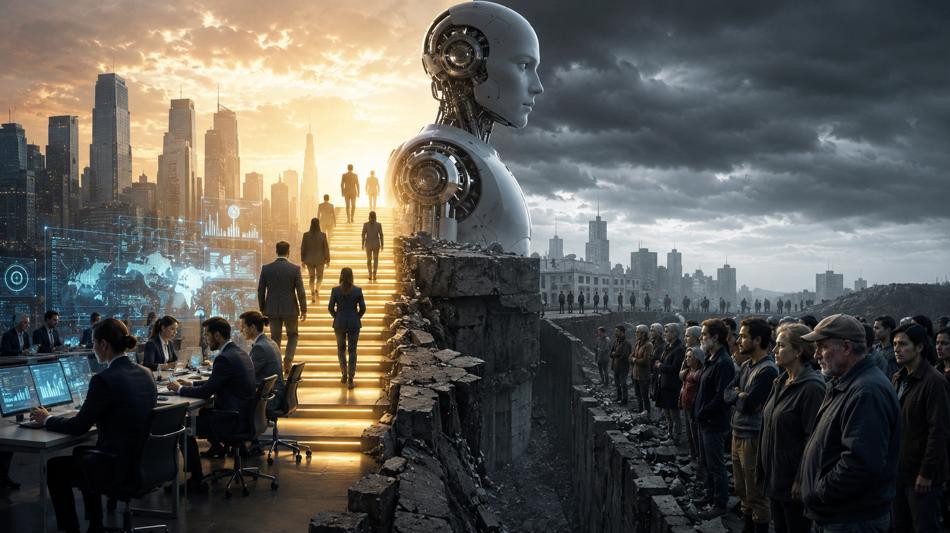
AI and the Future of Wealth
Unexpected economic twist
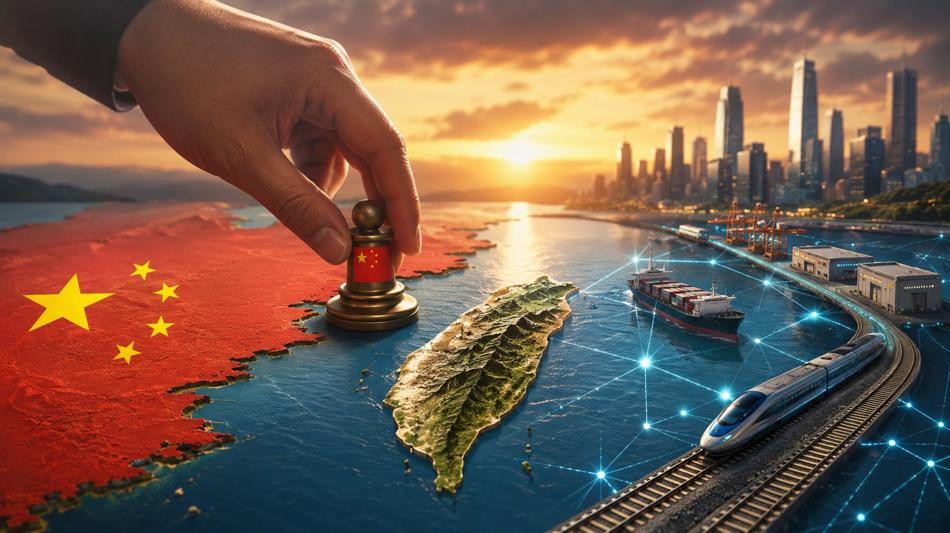
Beijing's new Taiwan playbook
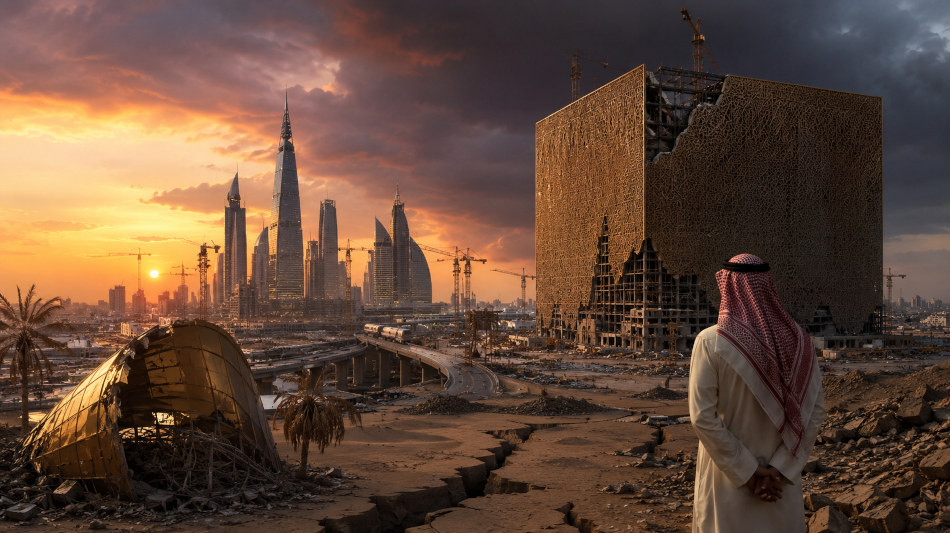
Saudi Arabia’s Costly Mirage
China's silicon reckoning
Putin's peace threshold
Latin America’s age trap
Sweden’s welfare reckoning
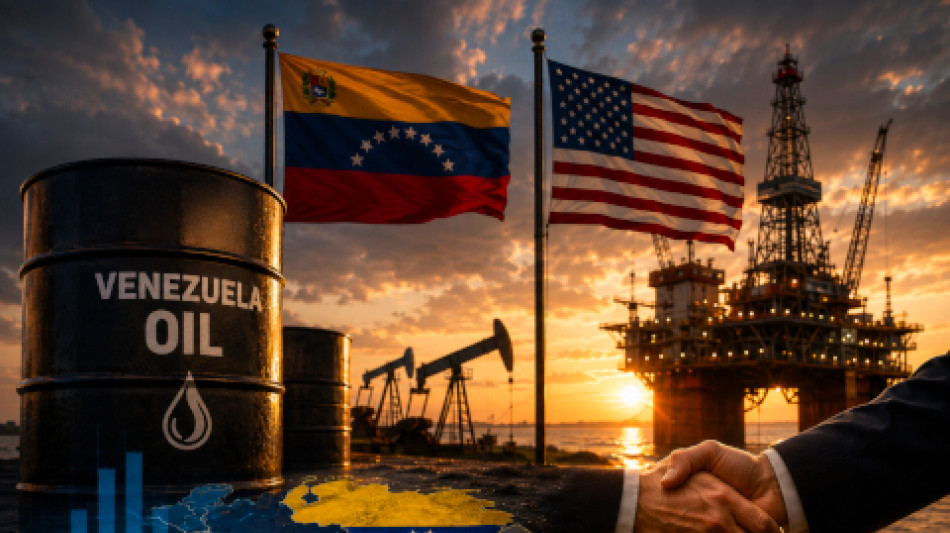
Venezuela’s Oil Return