Coin Press - Power at the Heart of Iran

NYSE - LSE
JRI 1.97% 12.7 $
NGG 3.82% 83.84 $
CMSC 0% 22.98 $
RIO -0.35% 103.33 $
CMSD -0.39% 22.96 $
BTI 1.9% 66.35 $
BCC 2.38% 67.6 $
AZN 1.27% 183.92 $
BCE 0.13% 23.82 $
GSK 1.17% 50.26 $
RBGPF 1.33% 62.51 $
VOD 2.13% 15 $
RELX 4.59% 33.96 $
RYCEF 1.3% 15.39 $
BP 2.93% 45.69 $

Power at the Heart of Iran


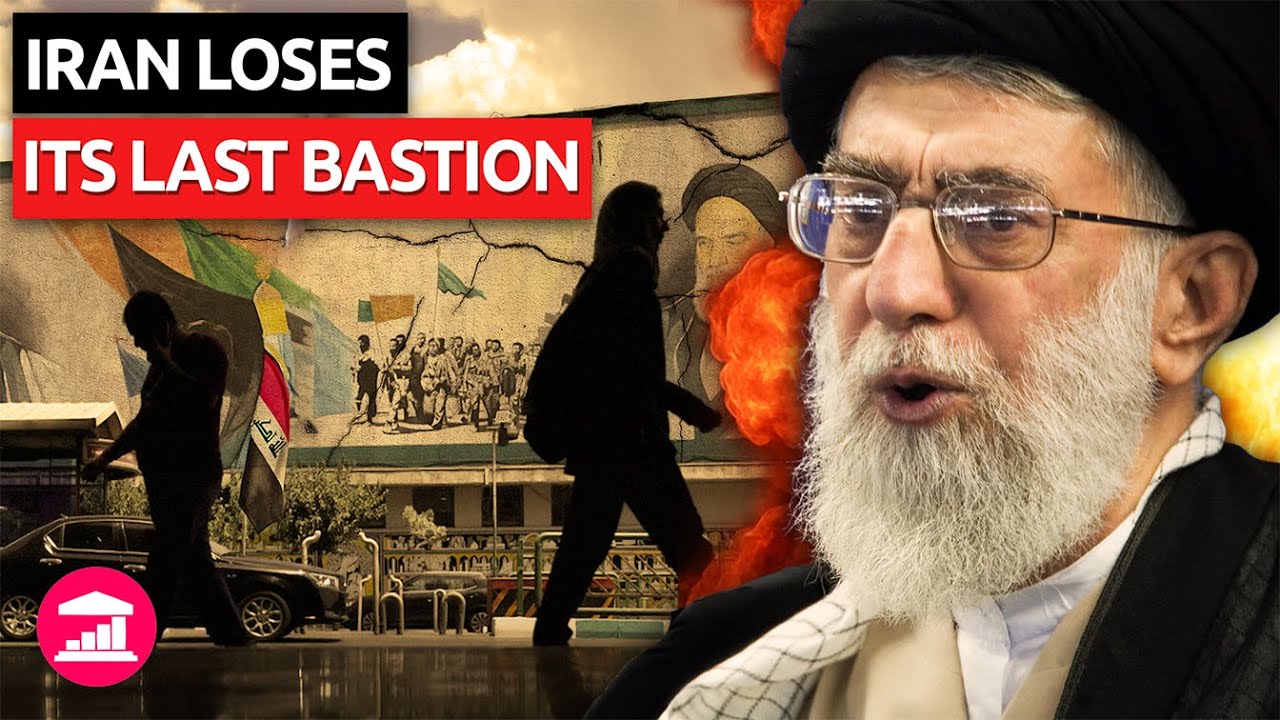
For more than four decades the Islamic Republic of Iran has combined the structures of a republic with those of a theocracy. The state’s founder, Ayatollah Ruhollah Khomeini, argued that political authority should flow from religious legitimacy under the theory of vilayat‑e faqih (the rule of the jurist). Iran therefore has an elected president and parliament, but these officials operate beneath a clerical hierarchy that answers to a single authority: the Supreme Leader. Ayatollah Ali Khamenei has held that office since 1989 and his title is literal—he has the ultimate say on all major policy decisions and presides over parallel power structures staffed by his loyalists. Recent mass protests, a plummeting economy and external military pressure have raised new questions about the future of the regime and who truly wields power.

The Supreme Leader’s Authority and Oversight
Under Iran’s constitution the Supreme Leader serves as head of state for life and sets national policy. He commands the armed forces, appoints the chiefs of the military and security services and influences key ministerial appointments. He also appoints half of the twelve‑member Guardian Council, which vets election candidates and can veto laws passed by parliament. While the Assembly of Experts is empowered to select and, in theory, dismiss the Supreme Leader, the body has never challenged Khomeini or his successor. In practice there are informal checks on the leader through elite consensus, but his authority remains the cornerstone of the system.

Despite Khamenei’s age—he is 86—and rumours about his health, he has not named a successor. Several figures are floated, including his son Mojtaba Khamenei and Hassan Khomeini, a grandson of the republic’s founder. The prospect of a hereditary succession has fuelled public anger and reinforced perceptions of a closed, unaccountable elite. Until the Assembly of Experts exercises its oversight powers, the Supreme Leader will continue to shape Iran’s domestic and foreign policies.

Elected Institutions with Limited Autonomy
Iran holds elections for president and parliament, but the scope of these offices is tightly circumscribed. The president implements laws, nominates ministers and manages the budget, yet he must operate within parameters set by the Supreme Leader. The parliament has lawmaking authority but its members and bills are screened by the Guardian Council. Reformist former president Mohammad Khatami saw many of his initiatives blocked by this vetting process.

The June 2024 presidential election, triggered by the death of President Ebrahim Raisi, produced a surprise reformist victory. Masoud Pezeshkian won after a second‑round vote with turnout of around 50 percent. As a moderate, he has advocated for easing social restrictions and reintegrating Iran into the global economy. Yet his room for manoeuvre is limited. Hard‑liners control the parliament following uncompetitive elections in 2020 and 2024, and the Guardian Council can block his policies. The parliament’s speaker, former Revolutionary Guards commander Mohammad Baqer Qalibaf, underlines the dominance of security insiders within ostensibly civilian institutions.

The Revolutionary Guards: A Parallel State
Outside the formal hierarchy stands the Islamic Revolutionary Guard Corps (IRGC). Formed after the 1979 revolution to defend the new Islamic order, the IRGC answers directly to the Supreme Leader and is not bound by the constitution. It has become a multifaceted organisation that functions as a militia, political party and economic conglomerate, with around 190 000 members and its own auxiliary force, the Basij. According to researcher Arash Azizi, the Guards control roughly half of Iran’s economy and act as a parallel state, shadowing the regular military and maintaining a pervasive presence in government ministries and state enterprises. They oversee large construction projects through their engineering arm, Khatam al‑Anbiya, and their Quds Force projects power abroad by supporting allied militias across the Middle East.

The IRGC has been central to recent crackdowns. When nationwide protests erupted on 28 December 2025 over economic grievances and demands for a more accountable government, security forces responded with unprecedented brutality. Amnesty International reports that the IRGC, its Basij battalions and police units used live ammunition and other unlawful force, resulting in mass killings and thousands of arrests. By early January 2026 the authorities cut off internet access to conceal the violence. Such actions reveal how the Guards sustain the regime through coercion—and how the regime relies on their loyalty.

Internally, the IRGC is not monolithic. It began as an ideological militia but has evolved into a network of elites pursuing power and wealth. Azizi notes that many commanders are pragmatic rather than doctrinaire; they may prioritise preserving their own privileges over defending the regime’s ideology. Some analysts therefore speculate that a future political transition could involve elements of the Guards if an opposition movement proves strong enough to negotiate with them.

Clerical Councils and Judicial Power
Complementing the Supreme Leader and the Guards are clerical bodies that shape law and succession. The twelve‑member Guardian Council ensures legislation conforms to Islamic principles and oversees all elections, disqualifying candidates deemed insufficiently loyal. The Expediency Council mediates disputes between the Guardian Council and parliament but is appointed entirely by the Supreme Leader, ensuring that the arbitration mechanism is not independent. The judiciary, led by clerics appointed by Khamenei, enforces conservative social codes and has overseen harsh sentences against dissidents and protesters. These bodies collectively entrench clerical oversight across the political system.

A Regime Under Pressure
Multiple factors now threaten this complex hierarchy. Externally, Iranian nuclear facilities and senior IRGC commanders were targeted in Israeli strikes in June 2025, exposing vulnerabilities in the country’s air defences and shaking public confidence. International sanctions have battered the economy, causing currency collapse, double‑digit inflation and shortages of essential goods. The winter 2025 protests were sparked by shopkeepers and quickly spread nationwide, with demonstrators calling for an end to the Islamic Republic and demanding basic rights and dignity. The deadly crackdown that followed has not resolved the underlying grievances; observers note that the regime has yet to regain equilibrium.

Internally, generational change is looming. Many Iranians, particularly women and youth, are demanding social freedoms and economic opportunities that the current system seems unable to provide. The death of President Raisi and the election of a reformist successor show that even within the regime there are competing visions. Yet as long as the Supreme Leader commands the loyalty of the IRGC and controls the clerical councils, meaningful change is unlikely to emerge from within the system.

Who Really Rules?
The Islamic Republic is often portrayed as a monolith, but power is distributed across overlapping institutions. The Supreme Leader remains the ultimate arbiter of policy, deriving his authority from religious doctrine and controlling key appointments. Elected officials carry out administrative functions but are constrained by clerical vetoes. The Revolutionary Guards enforce domestic order, advance Iran’s regional ambitions and dominate large swathes of the economy. Clerical councils and the judiciary ensure that Islamic ideology permeates legislation and succession processes.

In practice, the regime functions through constant negotiation among these centres of power. The Supreme Leader cannot govern without the Guards’ muscle and economic might; the Guards require his religious legitimacy and legal cover. Presidents and parliaments inject some responsiveness to public demands but remain subordinate. As protests shake the streets and external pressures mount, the real question is not whether one individual or institution rules Iran, but how long this coalition of theocratic authority and military-economic power can hold. The state’s survival depends on its willingness to reform or its ability to sustain ever‑greater repression. The coming years will determine whether the Islamic Republic’s current rulers can adapt to rising demands for change or whether a new constellation of forces will emerge to decide Iran’s future.


Featured


Long live Ukraine - Хай живе Україна - Да здравствует Украина

Es lebe die Ukraine - Да здравствует Украина - Long live Ukraine - Хай живе Україна - Nech žije Ukrajina - Länge leve Ukraina - תחי אוקראינה - Lang leve Oekraïne - Да живее Украйна - Elagu Ukraina - Kauan eläköön Ukraina - Vive l'Ukraine - Ζήτω η Ουκρανία - 乌克兰万岁 - Viva Ucrania - Ať žije Ukrajina - Çok yaşa Ukrayna - Viva a Ucrânia - Trăiască Ucraina - ウクライナ万歳 - Tegyvuoja Ukraina - Lai dzīvo Ukraina - Viva l'Ucraina - Hidup Ukraina - تحيا أوكرانيا - Vivat Ucraina - ขอให้ยูเครนจงเจริญ - Ucraina muôn năm - ژوندی دی وی اوکراین - Yashasin Ukraina - Озак яшә Украина - Živjela Ukrajina - 우크라이나 만세 - Mabuhay ang Ukraine - Lenge leve Ukraina - Nyob ntev Ukraine - Да живее Украина - გაუმარჯოს უკრაინას - Hidup Ukraine - Vivu Ukrainio - Længe leve Ukraine - Živjela Ukrajina - Жыве Украіна - Yaşasın Ukrayna - Lengi lifi Úkraína - Lank lewe die Oekraïne

Stargate project, Trump and the AI war...

In a dramatic return to the global political stage, former President Donald J. Trump, as the current 47th President of the United States of America, has unveiled his latest initiative, the so-called ‘Stargate Project,’ in a bid to cement the United States’ dominance in artificial intelligence and outpace China’s meteoric rise in the field. The newly announced programme, cloaked in patriotic rhetoric and ambitious targets, is already stirring intense debate over the future of technological competition between the world’s two largest economies.According to preliminary statements from Trump’s team, the Stargate Project will consolidate the efforts of leading American tech conglomerates, defence contractors, and research universities under a centralised framework. The former president, who has long championed American exceptionalism, claims this approach will provide the United States with a decisive advantage, enabling rapid breakthroughs in cutting-edge AI applications ranging from military strategy to commercial innovation.“America must remain the global leader in technology—no ifs, no buts,” Trump declared at a recent press conference. “China has been trying to surpass us in AI, but with this new project, we will make sure the future remains ours.”Details regarding funding and governance remain scarce, but early indications suggest the initiative will rely heavily on public-private partnerships, tax incentives for research and development, and collaboration with high-profile venture capital firms. Skeptics, however, warn that the endeavour could fan the flames of an increasingly militarised AI race, raising ethical concerns about surveillance, automation of warfare, and data privacy. Critics also question whether the initiative can deliver on its lofty promises, especially in the face of existing economic and geopolitical pressures.Yet for its supporters, the Stargate Project serves as a rallying cry for renewed American leadership and an antidote to worries over China’s technological ascendancy. Proponents argue that accelerating AI research is paramount if the United States wishes to preserve not just military supremacy, but also the economic and cultural influence that has typified its global role for decades.Whether this bold project will succeed—or if it will devolve into a symbolic gesture—remains to be seen. What is certain, however, is that the Stargate Project has already reignited debate about how best to safeguard America’s strategic future and maintain the balance of power in the fast-evolving arena of artificial intelligence.

US China race hits 2027

When NASA’s Artemis II crew splashed down in April 2026 after looping around the Moon, it rekindled interest in human spaceflight. The United States had not sent astronauts near the lunar surface in more than half a century, and its return came amid an unmistakable rivalry with a rising power. Over the last decade China has methodically tested rockets, landers and rovers, assembled its own orbital outpost and dispatched missions across the Solar System. The world’s two largest economies are now openly competing to build a permanent human presence on and around the Moon, to harvest its resources and to set the standards that will govern space for decades to come.Although the race evokes memories of the Cold War, experts stress that today’s contest is more complex. Rather than a sprint to plant a flag, the current competition is a marathon to establish infrastructure and routines for sustained exploration. It also includes commercial players, such as SpaceX and Blue Origin in the United States and a fast‑growing private sector in China. Political leaders in Washington and Beijing frame their objectives in terms of national prestige, economic opportunity and security, while scientists see the potential for breakthroughs in geology, physics and planetary science. In this multifaceted arena, the year 2027 looms as a pivotal test of each nation’s ambitions.Washington’s roadmap: Artemis and a moon baseThe United States is pursuing its lunar return through NASA’s Artemis programme. Artemis II demonstrated that the Space Launch System rocket and Orion spacecraft could carry a crew around the Moon and return safely. The next steps are more demanding. NASA plans a complex Earth‑orbit flight in 2027 in which Orion will practice docking with one or both of the commercial lunar landers now under development. This demonstration is essential for subsequent missions that will ferry astronauts to the lunar surface. Without a successful rendezvous and refuelling sequence, the agency cannot meet its goal of up to two crewed landings in 2028 and the construction of a lunar base in the early 2030s. NASA Administrator Jared Isaacman has warned that the United States is in a new space race and that failure to keep pace could damage American leadership. He argues that seeing Chinese taikonauts on the Moon before U.S. astronauts return would deliver a blow to American confidence and global influence.Policy makers in Washington view the timeline as tight. The launch of Artemis III, originally targeted for 2024, has slipped to 2028 after interim dates in 2026 and 2027. This drift reflects technical hurdles and shifting political priorities; over the past two decades U.S. lunar goals have changed with each administration. Under President Donald Trump, NASA’s focus returned to the Moon, and Congress has largely sustained funding. Lawmakers such as Senator Ted Cruz emphasise that America must simultaneously maintain leadership in low Earth orbit, where the International Space Station nears the end of its life, and embark on a new era of exploration. The challenge is to integrate commercial capabilities—particularly SpaceX’s Starship system, which will serve as a lunar lander—with NASA’s heavy‑lift rockets and Orion capsule. In low Earth orbit, U.S. companies are also competing to build private space stations as the ISS winds down.Behind the headline missions is a robust commercial ecosystem. SpaceX’s Falcon and Starship rockets have dramatically lowered launch costs, enabling a boom in satellite deployment and paving the way for large‑scale lunar logistics. Other firms are developing lunar landers, cargo services and in‑orbit data processing that uses artificial intelligence to analyze imagery directly in space rather than sending raw data back to Earth. Proponents say these technologies will revolutionize Earth observation, communications and defence, creating an “orbital economy” that could be worth trillions. Critics, however, worry about the potential for an uncontrolled proliferation of satellites, increasing the risk of collision and creating space debris—known as the Kessler syndrome—that could render some orbits unusable.Beijing’s blueprint: Chang’e, Tiangong and mega‑constellationsChina’s lunar ambitions were late to emerge but have progressed steadily since the Chang’e programme began in 2007. In the past decade the China National Space Administration has landed robotic spacecraft on the Moon’s near and far sides, returned lunar samples to Earth and placed two rovers on the surface. Its next steps include launching the Chang’e‑7 mission in late 2026 to explore the lunar south pole and Chang’e‑8 in 2029 to test technologies such as in‑situ resource utilization. These missions will lay the groundwork for an International Lunar Research Station that Beijing plans to build with Russia and other partners in the 2030s. Chinese officials say a crewed landing will occur before 2030, using the new Long March‑10 rocket, Mengzhou spacecraft and Lanyue lander. Tests of these systems began in 2025 and are progressing on schedule, according to state media.The difference between the U.S. and Chinese approaches is striking. China’s lunar timeline has remained largely steady, with milestones set years in advance and executed through successive five‑year plans. Analysts note that the one‑party state does not face the congressional budget battles or policy reversals common in Washington, allowing it to align industries, financing and state priorities around long‑term goals. Xi Jinping has framed space exploration as part of national rejuvenation, and the aerospace sector is listed among the strategic industries of the future. At the same time China is rapidly expanding its presence in Earth orbit. It operates the Tiangong space station, assembled in modules launched between 2021 and 2022, and plans to add a co‑orbiting telescope module. Chinese astronauts routinely conduct long‑duration missions and record‑setting spacewalks from Tiangong.Beyond human spaceflight, China is building its own satellite megaconstellations. The Thousand Sails network aims to deploy more than a thousand satellites by 2027 and potentially 14,000 by the 2030s to provide global broadband and compete with SpaceX’s Starlink. The defence‑oriented Guowang constellation could add another 13,000 satellites by 2035. China had over 800 satellites in orbit at the start of 2025—more than any country except the United States, which has nearly 9,000—but its launch rate is accelerating. In 2024 China launched 68 orbital rockets, second only to the U.S., and is testing reusable boosters and powerful new engines. It is also pursuing a Mars sample‑return mission that could bring material back to Earth by 2031, potentially beating NASA’s delayed Mars campaign. Observers say these achievements reflect an ecosystem that now rivals the U.S. in breadth, even if China still lags in private sector innovation and reusable rocket technology.Why 2027 mattersThe year 2027 stands out as a make‑or‑break point in the unfolding space competition. For NASA, the planned in‑orbit docking demonstration will show whether its architecture—combining the Orion crew capsule with privately built lunar landers—can actually work. This test has already been inserted into the Artemis sequence as a separate mission, and without it the agency cannot risk sending astronauts to the lunar surface. Success would keep the 2028 landing on track and bolster confidence in the United States’ ability to lead; failure could postpone human landings by years and give China a psychological and strategic advantage. Some observers argue that delays would also erode congressional support and funding, since political attention could shift to Mars or Earth‑orbit projects.For China, the mid‑2020s are equally crucial. By the end of 2026 the Chang’e‑7 probe is expected to deliver data from the Moon’s south pole, and the Thousand Sails constellation could surpass the 1,000‑satellite mark a year later. Meanwhile, low‑altitude tests of the Long March‑10 and Mengzhou systems in 2025 and 2026 will set the stage for full‑scale flight tests. If all proceeds as planned, China will enter 2027 with an integrated system for human lunar flight, a mature space station and an expanding commercial sector. The momentum could position Beijing to attempt its first crewed lunar landing by the end of the decade, perhaps just a year or two after Artemis III.The symbolic stakes of who returns to the Moon first resonate beyond space professionals. Many commentators see access to lunar resources such as water ice and helium‑3 as future economic boons, enabling fuel production, life support and even fusion energy. Others worry that these expectations could inflame geopolitical tensions and lead to the partition of the lunar surface. Online discussions are filled with references to science‑fiction series like For All Mankind and Star Wars, a sign of how popular culture shapes perceptions of space. Some people lament the absence of Europe in the high‑profile contest, expressing frustration that the European Space Agency is not competing at the same level. Others note that the proliferation of mega‑constellations could spoil the night sky for astronomy and raise the risk of collisions. A common thread is the belief that space is becoming another arena for geopolitical rivalry and that humanity must balance exploration with responsibility.What’s at stakeAt the heart of the new space race is a struggle over norms and infrastructure. The country that first establishes a sustained presence on the Moon will likely influence how lunar resources are allocated, how safety zones are defined and how future claims are adjudicated. China’s plan for an International Lunar Research Station is open to partners but would be led by Beijing and Moscow, while the U.S. promotes the Artemis Accords, a set of principles signed by more than thirty nations that emphasise transparency, peaceful use and the protection of heritage sites. The two frameworks represent competing visions of governance. Some analysts worry that parallel bases could harden rival blocs and complicate cooperation on scientific projects.Economic motives also loom large. The Moon’s south pole contains ice deposits that can be split into oxygen and hydrogen for rocket fuel; its regolith may hold helium‑3, a potential fuel for fusion reactors; and rare earth elements could be mined for electronics. Companies envisage extracting these materials and using them to support lunar factories, orbital refineries and interplanetary missions. Observers point out that many of these prospects are speculative and that the technological and legal challenges are formidable. Nevertheless, the prospect of a trillion‑dollar space economy drives investment from governments and venture capital. Commentators on social media often joke about “all those beautiful minerals” and wonder whether space will become a battlefield for humans. Others warn that competition could trigger an arms race, with anti‑satellite weapons and military platforms turning Earth orbit into a contested zone.Environmental concerns add another layer of complexity. Mega‑constellations of thousands of satellites enable global internet and Earth‑observing services, but they also contribute to light pollution and radio interference that hamper astronomical research. Critics argue that launching tens of thousands of spacecraft to benefit a small fraction of the population is not worth degrading the natural beauty of the night sky. Campaigners call for international regulation to ensure that orbits remain sustainable and that debris is removed. The U.S. Federal Communications Commission and international bodies are beginning to address these issues, but enforcement remains weak.Beyond the U.S. and ChinaWhile the rivalry between Washington and Beijing dominates headlines, other actors are shaping the space landscape. India, which landed a spacecraft near the lunar south pole in 2023, plans its own crewed missions and has an eye on lunar resources. Russia remains formally involved with China’s lunar base plan despite its own economic struggles. Private corporations across the globe are developing lunar landers, communications relays and space‑based manufacturing. Even as the European Space Agency grapples with funding and policy issues, European companies supply critical hardware, such as the service module for Orion and lunar lander technology. Japan, Canada and the United Arab Emirates are all planning missions that will contribute to lunar exploration or the construction of the Lunar Gateway, a planned station in lunar orbit.Taken together, these efforts suggest that the future of space will be multipolar. The outcome of the 2027 milestones will not end the race but will set the trajectory for the coming decade. Whether the United States and China choose to cooperate or compete will influence how quickly humanity establishes a foothold beyond Earth and whether the benefits of space are shared or monopolized.An uncertain finish lineThe United States and China are already locked in a fierce competition for space. Both nations have articulated ambitious lunar roadmaps, invested billions in rockets, spacecraft and infrastructure, and rallied their citizens with promises of national renewal and scientific glory. Yet the space environment today is far more complex than during the Apollo era. Private companies wield unprecedented influence, environmental and legal questions remain unresolved, and the stakes extend from lunar ice to orbital broadband and planetary defence. The year 2027 will be a crucial inflection point: a successful docking test for Artemis and the continued pace of China’s Chang’e and megaconstellation programmes will signal whether each nation can execute its plans on schedule. Failure or delay on either side could alter perceptions of leadership and open space for newcomers.As the countdown to these milestones advances, policymakers, engineers and citizens alike grapple with what the space race means. Will it inspire cooperation and new frontiers of knowledge, or will it deepen divisions and militarize the heavens? Will the Moon become a laboratory for sustainable living or a quarry for minerals? And can humanity develop rules and norms to manage an increasingly crowded sky? The answers will emerge over the next several years. For now, the only certainty is that the competition is real, the challenges are immense and the outcome will shape the cosmic future of us all.