Juneau food network combines difficult supply routes with deep sharing traditions

 UAE's HCT Holds Record Graduation and Announces Major Training Expansion

 IoT Refrigerator Hacks Disrupt Blood Labs and Supermarkets Across Europe and US

 British buyers pay substantial premiums for period-home appearance

 Dawn of War 4 developers chose Adeptus Mechanicus for tactical variety

 ChatGPT interactive interface feature tested across six custom tools
 Freshways milk-price cut deepens pressure on UK dairy farms
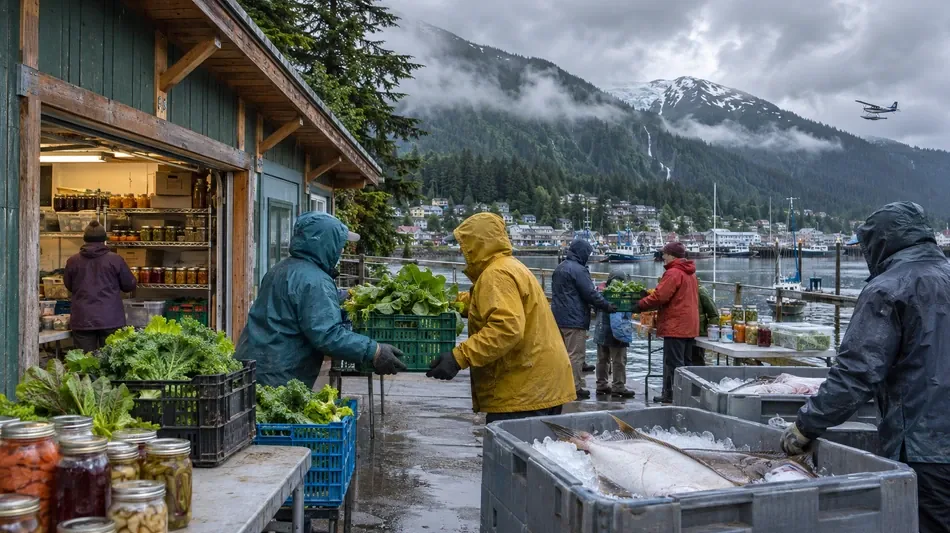
Alaska’s capital relies on barges, aircraft and community exchange to feed residents in a region with no road connection to the wider state network.
Juneau’s only highway ends about 40 miles north-west of the city, so most commercial food reaches its population of roughly 35,000 by water or air. Salt and Soil, operated by the non-profit Ecotrust, functions as an online farmers’ market and food hub, coordinating deliveries by ferry, barge and seaplane.
The often-cited claim that Alaska imports 95% of its food refers to products bought through the market and does not capture subsistence harvests or food shared without payment. State estimates indicate Alaskans gathered about 46 million pounds of wild food in 2014, the latest comprehensive figure.
Tlingit residents and other local communities maintain systems in which fish, game, plants and other foods circulate through extended families. Those networks provide an important layer of resilience in a city with little arable land, a short growing season and few commercial farms.
X.Wong--CPN