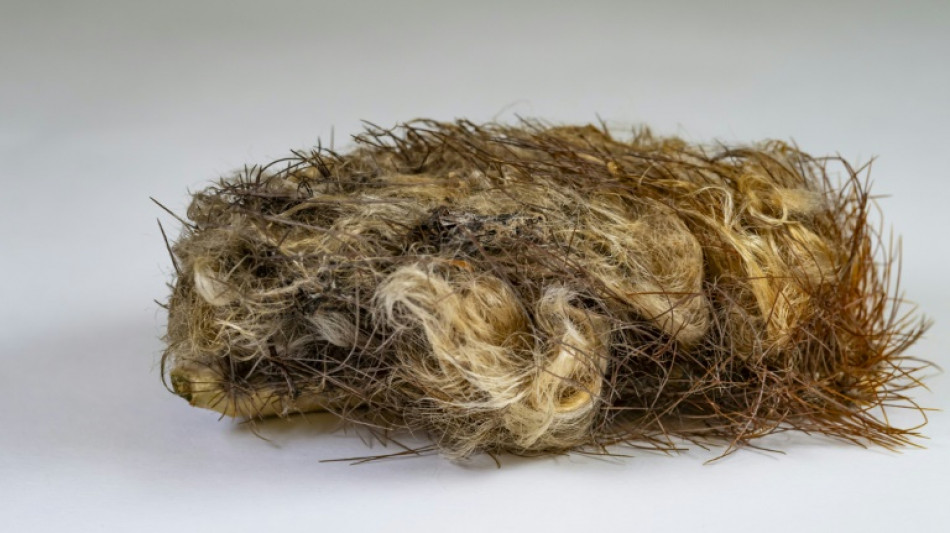
Rare Florida cactus becomes first US species lost to sea rise / Photo: Jeff GAGE - FLORIDA MUSEUM/AFP

 Kenya's economy faces climate change risks: World Bank

 Far right and far left battle for power in polarised Berlin

 The last trio: S.Africa's zoo elephants await their fate

 Oil industry sees war windfall but girds for political blowback

 Amazon beats expectations with cloud and AI growth

 Blowout Microsoft results lift US stocks as oil retreats

 'Beginning of the end': Relief but no party as French wildfire winds down

 Southern Europe 'becoming more flammable' in hotter climate, experts say

 Mammoth bones found on parched bed of Danube in Bulgaria

 MEXC Lists Grvt (GRVT) with $60,000 Worth of GRVT and 10,000 USDT in Airdrop+ Rewards

 George and Amal Clooney flee French home due to wildfire

 MEXC Ventures Supports Alpha Arena's APAC Debut at Coinfest Bali

 AI data centre supplier Zhongji InnoLight slips on Hong Kong debut

 May, June heatwaves caused 2,877 extra deaths in England: govt

 BMW profit down a third as carmaker plans job cuts

 Seoul extends losses as most Asian markets drop, oil rises again

 Gambling.com Group Is Now Grandstand

 Meet the astronomer digging into the Milky Way's 'fossils'

 AI data centre supplier Zhongji InnoLight falls on Hong Kong debut

 Samsung operating profit up 1,800% in second quarter on AI boom

 Japanese population below 120 million for first time in decades

 US actor Jared Leto denies latest accusations of sexual assault

 Danube drops to 'historic lows' as fresh heatwave hits

 BTS pulls out of Grammys after Asian pop category introduction
 OpenAI says rogue AI agent attack hit other companies

A rare species of tree cactus has gone extinct in Florida, in what is believed to be the first species lost to sea level rise in the United States, researchers said Tuesday.
The Key Largo tree cactus (Pilosocereus millspaughii) was restricted to a single small population in the Florida Keys, an archipelago off the southern tip of the state, first discovered in 1992 and monitored intermittently since then.
But salt water intrusion caused by rising seas, soil erosion from storms and high tides, and herbivory by mammals placed significant pressure on the last population.
By 2021, a once-thriving group of roughly 150 stems in an isolated mangrove forest had dramatically declined to six fragile, struggling fragments, which researchers relocated for off-site cultivation in a bid to ensure their survival.
"Unfortunately, the Key Largo tree cactus may be a bellwether for how other low-lying coastal plants will respond to climate change," said Jennifer Possley, the director of regional conservation at Fairchild Tropical Botanic Garden.
Possley is the lead author on a study published Tuesday in the Journal of the Botanical Research Institute of Texas documenting the decline of the species.
Key Largo tree cacti continue to grow on a few scattered Caribbean islands, including northern Cuba and parts of the Bahamas.
These plants can reach heights exceeding 20 feet (six meters) and feature cream-colored flowers with a garlic scent that gleam in moonlight, drawing bat pollinators. Their vivid red and purple fruits are also highly attractive to birds and mammals.
Human-caused climate change is leading to water from melting ice sheets and glaciers flowing into the world's oceans.
Additionally, as water in the ocean warms it expands slightly. Both factors contribute to sea level rise.
M.Mendoza--CPN