Prince Harry, Meghan end Nigeria tour with Lagos visit / Photo: Kola Sulaimon - AFP

 Nintendo producer 'all nervous' as Zelda classic remake hits shelves

 Three killed by storm in southern India

 Two hundred 'Cruise for life' passengers stranded in Cambodia

 Billionaire Ambani's Jio jumps 21% in market debut after record India IPO

 Sri Lanka's Tamil farmers fight to reclaim land after civil war

 'They don't care about us': Trump food aid cuts leave Americans struggling and angry

 Palestinian activist Khalil returns to Columbia after US detention

 Youths testify about 'despair' in unprecedented Canadian climate trial

 Storied Paris department store seeks bankruptcy protection

 Boeing shares tumble after it releases cautious growth forecast

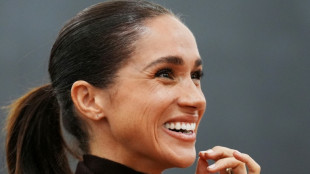
Prince Harry and his wife Meghan wrapped up their three-day visit to Nigeria on Sunday, arriving in the country's economic capital Lagos during a trip to promote his Invictus Games for wounded military veterans.
The Duke of Sussex arrived with his wife on Friday in Nigeria's capital Abuja where they visited a school event on mental health, in a trip that also saw the prince meet wounded Nigerian soldiers in the country's northwest.
On day three of the visit, Prince Harry and Meghan took part in a basketball event with the Giants of Africa Foundation in Lagos, an organisation that helps youth through engagement in the sport.
The prince practised dribbling basketballs with children at the exhibition event for the foundation, which is run by former NBA player Masai Ujiri.
"The power of sports can change lives, it brings people together and creates community and there are no barriers which is the most important thing," the prince said.
Harry, a former army captain who flew helicopters in Afghanistan, founded the Invictus Games 10 years ago to help bring wounded veterans into sporting events to aid with their recuperation.
The couple later met with Lagos State governor Babajide Sanwo-Olu and were also set to take part in a Lagos fundraiser.
"He has seen a lot and is still soaking in a whole lot," the governor said of the prince's experience of Nigeria.
- Nigerian heritage -
On Friday afternoon, Meghan sat on an event for women in leadership with Nigerian-born World Trade Organization director Ngozi Okonjo-Iweala, where the Duchess discussed her Nigerian heritage and being a role model to women.
"I want to start by saying thank you very much for just how gracious you've all been in welcoming my husband and I to this country," she said to applause, before adding, "my country".
"It's been really eye-opening and humbling to be able to know more about my heritage and to be able to know, this is just the beginning of that discovery."
In Abuja, the prince had also taken part in a seated volleyball match with Nigerian veterans, some of who were missing limbs from combat in the country's north where troops battle jihadists and heavily armed criminal gangs.
On the Duke's volleyball team was former Nigerian soldier Peacemaker Azuegbulam, who lost his leg in combat in the northeast, and became the first African to win gold at the Invictus Games in Germany last year.
Before Nigeria, Prince Harry was in London on Wednesday to mark the 10th anniversary of the games.
His trips to the UK since he moved to the United States in 2020 always prompt fresh speculation over a potential reconciliation with his family. But he did not meet with his father King Charles on this trip.
Nigeria's military forces are battling armed groups on several fronts.
A long-running jihadist insurgency in the northeast has killed more than 40,000 people and displaced another two million since 2009. Militants have been pushed back from areas they once controlled, but they now target convoys with roadside bombs.
H.Meyer--CPN