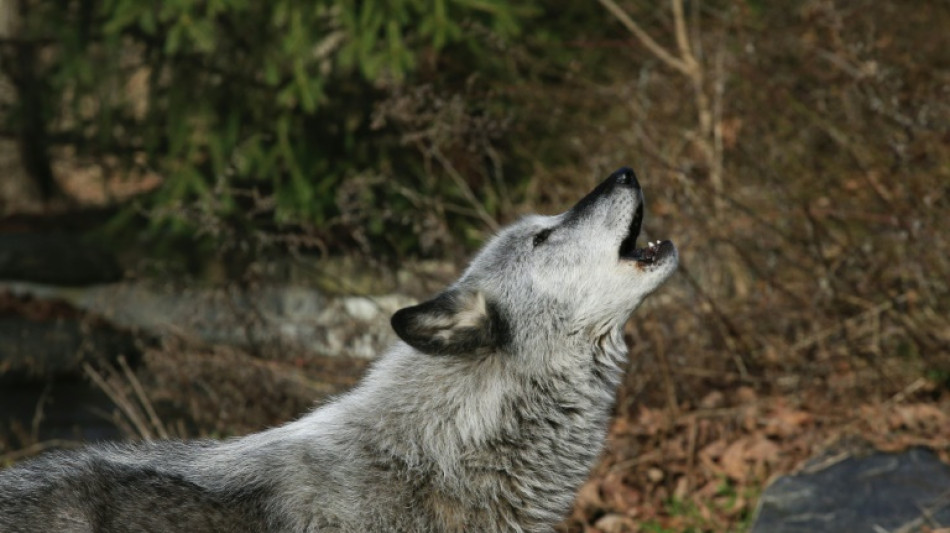
US Republicans vote to remove wolf protections / Photo: Kena Betancur - AFP/File

 Kenya's economy faces climate change risks: World Bank

 British oil giant BP aims to sell North Sea business

 China factory activity slides as leaders seek spending boost

 Tech rebound fuels record-breaking rally in South Korean stocks

 Cables and cooling bring AI windfall to Indian suppliers

 Anthropic's models gained unauthorized 'real-world' access during testing

 Apple tops estimates in CEO Cook's final quarter, but shares fall

 Milei demands expulsion of foreigners expressing 'hate' against Argentina

 Italy's Po River valley on drought alert

 Prada profits pinched as growth hard to chase

 Stocks climb on earnings and rates, oil retreats

 US economic growth slows in second quarter, missing expectations

 Russia adds Telegram founder Durov to 'terrorist' blacklist

 Stocks diverge on earnings, as oil steadies

 Eurozone economy grows despite Middle East war

 Singapore group will develop 'most promising' Ebola vaccine

 Shell profit surges as Mideast war fuels oil prices

 Car maker Stellantis says back in profit in second quarter

 Samsung quarterly operating profit up 1,800% on AI boom

 South Korean stocks bounce after rout, oil holds gains on Mideast woes

 South Korea's women web sleuths fight AI deepfake porn

 Anything but programmable: New cost-efficient EC-power-supply-series for the DIN rail by CAMTEC PS

 Meta misses profit expectations, sticks to massive AI spending

 Campari - king of the spritz - hopes to conquer American heartland

 Air France-KLM and Lufthansa bid for Portugal's TAP airline

The Republican-majority US House of Representatives on Tuesday passed a bill that would remove endangered species protections for the gray wolf across much of the country, sparking outrage among conservationists.
Sponsored by Representative Lauren Boebert, a right-wing firebrand from Colorado, the bill passed narrowly along party lines (209-205) and now heads to the Senate.
The White House on Monday announced its strong opposition to the measure, indicating a likely veto from President Joe Biden if it reaches his desk.
In October 2020, former president Donald Trump removed gray wolves from their protected species status, which was put in place in the 1970s after their near extinction in the continental United States.
These protections were restored by a federal judge in February 2022, but not before the lapse in safeguards led to devastating losses: more than 200 were killed in a 72-hour hunting spree in Wisconsin, in just one example.
To supporters, the apex predators embody the free spirit of the American wilderness, while detractors see them as a threat to ranchers' livelihoods.
A quarter of a million wolves once roamed from coast to coast before European colonizers embarked on campaigns of eradication that persisted into the 20th century and all but wiped them out, outside of their Alaskan stronghold.
Today they number around 5,000 in the continental United States thanks to their listing on the Endangered Species Act.
But activists say recovery remains tenuous.
"If our elected leaders truly want to see this species fully recovered and properly delisted from the Endangered Species Act, they will vote no on this bill and allow wolves to continue their comeback story guided by best available science," said Robert Dewey of Defenders of Wildlife, one of more than 100 organizations that condemned the bill.
Y.Tengku--CPN