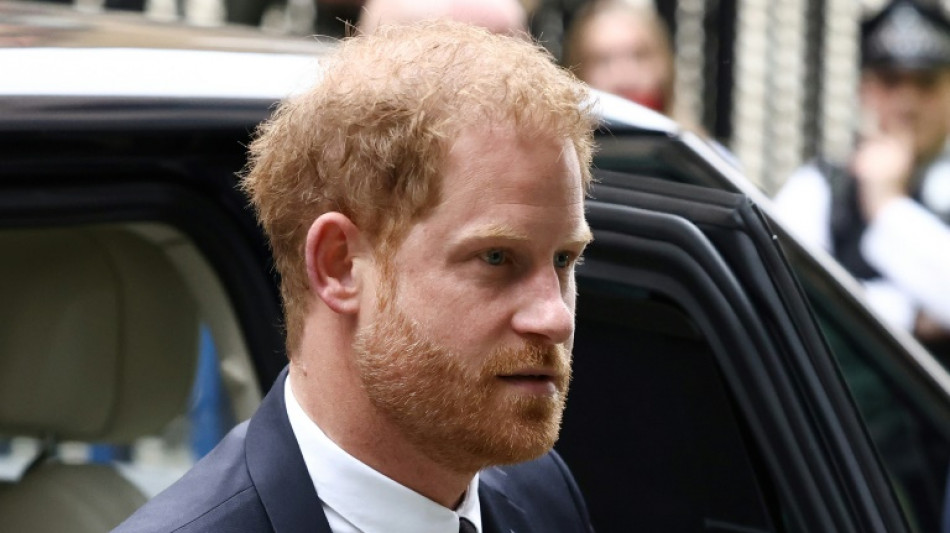
Prince Harry loses bid to appeal UK security ruling / Photo: HENRY NICHOLLS - AFP

 Kenya's economy faces climate change risks: World Bank
 British oil giant BP aims to sell North Sea business
 China factory activity slides as leaders seek spending boost

 Tech rebound fuels record-breaking rally in South Korean stocks

 Cables and cooling bring AI windfall to Indian suppliers

 Anthropic's models gained unauthorized 'real-world' access during testing

 Apple tops estimates in CEO Cook's final quarter, but shares fall

 Milei demands expulsion of foreigners expressing 'hate' against Argentina

 Italy's Po River valley on drought alert

 Prada profits pinched as growth hard to chase

 Stocks climb on earnings and rates, oil retreats

 US economic growth slows in second quarter, missing expectations

 Russia adds Telegram founder Durov to 'terrorist' blacklist

 Stocks diverge on earnings, as oil steadies

 Eurozone economy grows despite Middle East war

 Singapore group will develop 'most promising' Ebola vaccine

 Shell profit surges as Mideast war fuels oil prices

 Car maker Stellantis says back in profit in second quarter

 Samsung quarterly operating profit up 1,800% on AI boom

 South Korean stocks bounce after rout, oil holds gains on Mideast woes

 South Korea's women web sleuths fight AI deepfake porn
 Anything but programmable: New cost-efficient EC-power-supply-series for the DIN rail by CAMTEC PS
 Meta misses profit expectations, sticks to massive AI spending
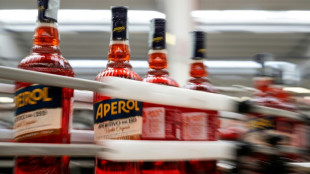 Campari - king of the spritz - hopes to conquer American heartland
 Air France-KLM and Lufthansa bid for Portugal's TAP airline

Prince Harry will not be allowed to appeal the downgrading of his personal security when he visits Britain, a court ruled on Monday.
The youngest son of King Charles III took legal action after the British government told him in 2020 that he would no longer be given the "same degree" of publicly-funded protection when he is in the UK.
The High Court ruled in February that the UK government had acted lawfully.
High Court judge Peter Lane said in a 52-page judgement that the "bespoke process" devised for him by a committee which is under the remit of the interior ministry "was, and is, legally sound".
A legal spokesman for Harry said at the time that he would try to turn to the Court of Appeal "to obtain justice".
A judicial spokesperson, however, said Monday that Harry had lost his initial bid to appeal against the decision.
The prince, also known as the Duke of Sussex, sensationally relocated to North America in 2020 with his wife Meghan, eventually settling in California in the United States, and is no longer classified as a working royal.
Harry told a hearing at London's High Court in December that security concerns were preventing visits back to Britain.
"The UK is my home. The UK is central to the heritage of my children," he said in a written statement read out by his lawyers.
"That cannot happen if it's not possible to keep them safe.
"I cannot put my wife in danger like that and, given my experiences in life, I am reluctant to unnecessarily put myself in harm's way too."
Harry's mother Princess Diana was killed in a high-speed car crash in Paris in 1997 as she tried to escape paparazzi photographers.
However, lawyers for the government rejected claims that he was "singled out" and treated "less favourably" or that a proper risk analysis was not carried out.
In May last year, a judge also sided with the government over its refusal to let him pay for specialist British police protection himself.
The interior ministry argued then that it was "not appropriate" for wealthy people to "buy" protective security when it had decided that it was not in the public interest for such taxpayer-funded protection.
The legal action over his personal security is one of various lawsuits Harry has pursued in recent years in Britain, primarily concerned with alleged phone hacking by newspapers.
Earlier this month, he settled a long-running legal claim against Mirror Group Newspapers (MGN).
The prince is also bringing legal action against the publisher of the Daily Mail, while he and actor Hugh Grant are also suing News Group Newspapers, part of Rupert Murdoch's global media empire.
C.Smith--CPN