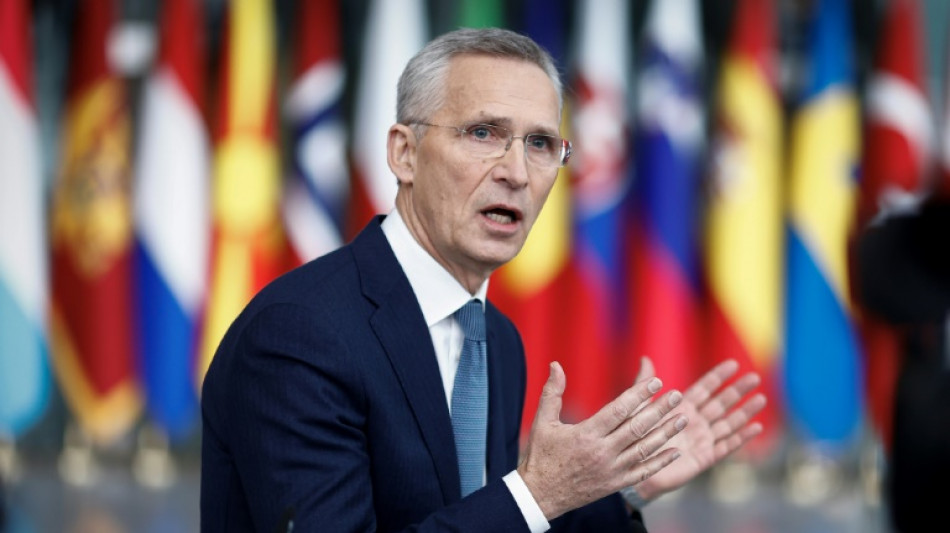
NATO marks 75 years in face of Ukraine war / Photo: Kenzo TRIBOUILLARD - AFP

 Kenya's economy faces climate change risks: World Bank
 British oil giant BP aims to sell North Sea business

 China factory activity slides as leaders seek spending boost
 Tech rebound fuels record-breaking rally in South Korean stocks

 Cables and cooling bring AI windfall to Indian suppliers
 Anthropic's models gained unauthorized 'real-world' access during testing

 Apple tops estimates in CEO Cook's final quarter, but shares fall

 Milei demands expulsion of foreigners expressing 'hate' against Argentina

 Italy's Po River valley on drought alert

 Prada profits pinched as growth hard to chase

 Stocks climb on earnings and rates, oil retreats

 US economic growth slows in second quarter, missing expectations

 Russia adds Telegram founder Durov to 'terrorist' blacklist

 Stocks diverge on earnings, as oil steadies

 Eurozone economy grows despite Middle East war

 Singapore group will develop 'most promising' Ebola vaccine

 Shell profit surges as Mideast war fuels oil prices

 Car maker Stellantis says back in profit in second quarter

 Samsung quarterly operating profit up 1,800% on AI boom

 South Korean stocks bounce after rout, oil holds gains on Mideast woes

 South Korea's women web sleuths fight AI deepfake porn

 Anything but programmable: New cost-efficient EC-power-supply-series for the DIN rail by CAMTEC PS

 Meta misses profit expectations, sticks to massive AI spending

 Campari - king of the spritz - hopes to conquer American heartland
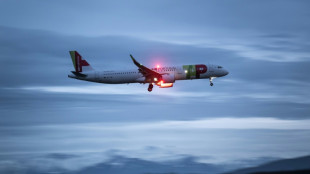 Air France-KLM and Lufthansa bid for Portugal's TAP airline

NATO on Thursday marks 75 years since its founding with the Western alliance confronted by the urgent need to do more to help Ukraine win a war currently roiling Europe.
Foreign ministers from NATO's 32 countries will hold a ceremony at its Brussels headquarters to fete the organisation that bills itself as the "most powerful and successful alliance in history".
But, amid the cake-cutting and speeches, NATO is grappling with one of its most serious challenges since it emerged from the ashes of World War II in 1949 to counter the Soviet Union.
"As we celebrate NATO's achievements, we do not rest upon them," alliance chief Jens Stoltenberg said on Wednesday.
"Europe now faces war on a scale we thought was resigned to history."
Since Russia launched its all-out invasion of Ukraine two years ago, a reinvigorated NATO has added Finland and Sweden to its ranks and bolstered its forces in eastern Europe.
Alliance members also have thrown their weight behind Kyiv -- which is bidding to join NATO -- by sending Ukraine weapons worth tens of billions of dollars.
But those supplies have now dwindled as support from leading NATO power the United States remains stuck by political wrangling. On the frontline, Ukraine's outgunned forces have been pushed onto the back foot.
In the face of surging Russian missile attacks on its infrastructure, Kyiv is pleading with its Western backers to send all the Patriot defence systems they can spare.
Stoltenberg, meanwhile, has proposed a 100-billion-euro ($108-billion) five-year fund in a bid to ensure long-term support for Ukraine.
He is also pushing to get NATO as an organisation more directly involved in coordinating deliveries, something the alliance has so far refused to do out of concern it could drag it closer to war with Russia.
- Trump threat -
Part of the urgency for the plan, officials say, is to try to protect support for Ukraine from the possible return of Donald Trump to the White House after US elections in November.
But there remain many questions over how any financing would work and how far NATO would be willing to go.
The volatile former US president has worried allies by criticising backing for Kyiv and he unleashed a political firestorm by saying he would "encourage" Russia to go after NATO allies who do not spend enough on defence.
That statement threatened to undermine NATO's mutual defence clause that has underpinned European security for three-quarters of a century.
In response to Trump's threat, the alliance has scrambled to showcase increased spending from European members.
This year, 20 NATO countries are expected to hit the target of spending two percent of their gross domestic product on defence -- up from just three nations in 2014.
"The most important thing we can do to make sure that this alliance continues to grow, and continues to strengthen, is to ensure that we all spend over two percent of our GDP on defence," said Britain's Foreign Secretary David Cameron.
"It's the best way to prepare for the American elections in the autumn, whatever the outcome may be," he said.
C.Smith--CPN