Victims of Denmark's adoption scandal demand answers / Photo: Camille BAS-WOHLERT - AFP

 Kenya's economy faces climate change risks: World Bank

 Profits surge at US oil giant amid Iran war supply shock
 Stock markets rally on tech rebound

 France, Spain assess scorched terrain as new wildfires threaten other regions

 Chipmaker Kioxia reports AI-driven 45-fold surge in quarterly net profit
 Far right and far left battle for power in polarised Berlin

 The last trio: S.Africa's zoo elephants await their fate
 Oil industry sees war windfall but girds for political blowback
 Amazon beats expectations with cloud and AI growth

 Blowout Microsoft results lift US stocks as oil retreats

 'Beginning of the end': Relief but no party as French wildfire winds down

 Southern Europe 'becoming more flammable' in hotter climate, experts say

 Mammoth bones found on parched bed of Danube in Bulgaria

 MEXC Lists Grvt (GRVT) with $60,000 Worth of GRVT and 10,000 USDT in Airdrop+ Rewards

 George and Amal Clooney flee French home due to wildfire

 MEXC Ventures Supports Alpha Arena's APAC Debut at Coinfest Bali

 AI data centre supplier Zhongji InnoLight slips on Hong Kong debut

 May, June heatwaves caused 2,877 extra deaths in England: govt

 BMW profit down a third as carmaker plans job cuts

 Seoul extends losses as most Asian markets drop, oil rises again

 Gambling.com Group Is Now Grandstand

 Meet the astronomer digging into the Milky Way's 'fossils'

 AI data centre supplier Zhongji InnoLight falls on Hong Kong debut

 Samsung operating profit up 1,800% in second quarter on AI boom

 Japanese population below 120 million for first time in decades

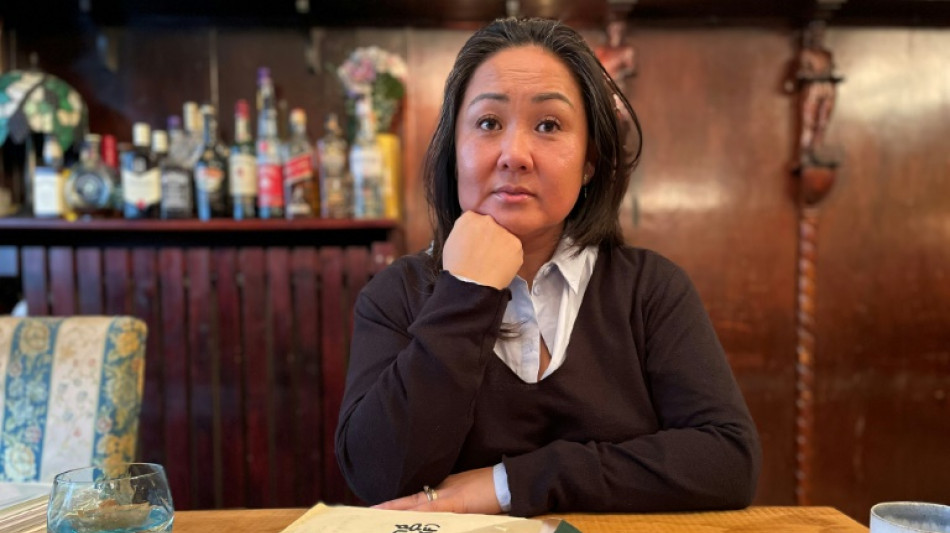
"I don't even know when I was born," said May-Britt Koed, a Copenhagen restaurant owner and one of the quarter of a million South Korean babies sent abroad for adoption since the 1950s.
Her adoption files contain two different birth dates months apart, which Koed suspects means she may have been exchanged for another baby that did not survive.
Experts say even the chubby baby picture sent to her Danish adoptive parents may not have been of her.
All the 47-year-old knows for sure is that "I arrived in Denmark on May 17, 1977".
Koed's case is far from isolated. The growing scandal over falsified records has prompted South Korea's Truth and Reconciliation Commission to look at hundreds of cases from the country's "baby farm" adoption industry during the decades of dictatorship that ended in the late 1980s.
Koed said her Danish Korean Rights Group has seen hundreds of files containing falsified documents, with some babies arriving in Denmark six centimetres (two inches) shorter than they were in their South Korea files.
A January report for Denmark's social affairs ministry found that some adoption agencies, operating under Danish state control, knew their South Korean partners were changing children's identities in the 1970s and 1980s.
More worrying still, "it's been documented that letters were being sent from (birth) parents who didn't know where their children were", said Marya Akhtar of the Danish Institute for Human Rights.
- 'Why didn't anything happen?' -
"And allegedly it looks like they were in the possession of authorities in Denmark," she added.
"Why didn't anything happen? We call for a thorough examination," Akhtar told AFP.
Danish adoption agencies also reportedly paid some 54 million kroner ($7.9 million) to Korean orphanages and other bodies over the years to facilitate the adoptions, according to media investigations.
Denmark suspended all international adoptions in January amid serious concerns over babies also brought from other countries including India and South Africa.
"It's like opening Pandora's Box," Koed told AFP.
"We are at a point where we can see that the Danish government has been involved," said Koed, whose group has called for an independent Danish commission into the trade.
"Everybody deserves to have that truth, especially the adoptees that are trying to piece together their own history," she said.
"I haven't searched for a biological family, I'm not sure I'm going to. I am doing this to discover the truth of what happened to all of us and to find out who is responsible," she added.
Time is of the essence for those who want to trace their biological families, with some already learning that their parents are dead, she added.
Copenhagen's freeze on international adoptions came after the last agency operating there closed down amid revelations of financial pressure and fraudulently acquired consent -- not only in South Korea but also in India, Madagascar and South Africa.
Brothers and sisters were separated and sometimes adopted to different countries.
Danish social affairs minister Pernille Rosenkrantz-Theil said there was "too high a risk of human trafficking or child theft".
Last year she promised an inquiry into the history of international adoption procedures.
Legal expert Klaus Josephsen, a lecturer at the University of Aarhus, said there "hasn't been enough control" of the system in Denmark.
"We have a private organisation, which has handled and taken care of those adoptions. They found children then created the papers and sent them to the Danish authorities," he added.
"We will not see those organisations anymore, because the government doesn't trust them. So I think we will get a new system, where the state will be active," Josephsen said.
C.Peyronnet--CPN