
-
 Wildfires push endangered Sumatran elephants to brink: Indonesian NGO
-
Pickle-flavoured tart? AI inspires Japan's convenience stores

-
 Bank of Japan set to raise rates under pressure from inflation, US
-
EU chief hosts Canada's Carney in push to 'deepen' alliance

-
 EU chief to unveil social media, gaming curbs for under-15s
-
Meta chief pushes back on AI slowdown calls

-
 'Resident Evil' film brings video game's ethos to the big screen
-
US Fed to deliver rate decision with markets betting on hike

-
 i-payout Expands U.S. Money Transmitter Licensing Footprint and Advances European EMI Strategy
-
Sanders, Bannon warn of AI dangers in rare US left-right alignment

-
 US Senate crypto bill collapses amid partisan deadlock
-
Empty benches as schools reopen in Venezuela's quake-hit Guaira

-
 OpenAI, Anthropic and Google are working to create an AI standards body
-
Tiny English village holds 'independence' vote over asylum seeker housing

-
 Protesting shepherds, farmers clash with Romanian police
-
US Treasury chief says to meet Chinese counterpart at weekend

-
 Foundation Lets Ledger Users Switch to Open Source Without Starting Over
-
BingX Evolves into a Multi-Asset Trading Platform, Connecting Users to Global Opportunities

-
 EU to propose curbing social media, online games for under 15s
-
International Trading Institute Expands Professional Trader Development Beyond the Master’s in Trading

-
 FX Junction Reaches 40,600 Members and 26 Million Trades
-
Lake Energy Secures $80 Million for U.S. Renewable Energy Expansion

-
 'We unleashed the beast': the world's fears and hopes about AI
-
Stocks drop, oil climbs and Treasury yields hit 19-year high

-
 Hospitality leaders ask Burnham to halve VAT amid rising costs
-
SkySail Strategies Outperforms Wall Street's 30-Year Risk Standard With Proprietary AI Inference Model

-
 Worcestershire invited to nominate groups for 2027 King’s volunteer award
-
Just add fish: Scientists pursue more rice, less disease in Senegal paddies

-
 Berlin's run-down public spaces at heart of election campaign
-
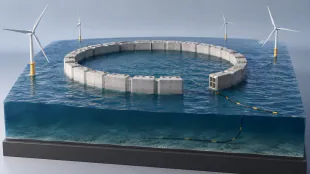
Belgium completes outer structure of offshore energy island
-
 'Widow's Bay' and 'The Pitt' win big at Emmy Awards
-
China retail sales growth weakens further in August

-
 Most markets drop as oil extends gains ahead of expected US rate hike
-
In Kashmir, lake weeds mix with traditional art

-
 Sri Lanka's famed beach shack battles demolition
-
'Widow's Bay' and 'The Pitt' take key Emmy awards

-
 Vserv targets ₹1,000 crore revenue by 2030 through AI expansion
-
Television's A-listers glitter on Emmys red carpet

-
 India prohibits bank fees on UPI payments up to ₹2,000
-
Air India CEO summoned over alleged departure immigration lapse

-
 Brazil's Amazon defender Raoni has cancer
-
HFCL expands planned fibre investment to ₹1,800 crore

-
 Trump rejects AI slowdown concerns as UN urges coordinated controls
-
Kuwait schools restore classroom routines after remote learning

-
 Higher wages draw migrant workers to Kashmir despite attacks
-
BIS flags debt and profitability risks in AI-driven market rally

-
 Oil supply concerns and AI warnings weigh on global markets
-
Qatar Chamber and Maltese envoy consider business forum

-
 'I am the hoax buster': Trump rejects AI danger warnings
-
Spanish PM denies being blackmailed by Morocco
Stakes 'never been higher' in climate fight: IPCC head
The stakes in the fight against global warming are higher than ever, the UN's climate science chief said Monday as nearly 200 nations met to finalise what is sure to be a harrowing report on climate impacts.
"The need for the Working Group 2 report has never been greater because the stakes have never been higher," Intergovernmental Panel on Climate Change (IPCC) Chair Hoesung Lee said in a live videocast.
Species extinction, ecosystem collapse, mosquito-borne disease, deadly heat, water shortages and reduced crop yields are already measurably worse due to rising temperatures.
Just in the last year, the world has seen a cascade of unprecedented floods, heatwaves and wildfires across four continents.
All these impacts will accelerate in the coming decades even if the carbon pollution driving climate change is rapidly brought to heel, the IPCC report is likely to warn.
A crucial, 40-page Summary for Policymakers -- distilling underlying chapters totalling thousands of pages, and reviewed line-by-line -- is to be made public on February 28.
"This is a real moment of reckoning," said Rachel Cleetus, climate and energy policy director at the Union of Concerned Scientists.
"This not just more scientific projections about the future," she told AFP ahead the two-week plenary. This is about extreme events and slow-onset disasters that people are experiencing right now."
The report will also underscore the urgent need for "adaptation" -- climate-speak which means preparing for devastating consequences that can no longer be avoided, according to an early draft seen by AFP in 2021.
In some cases this means that adapting to intolerably hot days, flash flooding and storm surges has become a matter of life and death.
- 'Doping the atmosphere' -
"The growth in climate impacts is far outpacing our efforts to adapt to them," said Inger Andersen, head of the UN Environment Programme, noting that climate change threatens to become a major driver of species loss.
IPCC assessments -- this will be the sixth since 1990 -- are divided into three sections, each with its own volunteer "working group" of hundreds of scientists.
In August 2021, the first instalment on physical science found that global heating is virtually certain to pass 1.5 degrees Celsius (2.7 degrees Fahrenheit), probably within a decade.
Earth's surface has warmed 1.1C since the 19th century.
"We have been doping the atmosphere with fossil fuels," World Meteorological Organization chief Petteri Taalas said Monday, comparing the result to the "enhanced performance" of Olympic athletes who used banned substances.
The 2015 Paris deal calls for capping global warming at "well below" 2C, and ideally 1.5C.
This report is sure to reinforce this more ambitious goal.
It will likewise underscore that vulnerability to extreme weather events -- even when they are made worse by global warming -- can be reduced by better planning and preparation, according to the draft seen by AFP.
This is not only true in the developing world, noted Imperial College professor Friederike Otto, pointing to massive flooding in Germany last year that killed scores and caused billions in damage.
- Tipping points -
"Even without global warming there would have been a huge rainfall event in a densely populated geography where the rivers flood very easily," said Otto, a pioneer in the science of quantifying the extent to which climate change makes extreme weather events more likely or intense.
The report will zero in on how climate change is widening already yawning gaps in inequality, both between regions and within nations.
The simple fact is that the people least responsible for climate change are the ones suffering the most from its impacts.
The report is also likely to highlight dangerous "tipping points", invisible temperature trip wires in the climate system for irreversible and potentially catastrophic change.
Some of them -- such as the melting of permafrost housing twice as much carbon as in the atmosphere -- could fuel global warming all on their own.
"There is a finite set of choices we can make that would move us productively into the future," said Clark University professor Edward Carr, a lead author of one of the report's chapters.
"Every day we wait and delay, some of those choices get harder or go away."
X.Cheung--CPN