
-
 Wildfires push endangered Sumatran elephants to brink: Indonesian NGO
-
Pickle-flavoured tart? AI inspires Japan's convenience stores

-
 Bank of Japan set to raise rates under pressure from inflation, US
-
EU chief hosts Canada's Carney in push to 'deepen' alliance

-
 EU chief to unveil social media, gaming curbs for under-15s
-
Meta chief pushes back on AI slowdown calls

-
 'Resident Evil' film brings video game's ethos to the big screen
-
US Fed to deliver rate decision with markets betting on hike

-
 i-payout Expands U.S. Money Transmitter Licensing Footprint and Advances European EMI Strategy
-
Sanders, Bannon warn of AI dangers in rare US left-right alignment

-
 US Senate crypto bill collapses amid partisan deadlock
-
Empty benches as schools reopen in Venezuela's quake-hit Guaira

-
 OpenAI, Anthropic and Google are working to create an AI standards body
-
Tiny English village holds 'independence' vote over asylum seeker housing

-
 Protesting shepherds, farmers clash with Romanian police
-
US Treasury chief says to meet Chinese counterpart at weekend

-
 Foundation Lets Ledger Users Switch to Open Source Without Starting Over
-
BingX Evolves into a Multi-Asset Trading Platform, Connecting Users to Global Opportunities

-
 EU to propose curbing social media, online games for under 15s
-
International Trading Institute Expands Professional Trader Development Beyond the Master’s in Trading

-
 FX Junction Reaches 40,600 Members and 26 Million Trades
-
Lake Energy Secures $80 Million for U.S. Renewable Energy Expansion

-
 'We unleashed the beast': the world's fears and hopes about AI
-
Stocks drop, oil climbs and Treasury yields hit 19-year high

-
 Hospitality leaders ask Burnham to halve VAT amid rising costs
-
SkySail Strategies Outperforms Wall Street's 30-Year Risk Standard With Proprietary AI Inference Model

-
 Worcestershire invited to nominate groups for 2027 King’s volunteer award
-
Just add fish: Scientists pursue more rice, less disease in Senegal paddies

-
 Berlin's run-down public spaces at heart of election campaign
-
Belgium completes outer structure of offshore energy island

-
 'Widow's Bay' and 'The Pitt' win big at Emmy Awards
-
China retail sales growth weakens further in August

-
 Most markets drop as oil extends gains ahead of expected US rate hike
-
In Kashmir, lake weeds mix with traditional art

-
 Sri Lanka's famed beach shack battles demolition
-
'Widow's Bay' and 'The Pitt' take key Emmy awards

-
 Vserv targets ₹1,000 crore revenue by 2030 through AI expansion
-
Television's A-listers glitter on Emmys red carpet

-
 India prohibits bank fees on UPI payments up to ₹2,000
-
Air India CEO summoned over alleged departure immigration lapse

-
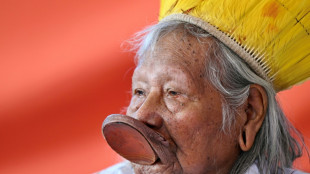 Brazil's Amazon defender Raoni has cancer
-
HFCL expands planned fibre investment to ₹1,800 crore

-
 Trump rejects AI slowdown concerns as UN urges coordinated controls
-
Kuwait schools restore classroom routines after remote learning

-
 Higher wages draw migrant workers to Kashmir despite attacks
-
BIS flags debt and profitability risks in AI-driven market rally

-
 Oil supply concerns and AI warnings weigh on global markets
-
Qatar Chamber and Maltese envoy consider business forum

-
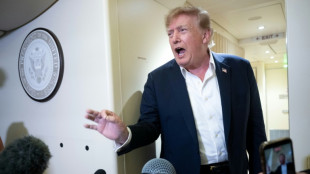 'I am the hoax buster': Trump rejects AI danger warnings
-
Spanish PM denies being blackmailed by Morocco
Swiss poised to ban nearly all tobacco advertising
Swiss voters appeared set Sunday to back a near-total ban of advertising for tobacco products but were expected to reject a blanket ban on animal testing.
Shortly after polls closed at noon (1100 GMT), projections from the gfs.bern polling institute indicated that around 57 percent of voters had backed the tobacco advertising ban.
It remained unclear, however, whether the initiative to ban all advertising for the hazardous products wherever minors might see it would secure support from enough of Switzerland's 26 cantons to land the double majority needed to pass.
Projections were less positive for votes on a number of other issues as part of Switzerland's direct democracy system. An initiative to ban animal testing for medical research was expected to be rejected by 79 percent of voters.
Switzerland lags far behind most wealthy nations in restricting tobacco advertising -- a situation widely blamed on hefty lobbying by some of the world's biggest tobacco companies headquartered in the country.
Currently, most tobacco advertising is legal at a national level, except for ads on television and radio, and ones that specifically target minors.
Some Swiss cantons have introduced stricter regional legislation and a new national law is pending but campaigners gathered enough signatures to spur a vote towards a significantly tighter country-wide law.
- 'Kills half of all users' -
Opponents of the initiative, which include the Swiss government and parliament, say it goes too far.
The world's largest tobacco company, Philip Morris International (PMI), -- which, like British American Tobacco and Japan Tobacco, is headquartered in Switzerland and has helped fund the "No" campaign -- described the initiative as "extreme".
"This is a slippery slope as far as individual freedom is concerned," a spokesman for PMI's Swiss section told AFP. He said it "paves the way for further advertising bans on products such as alcohol or sugar".
Jean-Paul Humair, who heads a Geneva addiction prevention centre and serves as a spokesman for the "Yes" campaign, flatly rejected that comparison.
"There is no other consumer product that kills half of all users," he told AFP.
Campaigners say lax advertising laws have stymied efforts to bring down smoking rates in the Alpine nation of 8.6 million people, where more than a quarter of adults consume tobacco products. There are around 9,500 tobacco-linked deaths each year.
- Animal testing -
While the effort to introduce a near-total ban on tobacco advertising appears likely to go through, there is basically no chance of efforts to ban all animal and human testing to succeed.
All political parties, parliament and the government opposed the initiative, arguing it goes too far and would have dire consequences for medical research.
Switzerland has rejected three similar initiatives by large margins since 1985.
Researchers say medical progress is impossible without experimentation, and even the Swiss Animal Protection group has warned against the initiative's "radical" demands.
Swiss authorities say the country already has among the world's strictest laws regulating animal testing.
As the laws have tightened, the number of animals used has fallen in recent decades, from nearly two million per year in the early 1980s to around 560,000 today.
In another animal-themed vote, first results indicated that inhabitants in the northern Basel-Stadt canton have massively rejected a bid to afford non-human primates some of the same basic fundamental rights as their human cousins, with over 75 percent opposed.
Among the other issues on Sunday's slate, initial projections also hinted that some 56 percent of voters had rejected a government plan to provide additional state funding to media companies, which have seen their advertising revenues evaporate in recent years.
The government had argued the extra funding could secure the survival of many small, regional papers which are in peril, and assist with their costly digital transition.
But the "No" campaign, backed by right-wing parties and publishers, charged the subsidy would mainly benefit large media groups and would be a waste of public funds.
D.Goldberg--CPN