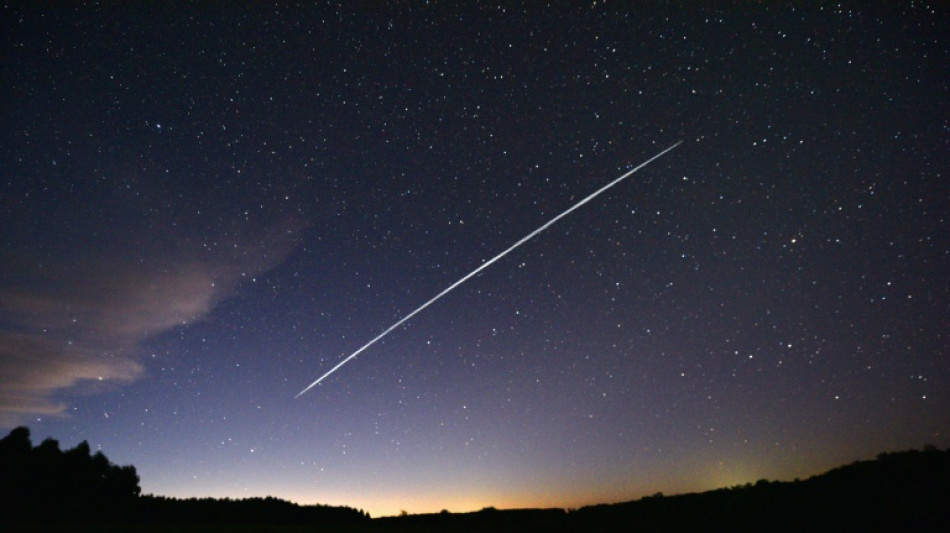
Dozens of SpaceX internet satellites lost to geomagnetic storm

 Wildfires push endangered Sumatran elephants to brink: Indonesian NGO

 Bank of Japan set to raise rates under pressure from inflation, US

 EU chief to unveil social media, gaming curbs for under-15s

 'Resident Evil' film brings video game's ethos to the big screen

 i-payout Expands U.S. Money Transmitter Licensing Footprint and Advances European EMI Strategy

 US Senate crypto bill collapses amid partisan deadlock

 OpenAI, Anthropic and Google are working to create an AI standards body

 Protesting shepherds, farmers clash with Romanian police

 Foundation Lets Ledger Users Switch to Open Source Without Starting Over

 EU to propose curbing social media, online games for under 15s

 FX Junction Reaches 40,600 Members and 26 Million Trades

 'We unleashed the beast': the world's fears and hopes about AI

 Hospitality leaders ask Burnham to halve VAT amid rising costs

 Worcestershire invited to nominate groups for 2027 King’s volunteer award

 Berlin's run-down public spaces at heart of election campaign

 'Widow's Bay' and 'The Pitt' win big at Emmy Awards

 Most markets drop as oil extends gains ahead of expected US rate hike

 Sri Lanka's famed beach shack battles demolition

 Vserv targets ₹1,000 crore revenue by 2030 through AI expansion

 India prohibits bank fees on UPI payments up to ₹2,000

 Brazil's Amazon defender Raoni has cancer

 Trump rejects AI slowdown concerns as UN urges coordinated controls

 Higher wages draw migrant workers to Kashmir despite attacks

 Oil supply concerns and AI warnings weigh on global markets

 'I am the hoax buster': Trump rejects AI danger warnings

Up to 40 SpaceX high-speed internet satellites have been knocked out of orbit by a geomagnetic storm shortly after launch, but pose little threat to Earth as they burn up in the atmosphere, the company said.
Geomagnetic storms are caused by ejections of the solar corona into space, resulting in disturbances to the Earth's upper atmosphere and increased drag on objects in low orbits.
The latest 49 satellites from the Starlink network launched from the Kennedy Space Center in Florida on February 3 and successfully assumed their initial orbit, with their nearest approach to the surface 130 miles (210 kilometers) high.
The company places them into this region to carry out final checks before flying further into space.
On February 4, however, they were struck by the space weather event, Elon Musk's company said in a statement late Tuesday.
"These storms cause the atmosphere to warm and atmospheric density at our low deployment altitudes to increase. In fact, onboard GPS suggests the escalation speed and severity of the storm caused atmospheric drag to increase up to 50 percent higher than during previous launches," it said.
The Starlink team commanded the satellites into a safe mode, where they would fly edge-on -- like a sheet of paper -- to minimize drag as they sought shelter.
But despite the evasive maneuver, most were unable to raise their orbits, and as many as 40 "will reenter or already have reentered the Earth's atmosphere."
The company insisted they posed "zero collision risk" with other satellites and are designed to disintegrate upon re-entry, with no debris expected to hit the ground.
The UK Space Agency agreed in a blog post that there was "virtually no risk" since the satellites are built without any dense metallic components and should burn up entirely, but said it was monitoring closely. NASA has not yet commented.
Apart from increasing atmospheric drag, geomagnetic storms can wreak havoc with satellites' computer circuitry and thus cause them to fail, according to space industry analyst Seradata.
Whatever the exact cause, the loss could point to a design weakness in Starlink satellites' ability to withstand such storms, Seradata's David Todd wrote in a post.
But it is not expected to impact the overall functioning of the Starlink "constellation."
SpaceX has launched more than 2,000 of the satellites since May 2019, with more than 1,500 currently operational, providing internet coverage across most of the planet.
The company currently has regulatory approval for 12,000 satellites, with plans to expand even further.
Astronomers have raised concerns about their impact on ground-based astronomy as they add to a congested environment in Low Earth Orbit (LEO).
There are approximately 4,000 active satellites in this space, which extends to 1,200 miles above the surface, as well as 15,000 pieces of debris like rocket bodies and defunct probes, according to the UK Space Agency.
X.Cheung--CPN