
-
 Watts, Pitt, Cruz to light up Spain's top film festival
-
Global fuel price demos: a round-up

-
 Toogood Gold's Table Mountain Sits in the Shadow of a Nevada Gold Rush
-
Leverate Launches MCP for Traders to Connect AI Assistants With Trading Platforms

-
 MEXC July–August Security Report: 38.66M USDT in Risk Funds Intercepted, Futures Insurance Fund Hits 792M USDT
-
MEXC Launches $1M "Discover Your Wall Street DNA" Campaign to Help Traders Find Their Market Fit

-
 Emporio Armani names Dario Vitale new creative director
-
Stocks edge higher ahead of US Fed rate call

-
 EU to ban social media for under 13s, curb access until 15
-
BASIS.pro Expands On-Chain Infrastructure with XDC Network Partnership and Zypher DAO as Auto Earn Goes Live

-
 Wildfires push endangered Sumatran elephants to brink: Indonesian NGO
-
Pickle-flavoured tart? AI inspires Japan's convenience stores

-
 Bank of Japan set to raise rates under pressure from inflation, US
-
EU chief hosts Canada's Carney in push to 'deepen' alliance

-
 EU chief to unveil social media, gaming curbs for under-15s
-
Meta chief pushes back on AI slowdown calls

-
 'Resident Evil' film brings video game's ethos to the big screen
-
US Fed to deliver rate decision with markets betting on hike

-
 i-payout Expands U.S. Money Transmitter Licensing Footprint and Advances European EMI Strategy
-
Sanders, Bannon warn of AI dangers in rare US left-right alignment

-
 US Senate crypto bill collapses amid partisan deadlock
-
Empty benches as schools reopen in Venezuela's quake-hit Guaira

-
 OpenAI, Anthropic and Google are working to create an AI standards body
-
Tiny English village holds 'independence' vote over asylum seeker housing

-
 Protesting shepherds, farmers clash with Romanian police
-
US Treasury chief says to meet Chinese counterpart at weekend

-
 Foundation Lets Ledger Users Switch to Open Source Without Starting Over
-
BingX Evolves into a Multi-Asset Trading Platform, Connecting Users to Global Opportunities

-
 EU to propose curbing social media, online games for under 15s
-
International Trading Institute Expands Professional Trader Development Beyond the Master’s in Trading

-
 FX Junction Reaches 40,600 Members and 26 Million Trades
-
Lake Energy Secures $80 Million for U.S. Renewable Energy Expansion

-
 'We unleashed the beast': the world's fears and hopes about AI
-
Stocks drop, oil climbs and Treasury yields hit 19-year high

-
 Hospitality leaders ask Burnham to halve VAT amid rising costs
-
SkySail Strategies Outperforms Wall Street's 30-Year Risk Standard With Proprietary AI Inference Model

-
 Worcestershire invited to nominate groups for 2027 King’s volunteer award
-
Just add fish: Scientists pursue more rice, less disease in Senegal paddies

-
 Berlin's run-down public spaces at heart of election campaign
-
Belgium completes outer structure of offshore energy island

-
 'Widow's Bay' and 'The Pitt' win big at Emmy Awards
-
China retail sales growth weakens further in August

-
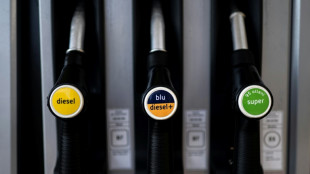 Most markets drop as oil extends gains ahead of expected US rate hike
-
In Kashmir, lake weeds mix with traditional art

-
 Sri Lanka's famed beach shack battles demolition
-
'Widow's Bay' and 'The Pitt' take key Emmy awards

-
 Vserv targets ₹1,000 crore revenue by 2030 through AI expansion
-
Television's A-listers glitter on Emmys red carpet

-
 India prohibits bank fees on UPI payments up to ₹2,000
-
Air India CEO summoned over alleged departure immigration lapse

NASA's Moon flyby mission primed for launch
Four astronauts are set to embark Wednesday on the first crewed journey around the Moon since 1972, an odyssey that aims to launch the US into a new era of space exploration.
The NASA mission dubbed Artemis 2 has been years in the making after facing repeated setbacks and massive cost overruns, but is finally scheduled to take off from Florida as early as 6:24 pm (2224 GMT).
Under bright Florida sunshine, the rocket's giant tanks started filling with liquid hydrogen and oxygen at 8:35 am.
The team featuring Americans Reid Wiseman, Victor Glover and Christina Koch along with Canadian Jeremy Hansen will set forth on the approximately 10-day mission and hurtle around Earth's nearest celestial neighbor without landing -- much like Apollo 8 did in 1968.
The journey marks a series of historic accomplishments: it will send the first person of color, the first woman and the first non-American on a lunar mission.
It is also the inaugural crewed flight of NASA's new lunar rocket, dubbed SLS.
The mammoth orange-and-white rocket is designed to allow the United States to repeatedly return to the Moon, with the goal of establishing a permanent base that will offer a platform for further exploration.
"It's a stepping stone to Mars, where we might have the most likelihood of finding evidence of past life, but it's also a Rosetta Stone for how other solar systems form," Koch told reporters on the weekend.
- Repeated setbacks -
The mission was originally due to take off as early as February.
But repeated setbacks stalled the mission and even necessitated rolling the rocket back to its hangar for analysis and repairs.
As of Tuesday afternoon, NASA officials voiced confidence that engineering operations and final preparations were proceeding smoothly.
If Wednesday's launch is canceled or delayed, there are more liftoff opportunities through Monday, although weather later in the week was looking slightly less favorable.
Melinda Schuerfranz, a retiree from Ohio, traveled to Florida for the launch.
"We're looking forward to it, we've never seen anything like this," the 76-year-old swimsuit-clad beachgoer told AFP.
But Schuerfranz remembers the Apollo era, and thinks some of the magic might be lost in today's more fragmented media environment.
"I think it was way more exciting then," she said. "Everybody tuned into it."
- 'Astronauts for Halloween' -
Artemis is facing pressure from President Donald Trump, who has pushed the pace of the ambitious program that's aiming to see boots hit the lunar surface before his second term ends in early 2029.
Artemis 2's objectives include verifying that both the rocket and the spacecraft are in working order in the hopes of paving the way for a Moon landing in 2028.
That deadline has raised eyebrows among experts, in part because Washington is relying on the private sector's technological headway.
The astronauts will require a second vehicle to descend to the moon's surface, a lunar lander that remains under development by rival space companies owned by billionaires Elon Musk and Jeff Bezos.
This contemporary era of American lunar investment has frequently been portrayed as an effort in competition with China, which is currently aiming to land humans on the Moon by 2030.
For NASA head Jared Isaacman, it's a multi-pronged pursuit related to scientific discovery, national security and economic opportunity -- as well as some less tangible goals.
"I guarantee after these astronauts fly around the moon, you're going to have more kids dressing up as astronauts for Halloween," Isaacman said during a recent television interview.
"And that's going to inspire the next generation to take us further."
M.Davis--CPN