
Asian economies move to limit Mideast war's impact at home / Photo: Jam STA ROSA - AFP

 US House faces test on sweeping Russia sanctions bill

 British PM says to make 'difficult decisions' as inflation rises

 Global fuel price demos: a round-up

 Leverate Launches MCP for Traders to Connect AI Assistants With Trading Platforms

 MEXC Launches $1M "Discover Your Wall Street DNA" Campaign to Help Traders Find Their Market Fit

 Stocks edge higher ahead of US Fed rate call

 BASIS.pro Expands On-Chain Infrastructure with XDC Network Partnership and Zypher DAO as Auto Earn Goes Live

 Pickle-flavoured tart? AI inspires Japan's convenience stores

 EU chief hosts Canada's Carney in push to 'deepen' alliance

 Meta chief pushes back on AI slowdown calls

 US Fed to deliver rate decision with markets betting on hike

 Sanders, Bannon warn of AI dangers in rare US left-right alignment

 Empty benches as schools reopen in Venezuela's quake-hit Guaira

 Tiny English village holds 'independence' vote over asylum seeker housing

 US Treasury chief says to meet Chinese counterpart at weekend

 BingX Evolves into a Multi-Asset Trading Platform, Connecting Users to Global Opportunities

 International Trading Institute Expands Professional Trader Development Beyond the Master’s in Trading

 Lake Energy Secures $80 Million for U.S. Renewable Energy Expansion

 Stocks drop, oil climbs and Treasury yields hit 19-year high

 SkySail Strategies Outperforms Wall Street's 30-Year Risk Standard With Proprietary AI Inference Model

 Just add fish: Scientists pursue more rice, less disease in Senegal paddies

 Belgium completes outer structure of offshore energy island

 China retail sales growth weakens further in August

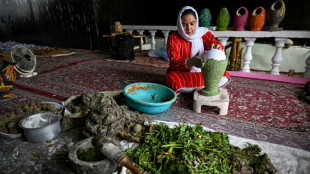 In Kashmir, lake weeds mix with traditional art

 'Widow's Bay' and 'The Pitt' take key Emmy awards

Faced with soaring prices and disruptions to their oil and gas supplies, Asian countries heavily dependent on fossil fuels from the war-struck Gulf are moving to protect their domestic markets.
Here are some of the measures being considered to limit the war's impact:
- South Korea eyes price caps -
South Korean President Lee Jae Myung has said the manufacturing powerhouse, the world's eighth-largest consumer of crude oil, is moving towards instituting fuel price caps to alleviate pressure on the country's energy supply.
"We should swiftly introduce and decisively implement a price ceiling system for petroleum products that have recently seen excessive price increases," he told a Monday cabinet meeting.
His chief of staff said Friday the country had already secured the "emergency delivery" of four million barrels of crude oil from ports in the United Arab Emirates.
- Vietnam moves to slash tariffs -
Vietnam has prepared a draft decree that would slash import tax rates to zero on certain petroleum products in a bid to "stabilise the domestic market", its finance ministry has said.
Current tariffs of 10 percent on unleaded gasoline and seven percent on diesel, aviation fuel and kerosene would all be temporarily removed under the decree.
- Japan may tap strategic stocks -
According to Japanese news agency Kyodo, Tokyo is considering drawing on its national oil reserves to protect itself against possible prolonged supply disruptions -- a measure being demanded by the country's refiners.
The government said last week that Japan had stocks equivalent to 254 days of crude oil consumption -- including reserves held by the private sector -- and three weeks of liquefied natural gas (LNG) consumption.
- Philippines keeps civil servants home -
Government departments in the Philippines, a country heavily dependent on oil imports, began adopting a four-day working week Monday to cope with soaring fuel prices.
President Ferdinand Marcos has also ordered all government agencies to reduce their fuel and electricity consumption by 10 to 20 percent, while police have warned against hoarding as queues were seen forming at some petrol stations.
- India gambles on Russia -
India has been pushing ahead with imports of Russian oil, after the United States issued a temporary waiver allowing New Delhi to buy Moscow's oil if it was currently stranded at sea.
An Indian government source, however, said that New Delhi does not need any country's permission to source the fuel from Russia, its largest crude supplier.
The source also said India was "well stocked" with more than 250 million barrels of crude and petroleum products to "handle short-term disruptions".
The country's petroleum ministry has reassured the public that India "has sufficient energy reserves", without ruling out potential measures to mitigate the impact.
- Taiwan locks down LNG supplies -
Taiwan, a country dominated by the tech industry and highly dependent on hydrocarbon imports, is moving swiftly to compensate for missing LNG from Qatar.
"We need to organise the supply of about 22 shipments of LNG for March and April," economic affairs minister Kung Ming-hsin said Monday, while noting 20 of those shipments had already been secured.
The government was also seeking to keep prices "as stable as possible" for consumers via "a fuel pricing formula" that would take into account neighbouring markets, he said.
- China suspends exports -
According to financial outlet Bloomberg News, China, the world's second-biggest economy, has asked its main refiners to suspend exports of diesel and gasoline to prioritise domestic needs.
The Middle East accounted for about 57 percent of China's direct imports of crude transported by sea in 2025, according to the analysis firm Kpler.
- Indonesia warns subsidies won't last -
Indonesia, under pressure due to a fiscal policy that worries the markets, warned of the limits of its room for manoeuvre.
"If the budget can no longer cope with (oil price increases), there is no other solution than to share... the burden with the population," Finance Minister Purbaya Yudhi Sadewa said Friday.
"This means that fuel prices will have to rise and the budget can no longer support" increased energy subsidies, he said.
- Cambodia ups prices at the pump -
Cambodia's commerce ministry set retail fuel prices higher for a three-day period to Tuesday, noting the increase was due to the spike in global oil prices.
The Southeast Asian country, which relies completely on imported diesel and petroleum for its consumer fuel needs, has enough reserves to last for about three weeks, its energy minister has said.
- Myanmar rations, but holds prices steady -
Since Saturday, Myanmar's military government has enforced rules to ration fuel, requiring half of all private vehicles to stay off the roads each day, depending on their licence plate numbers.
AFP reporters in Yangon have seen queues outside some petrol stations and restrictions on the amount of fuel sold to each driver, but the junta has only allowed modest price hikes so far.
- Thailand halts exports -
Thailand said last week it had secured two months' worth of oil supplies but was suspending exports to conserve its holdings.
The government also capped the price of diesel at just under 30 baht ($0.94) per litre for a 15-day period.
burs-cwl/mjw
Y.Ibrahim--CPN