
Nvidia smashes forecasts with record quarter as AI boom rolls on / Photo: Lionel BONAVENTURE - AFP

 亞歷克斯・博迪獲任命為 SCANDIC FINANCE 集團副總裁

 Alex Bodi appointed Vice President of SCANDIC FINANCE GROUP

 Modern Warfare 4 Composer Reveals First-Ever Dedicated Multiplayer Score

 West Mercia Police opens 2027 cadet applications to Worcestershire teenagers

 Goa plans relationship-readiness course amid concern over divorces

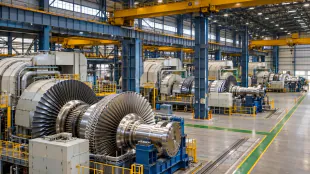 BHEL wins Adani Power projects valued at up to ₹28,000 crore

 India seeks threefold increase in coal stocks to prevent summer power shortages

 Indus Towers expands solar-powered network to 50,000 telecom sites

 Equitas Small Finance Bank rebounds after naming interim chief executive

 Titan quarterly profit seen rising as jewellery business drives growth

 Kuwait finance minister holds economic cooperation talks at COMCEC

 Kuwait marks key events and anniversaries from national history
Nvidia on Wednesday reported blockbuster quarterly results that blew past Wall Street expectations, posting record revenue of $68.1 billion as insatiable demand for its artificial intelligence chips showed no sign of cooling.
The figures -- up 73 percent from a year ago and well above the $65.7 billion analysts had forecast -- sent a powerful signal that the technology buildout dominated by Nvidia that underpins the global AI boom remains in full swing.
Net income for the quarter more than doubled year-on-year to $42.96 billion; the earnings release sent shares surging five percent in after-hours trading.
Nvidia designs the graphics processing units (GPUs) that have become the backbone of the global artificial intelligence boom.
Founded in 1993 by Jensen Huang, who remains CEO, the Santa Clara, California-based company commands a market capitalization exceeding $4.7 trillion, making it the world's most valuable publicly traded company.
Combined capital expenditure from the four major AI builders -- Google, Amazon, Meta and Microsoft -- could approach $700 billion this year as the tech giants race to stay ahead in the crucial technology.
A large share of that spending lands at Nvidia, which remains the dominant supplier of the AI chips and technology used to train and deliver generative AI capability.
Huang said the AI industry had reached a decisive turning point driven by the rise of so-called agentic AI — systems that can take decisions and act autonomously on behalf of humans.
"We have now seen the inflection of agentic AI and the usefulness of agents across the world," he said, adding that enterprises everywhere were seeing "incredible" demand because of it.
- 'Gone to AI' -
He pointed to the rapid adoption of AI coding and productivity tools — including Anthropic's Claude and OpenAI's Codex — as evidence that AI was now delivering tangible returns for both customers and cloud providers.
Speaking to analysts, he warned that the traditional software industry was being fundamentally transformed by this adoption, an argument that has seen shares in enterprise software companies spiral lower in recent sessions on Wall Street.
"What used to be software running on computers has now gone into AI," he said, "and that translates directly to growth, and that translates directly to revenues" for companies deploying AI solutions.
The company's data center division, which sells the high-powered chips used to train and run AI models, was once again the engine of growth.
Revenue from that segment hit a record $62.3 billion in the quarter, up 75 percent from a year earlier and up 22 percent from the prior quarter.
For the full fiscal year ending January 25, 2026, Nvidia reported revenue of $215.9 billion, up 65 percent from the previous year, with data center revenue reaching $193.7 billion -- a 68 percent annual gain.
Perhaps more significant for investors was Nvidia's guidance for the current quarter.
The company said it is not assuming any data center computing revenue from China in its outlook, an acknowledgement of the ongoing impact of US export controls on its ability to sell advanced chips to the world's second-largest economy.
Even if the US government has greenlit exports of "small amounts" of lower powered chips to China, "we have yet to generate any revenue, and we do not know whether any imports will be allowed into China," Nvidia CFO Colette Kress told analysts.
The company forecast the current quarter's revenue at $78 billion, plus or minus two percent -- comfortably above the roughly $72 billion Wall Street had been expecting, and a figure that analysts said would go a long way toward silencing doubts about the durability of AI infrastructure spending.
Considered a main bellwether for the AI phenomenon, the recurring question for Nvidia is whether the boom will continue to accelerate as the technology takes over more corners of the broader economy.
Despite increased volatility around AI on Wall Street, Nvidia shares are up by more than 50 percent over the past year, though just 2.2 percent year to date, before the latest earnings.
A.Zimmermann--CPN
