Homework will 'never be the same' says ChatGPT founder / Photo: Philip FONG - AFP

 Lights out in Laos as electricity exports surge

 Steven Strogatz weighs AI mathematics advances and their consequences for researchers

 Anthropic boss calls for AI slowdown, Altman and Musk agree

 French IT giant Capgemini sells subsidiary after row over ICE links

 Quebec Brokerage Qubit Insurance Announces New Data on Coverage Shortfalls as Rebuilding Costs Rise

 Lady Gaga welcomes first child with fiance: US media

 Bhutan business bets on hazelnuts for farming future

 'Widow's Bay' and 'The Pitt' are favorites for Emmys night

 Coastal erosion forces cancellation of California music festival

 Argentina's Dirty War rears its head in Venice film

 UK lawmakers throw out bill to legalise assisted dying

 US inflation steady in August, fueling Fed rate hike expectations

 New York marks 25th anniversary of 9/11 attacks

 Nepal flood reconstruction bill to be $4.78 bn: foreign ministry

 JUMO and Standard Bank launch Social Finance Framework to scale inclusive finance in Africa

 Doomsday tech: could AI really kill us all?

 French comedy show 'Call my agent' makes film comeback

 It's all coming back: Celine Dion fans gear up for Paris return

 Researchers eye AI revolution in natural disaster forecasts

 US braces for inflation report that may push Fed to hike rates

 Musk threatens legal action over documentary

 Latin America fact-check group asks Meta not to replace verification practice

 AI Risks to Enter 60–80% of Liability and Cyber Insurance Underwriting by 2028, ScienceSoft Predicts

 Tribal Launches Campfire, Letting Business and Technical Teams Build on Salesforce Together

 Stocks fall as fresh oil surge fans inflation fears

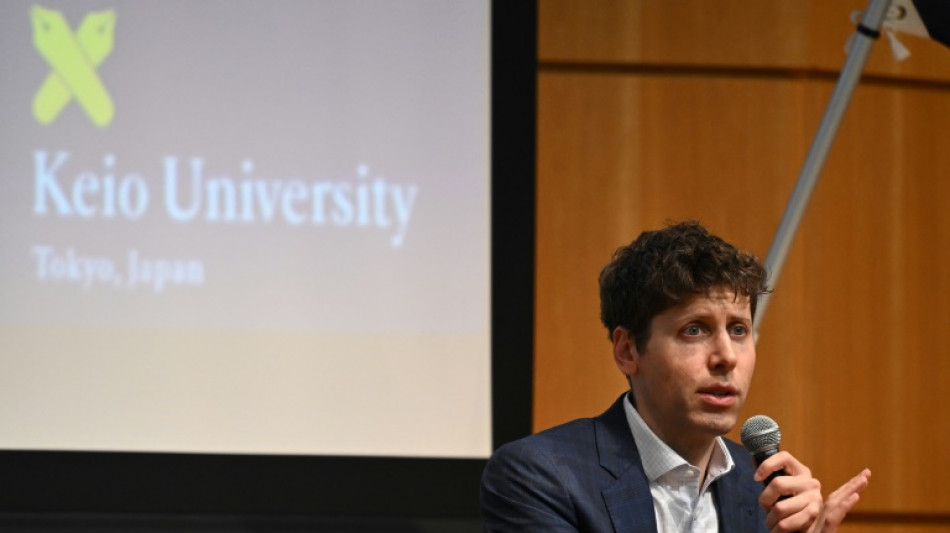
Artificial intelligence tools will revolutionise education like calculators did, but will not supplant learning, ChatGPT's founder Sam Altman told students in Tokyo on Monday, defending the new technology.
"Probably take-home essays are never going to be quite the same again," the OpenAI chief said in remarks at Keio University.
"We have a new tool in education. Sort of like a calculator for words," he said. "And the way we teach people is going to have to change and the way we evaluate students is going to have to change."
ChatGPT has captured the world's imagination with its capacity to generate human-like conversations, writing and translations in seconds.
But it has raised concern across many sectors, including in education, where some worry students will abuse the tool or turn to it rather than producing original work.
Altman was in the Japanese capital as part of a world tour where he is meeting business and political leaders to discuss possibilities and regulations for AI.
He has regularly urged politicians to draft regulations for AI, warning "if this technology goes wrong, it can go quite wrong".
"The tools we have are still extremely primitive relative to tools we are going to have in a couple of years," he said Monday, again urging safety measures and regulation.
He said he felt "positive" about new regulatory frameworks for AI after meeting world leaders, without offering details, but reiterated his fears.
"We will feel super responsible, no matter how it goes wrong," he said.
He also repeated previous attempts to calm fears that AI could make many existing jobs obsolete, though he conceded that "some jobs will go away".
"I don't think it is going to quite have the employment impact that people expect," he added, insisting that "new classes of jobs" will emerge.
"Almost all of the predictions are wrong," he said.
A.Mykhailo--CPN