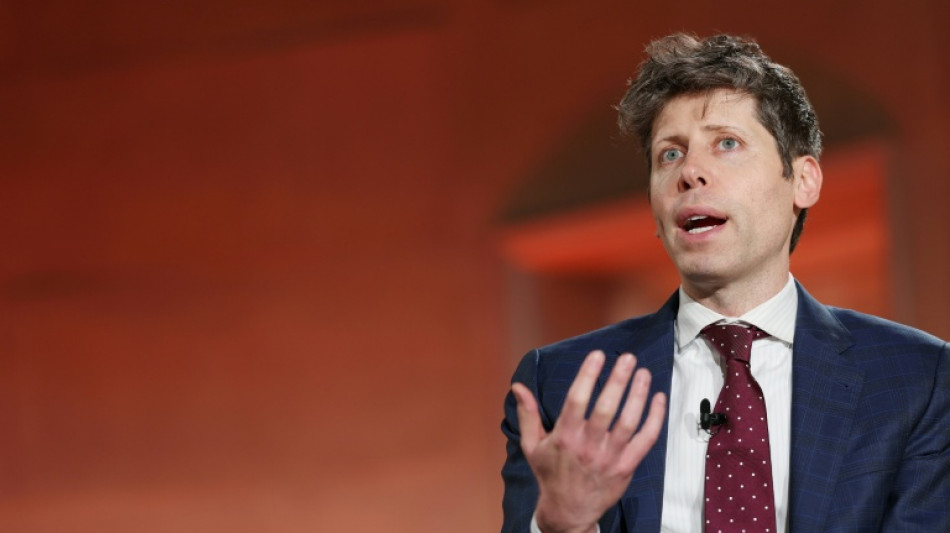
Wary of news media, Silicon Valley builds its own / Photo: Anna Moneymaker - GETTY IMAGES NORTH AMERICA/AFP

 Oversight Board blasts 'inadequate' Meta safeguards for AI deepfakes

 Harry makes first public appearance since return to UK

 Princess Diana's brother makes new explosive claims against Charles

 Trump admin overhauls key protection for endangered species

 Mbappe draws political fire over Ceuta t-shirt controversy

 Third malaria death in Germany from outbreak tied to Frankfurt airport

 AtlasClear Holdings Reports Preliminary Fiscal 2026 Revenue of Approximately $20.1 Million, Up 85%; Revenue Plus Interest Income of Approximately $21.9 Million

 'Another arrow to the quiver': World Bank posts record private capital mobilization

 Ireland to boycott Eurovision 2027 over Gaza

 India's Tata Sons reappoints N. Chandrasekaran as chairman

 Germany urges EU action against China to defend carmakers

 Japan eyes changing prostitution law to punish sex buyers

 Modi pitches India as global chipmaking hub

 Ukraine plans record defence spending in 2027

 NASA scan discovers new, 'once in a century' Moon crater

 Most stocks rise as Fed hikes and indicates drive to curb inflation

 UK-Sudanese author pens book to give children 'African history of Africa'

 Argentine judge orders suspension of Falklands oil project

 US Fed raises rates to tackle 'too high' inflation, irking Trump

 Turkey releases 106 protesters, jails more LGBTQ activists

 Candidate for UN chief calls for AI regulation akin to nuclear weapons

 'We're losing control,' AI pioneer Yoshua Bengio tells AFP

 IR-MED and Dice Technologies Announce collaboration to Evaluate and Advance Pressure-Injury Prevention Platform in Japan

 Watts, Pitt, Cruz to light up Spain's top film festival

 Toogood Gold's Table Mountain Sits in the Shadow of a Nevada Gold Rush

When OpenAI acquired the tech podcast TBPN this week, it wasn't just buying a show -- it was buying a message.
The move laid bare a strategy that Silicon Valley has been perfecting for years: ditch the tech-sceptics of the traditional press, and build your own media.
TBPN is in many ways a tribute to mainstream news, with co-hosts John Coogan and Jordi Hays -- both from the venture capital world -- presenting a three-hour show daily from a studio in Los Angeles that resembles a business or sports program on a cable news network.
But Coogan and Hays insist they are not journalists, even if they line up interviews with key figures in the industry who offer insightful access to the Silicon Valley world.
The show -- like a whole ecosystem of podcasts and media orbiting Silicon Valley today -- operates in a world where the benefits of tech for society need no explaining, and tech enthusiasm runs deep.
Fidji Simo, OpenAI's CEO of AGI Deployment, said the acquisition was driven by a need for "constructive conversation about the changes AI creates," and said TBPN would maintain its editorial independence.
The show and its team now fall under the responsibility of OpenAI's public affairs chief Chris Lehane, a veteran Washington lobbyist who made his name handling scandals for the Clinton administration.
"You could read this as OpenAI needing help translating complexity to decision-makers. You could also read it as buying favorable narrative positioning during a period of intense scrutiny. Probably both," said Monica Kahn, CEO of brand advisory Creator Revolution.
"They're buying the layer where interpretation happens," she added on LinkedIn.
The transaction follows a movement spearheaded by Elon Musk and venture capitalist Marc Andreessen in which the most powerful figures in tech are circumventing mainstream news media to avoid an establishment they describe as anti-tech or left-wing.
The roster of shows where Silicon Valley's elite now prefer to make news constitutes a parallel media ecosystem.
Andreessen Horowitz has invested heavily to build its own media empire, putting out podcasts to showcase its portfolio of tech investments and push a deeply pro-tech agenda without confrontation.
- 'Mistake' -
Lex Fridman's podcast draws millions of viewers or listeners and has attracted tech luminaries including Musk, Zuckerberg, DeepMind CEO Demis Hassabis, and OpenAI CEO Sam Altman for two-to-three-hour discussions ranging from business to the personal.
The unabashedly right-wing All-In Podcast has featured the top CEOs, as well as executives closely linked to the Trump administration who avoid the mainstream news coverage they see as unsympathetic.
Zuckerberg used a three-hour January 2025 appearance on Joe Rogan's podcast to defend Meta's rollback of content moderation.
Whether bypassing the news media will actually benefit tech's cause remains an open question.
"I think the TBPN deal is a mistake," said former BuzzFeed reporter Alex Kantrowitz of the Big Technology Podcast. "Under the OpenAI umbrella, the network loses credibility and everything it says will be seen as OpenAI marketing."
The deeper problem, Kantrowitz argued, is one of reach.
While OpenAI may be looking to reshape public opinion at a moment when AI is polling poorly in the United States, TBPN's audience -- like on other Silicon Valley-made podcasts -- is already a converted one.
Y.Uduike--CPN