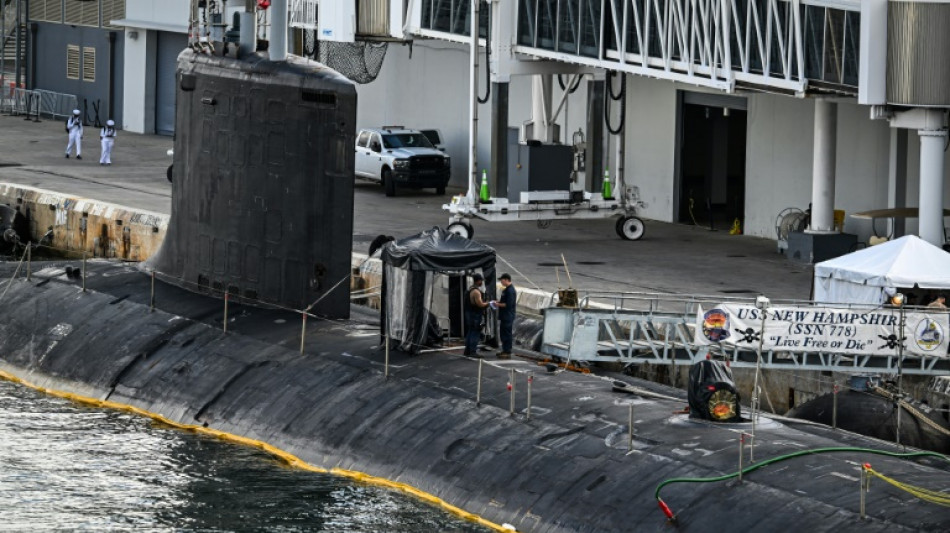
Australia buys parts for future AUKUS sub reactor / Photo: CHANDAN KHANNA - AFP/File

 France's debt climbs to highest since 1978: ministry

 Thousands protest inaction over climate crisis in Switzerland

 UK actor Naomi Watts honoured at Spain film festival
 Trump signs bill authorizing sweeping Russia sanctions

 Anthropic picks Accenture for in-house AI safety evaluation

 Hushing and hedging: US companies retreat on climate

 Crisis-wracked Volkswagen warns of 10-bn-euro hit to profits

 Shakira to cap off world tour with Madrid 12-gig run

 Isolated Syrian-Druze city shortages

 UNESCO can be 'moderator' in AI debate: chief to AFP

 Russia seizes assets of Nestle, French firms

 Anthropic says AI systems moving towards building themselves

 Asian stocks boosted by falling oil, yen weakens after BoJ rate hike

 Afghan medical students in Pakistan hope court stops college expulsions

 Australia to detain tourists who overstay visa, minister says

 Asian stocks track Wall St rally as oil prices drop

 Prized Mexican relic returns on loan, two centuries on

 'In our lane': Fed's Warsh defies Trump but still fighting for credibility

 Trump admin makes major cut to endangered species protections

 GM delivers first components for US interceptor missiles

 Travis Scott and Keith Richards feature on GTA VI soundtrack

 King Charles warns tech bosses of 'existential dangers' of AI

 French fishermen block ports over petrol prices

 Micron's Taiwan workers say 68 months' bonus not enough

 Canada's Carney pushes 'new alliance' with EU despite Trump threats

Australia has paid for the first British-built parts of nuclear reactors to power a future SSN-AUKUS stealth submarine, the government said Tuesday.
Australia plans to acquire a fleet of cutting-edge, nuclear-powered submarines under AUKUS, a multi-decade defence pact with Britain and the United States.
As part of the deal, Australia will build some of the new class of SSN-AUKUS submarines for delivery in the early 2040s, though the reactors will still be built in Britain.
"We've just spent Aus$310 million ($220 million) acquiring the very first parts that will go into the reactors for the first two submarines that we will construct in Adelaide beginning later this decade," Australian Defence Industry Minister Pat Conroy said after meetings in Britain.
"This project will create 20,000 high-skilled, secure jobs making the most advanced submarines in the world, equipping the Royal Australian Navy with the capabilities it needs to deter conflict in our region."
Under AUKUS, the Australian navy aims to acquire at least three US Virginia-class nuclear-powered submarines within 15 years as part of a strategy to counter China's military in the Pacific.
Britain would then develop the new SSN-AUKUS for delivery in the late 2030s.
Australia would also construct the vessel to go into service in the early 2040s, but remain reliant on Britain for the delivery of complete, welded nuclear propulsion units.
The latest payment is in addition to Aus$2.4 billion Australia is paying over 10 years to expand the production capacity of Rolls-Royce Submarines, the government said.
C.Smith--CPN