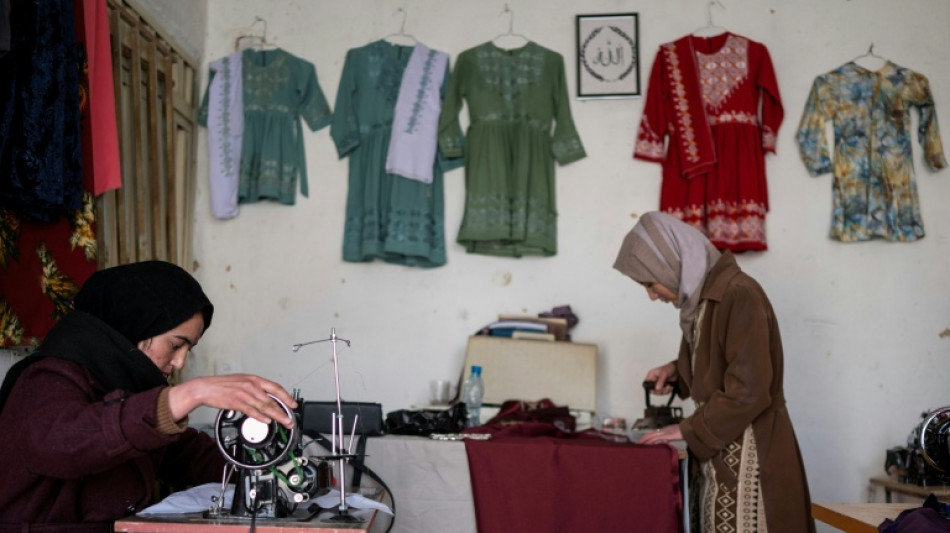
Afghan woman's boutique brightens Bamiyan / Photo: Wakil KOHSAR - AFP

 Saudi-led coalition says Houthis fired ballistic missile at Riyadh
 Cuba works to restore power after another blackout
 Brigitte Bardot widower slams sale of star's belongings
 Indonesia accepts Malaysia's help to tackle wildfires
 Nvidia, OpenAI CEOs to attend Xi dinner at White House

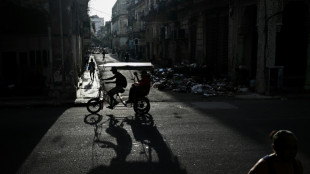 Cuba hit with seventh major blackout of the year
 Nigeria miners struggled to breathe in cell before 37 died: survivors

 Warren Buffett steps down as Berkshire Hathaway chairman

 Isolated Syrian-Druze city blames Damascus for shortages

 Kerry James Marshall: American 'blackness' painter celebrated in Europe

 Infantino 'must go', says German FA vice-president

 Japan's busiest rail station tests robot bins

 Backpackers fret over Australian visa crackdown

 Bank of Japan hikes rates to 31-year high to battle inflation

 AI doomsday warnings unlikely to slow IPOs but questions linger

 In Brazil's Amazon, the hunt for oil fuels hopes and fears

 Baby orangutans in India expose 'frightening' scale of trafficking

 Oversight Board blasts 'inadequate' Meta safeguards for AI deepfakes

 Harry makes first public appearance since return to UK

 Princess Diana's brother makes new explosive claims against Charles

 Trump admin overhauls key protection for endangered species

 Mbappe draws political fire over Ceuta t-shirt controversy

 Third malaria death in Germany from outbreak tied to Frankfurt airport

 AtlasClear Holdings Reports Preliminary Fiscal 2026 Revenue of Approximately $20.1 Million, Up 85%; Revenue Plus Interest Income of Approximately $21.9 Million

 'Another arrow to the quiver': World Bank posts record private capital mobilization

With women banned from most jobs in Afghanistan, an embroidery boutique run by 22-year-old Rahima Alavi is a surprising and treasured sight in Bamiyan.
"Spring flowers, tailoring and embroidery," reads a sign outside Alavi's small store, which opened in January after a months-long search for work.
"I really feel proud because I can support my family, my parents and three sisters. I can pay the rent," said Alavi, who was wearing a burgundy coat which had a few pieces of leftover coloured thread stuck to it.
Demonstrating her new skills, she guided material through her sewing machine to create delicate silk leaves and flowers.
Alavi is one of more than five million people who returned to the country since 2023 from neighbouring Iran and Pakistan, which have been pushing back Afghans after decades hosting them.
Having grown up in rural Bamiyan province, where she helped her parents with farmwork alongside school, the family moved to Iran in 2021.
"In Iran, there were more job opportunities, and there, men and women can work," she said.
They picked cabbages for a living near the central city of Isfahan, before returning to Afghanistan in 2024.
"My father couldn't find a job, nor could I or my sisters. I was very hopeless, because there were no jobs in Bamiyan," she said, her smile fading.
Only one percent of women who returned from Iran or Pakistan have found full-time jobs, while two percent have a business, according to a survey by the International Organization for Migration.
Alavi struggled for months, before being picked along with 25 other women for embroidery training under a programme backed by the UN refugee agency.
"I started to have hope, and my hope grew bigger with the course," she said.
- 'No work for women' -
Alavi was given a range of equipment including a sewing machine, fabric and cash for a solar panel -- essential in a country where power cuts are commonplace.
Her teacher, Rayhana Darabi, described Alavi as "very capable, very talented".
"She was so dedicated that she would not miss anything and learned everything that same day," said Darabi.
The embroidery teacher lost her job in December when the programme was discontinued, as part of broader aid cuts hitting people across Afghanistan.
Alavi is the only woman from the programme to have successfully opened a business so far, with her best friend's support, bringing great pride to those around her.
"We were truly very happy. Women in Afghanistan today -- not only in Bamiyan but all over the country -- face many challenges and rules and regulations," said her teacher.
The Taliban authorities rule by a strict interpretation of Islamic law, barring women from the majority of professions while permitting some to work in industries such as handicrafts.
Alavi appealed to donors to restart the training programme. "Because there is no work for women here," she said.
Last year, women were the majority among nearly 2,400 people trained under UNHCR programmes.
The agency said this month it needed $216 million this year to support displaced people and returnees across the country, but its appeal was currently just eight percent funded.
With opportunities increasingly limited, Alavi encouraged her fellow returnee women to seek out any chance available.
"Don't sit at home," said the entrepreneur, surrounded by embroidered dresses, scarves and tablecloths.
Decorated across one of the scarves, which Alavi said she would like to wear, she had embroidered purple butterflies taking flight.
A.Zimmermann--CPN