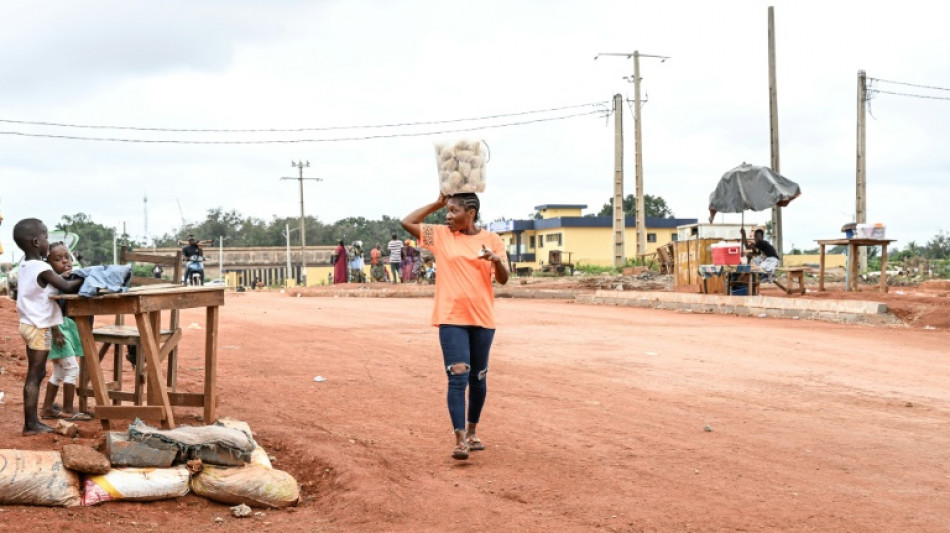
Ivory Coast 'returnees' rebuild lives at home / Photo: Sia KAMBOU - AFP

 South Africa arrests three more suspects, after nine women murdered

 Paramount settles with US states to clear Warner Bros. mega-merger
 Climate crisis a job for world leaders, not just activists: UK FM
 COP31 host says AI's climate footprint to be a summit priority
 EU proposes energy rating for data centres

 TradersYard Shifts Focus to Futures Trading

 Indonesia doing 'everything' but struggling to curb fires
 FQ-42 Vengeance Finds New Home at Creech Air Force Base
 Multi-Asset Trading Venue Monochrome Exchange Announces IEO of Its Native Token, $MCR

 Data centre command hub keeps AI up and running
 Leo XIV, first US pope transcends his restrained style
 France's debt climbs to highest since 1978: ministry
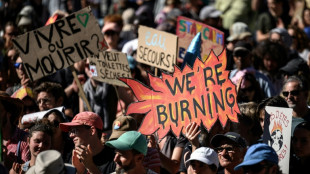 Thousands protest inaction over climate crisis in Switzerland
 UK actor Naomi Watts honoured at Spain film festival
 Trump signs bill authorizing sweeping Russia sanctions

 Anthropic picks Accenture for in-house AI safety evaluation
 Hushing and hedging: US companies retreat on climate
 Crisis-wracked Volkswagen warns of 10-bn-euro hit to profits
 Shakira to cap off world tour with Madrid 12-gig run
 Isolated Syrian-Druze city shortages
 UNESCO can be 'moderator' in AI debate: chief to AFP
 Russia seizes assets of Nestle, French firms

 Anthropic says AI systems moving towards building themselves
 Asian stocks boosted by falling oil, yen weakens after BoJ rate hike
 Afghan medical students in Pakistan hope court stops college expulsions

In the Ivory Coast town of Daloa, tales like Marie Godo's of dreams shattered overseas are common.
The small town in the centre of the west African country is well known as a transit point for Ivorians looking to migrate.
For Godo, her failed attempt in Tunisia brought shame, but ended with her back in Daloa with a successful cosmetics business.
For some returnees like Godo, Daloa has become a new start, though for others coming back is not so fortunate.
"My family was counting on me and I came back with nothing," Godo said, recounting her failure in North Africa.
Helped by the Italian NGO AVSI to launch her business, she says she managed to change her life after 12 years in Tunisia, where she went to train as a midwife but where she encountered racism and lived off odd jobs.
"I came back changed. I was sinking. I was disappointed in myself. I preferred to come here to follow a friend rather than return to my family."
Jobs for young people were a key part of campaigning for Ivory Coast's presidential election on October 25.
On track to secure a fourth term, President Alassane Ouattara has vowed new opportunities.
Known as West Africa's engine, Ivory Coast is one of the fastest-growing economies in the region and the world's top cocoa producer.
But many Ivorians still live in poverty and dream of migrating.
For many that means their family has contributed, sometimes taking out debts of several thousand dollars while waiting for a return on investment.
Failure to make a life overseas is often stigmatised.
Returnees are called "cursed".
- Jobs and training -
"I've seen families use their farms as collateral to finance a move overseas. Leaving someone is a form of social investment, not just financial," said Lassine Bamba, AVSI representative in Ivory Coast.
"When you receive money from a loved one who has left, the entire community's outlook changes."
In Daloa, Mohamed Badini recounted his own departure by road as a teenager in 2016, inspired by friends who tried their luck.
Travelling through Mali, Niger and Algeria, it took him a year to reach Morocco.
Without any papers, he worked in construction -- often without pay -- and tried several times, in vain, to cross into Europe before resigning to returning with a voluntary return programme run by the United Nations' International Organization for Migration (IOM).
Now running a small hair salon, he has no plans to leave again.
"It's too dangerous," he said, recalling seeing other travellers like him fall ill or die.
"Here, I know I can succeed. My situation has improved," he said.
While the issue of discouraging migration was not a central theme in the election platforms of Ivorian presidential candidates, all of them proposed policies aimed at creating more jobs and training for young people.
Claude Tanoh himself went through a similar experience in North Africa.
The 40-year-old father of three eventually returned and now heads Diaspora, an NGO which educates potential migrants.
"We try to explain that dreaming is possible but that even here, we can make it," he said.
"We don't discourage people from leaving but we tell them to be prepared, to follow the legal route and to learn about the reality of migration."
- Motives for leaving -
NGO AVSI representative Bamba said those returning needed help to reintegrate, with access to bank accounts and health insurance.
Working in the informal sector leaves them too vulnerable.
"Moving from the informal sector to the formal sector with training is essential for their reintegration to be sustainable," said IOM programme officer Joseph Duck.
"We're mobilising the private sector to help us, particularly in Ivory Coast, which is seeing good economic development," he said.
IOM has supported more than 18,000 returnees in Ivory Coast since 2017 but informal employment among returnees remains above 85 percent.
Not all are fortunate enough to have opened a successful business.
Some, like Abou Dosso, a mechanic in a small garage, live on less than two dollars a day.
Others take up illegal gold mining or are raising money to try their luck again.
"What motivates people to leave?" asked Tanoh, the former migrant.
"The shame of being back where we started, ignorance and lack of activity."
While the Daloa region has developed in recent years, it still remains too under-industrialised to provide enough jobs.
"If I can leave, I'll leave!" said one young colleague sitting with Dosso.
"Those who came back just weren't lucky."
P.Gonzales--CPN