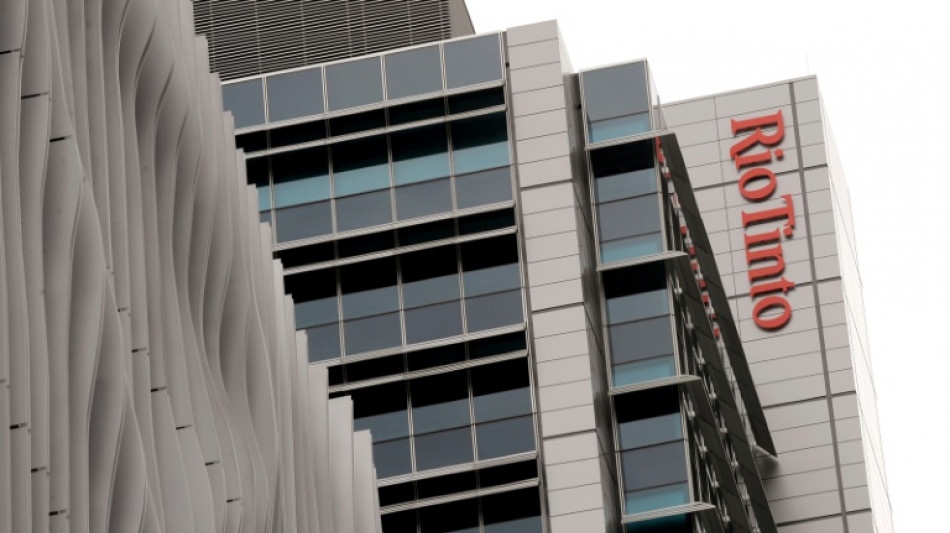
Rio Tinto admits culture of 'bullying, sexual harassment, racism'

 Lights out in Laos as electricity exports surge

 Steven Strogatz weighs AI mathematics advances and their consequences for researchers

 Anthropic boss calls for AI slowdown, Altman and Musk agree

 French IT giant Capgemini sells subsidiary after row over ICE links

 Quebec Brokerage Qubit Insurance Announces New Data on Coverage Shortfalls as Rebuilding Costs Rise

 Lady Gaga welcomes first child with fiance: US media

 Bhutan business bets on hazelnuts for farming future

 'Widow's Bay' and 'The Pitt' are favorites for Emmys night

 Coastal erosion forces cancellation of California music festival

 Argentina's Dirty War rears its head in Venice film

 UK lawmakers throw out bill to legalise assisted dying

 US inflation steady in August, fueling Fed rate hike expectations

 New York marks 25th anniversary of 9/11 attacks

 Nepal flood reconstruction bill to be $4.78 bn: foreign ministry

 JUMO and Standard Bank launch Social Finance Framework to scale inclusive finance in Africa

 Doomsday tech: could AI really kill us all?

 French comedy show 'Call my agent' makes film comeback

 It's all coming back: Celine Dion fans gear up for Paris return

 Researchers eye AI revolution in natural disaster forecasts

 US braces for inflation report that may push Fed to hike rates

 Musk threatens legal action over documentary

 Latin America fact-check group asks Meta not to replace verification practice

 AI Risks to Enter 60–80% of Liability and Cyber Insurance Underwriting by 2028, ScienceSoft Predicts

 Tribal Launches Campfire, Letting Business and Technical Teams Build on Salesforce Together

 Stocks fall as fresh oil surge fans inflation fears

Australian-based mining giant Rio Tinto released a searing internal report Tuesday that found sexual assault, bullying and racial discrimination are rife "throughout the company".
Management ordered the investigation after a string of complaints and scandals, including the blowing-up of an ancient Aboriginal site in Western Australia to expand an iron ore mine.
The 85-page report -- based on information from 10,000 employees gleaned over eight months -- described bullying as "systemic" and racism as "common", while stating that sexual harassment occurs "at unacceptable rates".
It describes a toxic, white- and male-dominated work culture in which female employees were asked to perform oral sex, catcalled and forced to keep a list of male colleagues to avoid at night.
Rio's operations span mines, smelters and refineries often in remote Outback locations, with a significant number of the company's 45,450 workers living on-site and hired on fly-in, fly-out contracts.
Twenty-one women reported actual or attempted rape or sexual assault in the past five years and one third said they had been harassed, according to author Elizabeth Broderick, formerly sex discrimination commissioner of Australia.
"Bullying is systemic, experienced by almost half of the survey respondents," the report concluded.
Other Rio staff members reported widespread racism in what they described as a "Caucasian oriented" company.
"I've copped racism in every single corner of this company," said one respondent.
CEO Jakob Stausholm said the report's findings were "deeply disturbing".
"I offer my heartfelt apology to every team member, past or present, who has suffered as a result of these behaviours. This is not the kind of company we want to be."
The report made 26 recommendations, including changes to management oversight and training, and making sure "women and other minority groups are deployed to operational sites as part of a cohort".
Rio has tried to soften its public image in recent years, announcing plans to cut direct carbon emissions 50 percent by 2030 and vowing to overhaul a toxic workplace culture.
The revelation in 2020 that Rio had blown up the 46,000-year-old rock shelters at Juukan Gorge in Western Australia sparked a public backlash and investor revolt that led then CEO Jean-Sebastien Jacques and two top executives to resign.
H.Müller--CPN