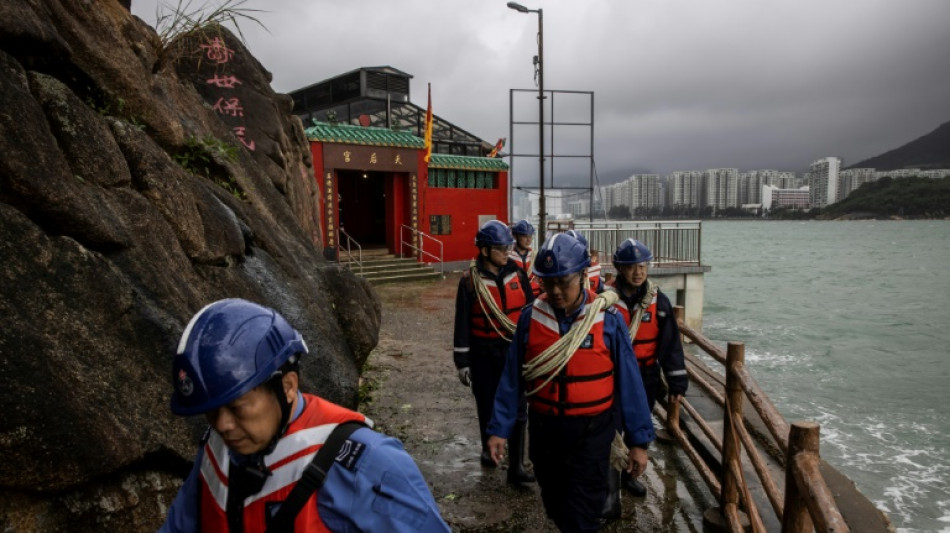
Typhoon Saola weakens to a severe storm as it tracks along southern China / Photo: ISAAC LAWRENCE - AFP

 Kenya's economy faces climate change risks: World Bank
 Hungary to shut nuclear plant as heatwave hits central Europe
 Tech-fuelled rally fizzles as oil prices rise

 Alarm over climate-linked low level of German waterways

 Commerzbank agrees to talks with UniCredit after two-year standoff
 Fornaro Legal Releases Guidance to Help Businesses Maintain Clear Ownership Records During Growth

 Japan probe made closest-ever asteroid flyby: space agency
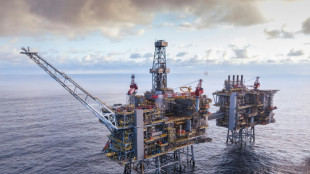 British oil giant BP aims to sell North Sea business
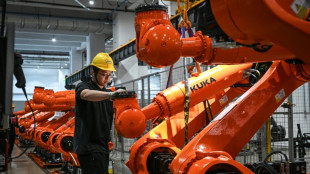 China factory activity slides as leaders seek spending boost
 Tech rebound fuels record-breaking rally in South Korean stocks
 Cables and cooling bring AI windfall to Indian suppliers
 Anthropic's models gained unauthorized 'real-world' access during testing

 Apple tops estimates in CEO Cook's final quarter, but shares fall

 Milei demands expulsion of foreigners expressing 'hate' against Argentina

 Italy's Po River valley on drought alert

 Prada profits pinched as growth hard to chase

 Stocks climb on earnings and rates, oil retreats

 US economic growth slows in second quarter, missing expectations

 Russia adds Telegram founder Durov to 'terrorist' blacklist

 Stocks diverge on earnings, as oil steadies

 Eurozone economy grows despite Middle East war

 Singapore group will develop 'most promising' Ebola vaccine

 Shell profit surges as Mideast war fuels oil prices

 Car maker Stellantis says back in profit in second quarter

 Samsung quarterly operating profit up 1,800% on AI boom

Typhoon Saola swept across southern China on Saturday after tearing down trees and smashing windows in Hong Kong, although the megacity avoided a feared direct hit from one of the region's strongest storms in decades.
Tens of millions of people in the densely populated coastal areas of southern China had sheltered indoors on Friday ahead of the storm.
Saola had triggered Hong Kong's highest threat level on Friday evening -- issued only 16 times since World War II -- and registered winds of around 210 kilometres per hour at its peak.
It was downgraded before dawn on Saturday as the typhoon passed the city and tracked towards coastal areas of mainland China -- where it weakened into a severe tropical storm.
So far, Hong Kong has had no reported casualties and far less damage than that created by 2018's powerful Typhoon Mangkhut, but authorities warned people to stay away from the shoreline as Saola was still whipping up strong gales.
AFP journalists saw multiple fallen trees strewn across Hong Kong roads, broken windows, and crumpled scaffolding from under-construction buildings, while local media reported that solar panels had been ripped off rooftops.
"Yesterday was a bit scary," Angelie said as she ventured out to meet a friend under a blanket of constant rain.
"In our (residential) estate, there were a lot of trees fallen, and some windows were broken."
Saola left Thomas Wong, a shopkeeper in Causeway Bay, stranded overnight in his home goods store.
"I didn't leave my shop because the transportation was not running... I had no choice," Wong said, adding that he lived in the northern Hong Kong district of Tai Po.
A resident in Hong Kong's Heng Fa Chuen housing estate -- the site of devastation during the 2018 Typhoon Mangkhut -- said she felt "some swaying" in her building during the night
"But overall, we didn't feel unsafe," she told AFP, contrasting it to 2018's Mangkhut which had temporarily disrupted the supply of water and electricity in some housing blocks.
The last storm to earn the city's highest typhoon alert, Mangkhut shredded trees and unleashed floods across the city, leaving more than 300 people injured in its wake.
In mainland China, it killed six people and impacted the lives of more than three million others.
Hong Kong's Civil Aid Service said Saturday more than 500 people were deployed around the city to evaluate the damage, including volunteer workers who patrolled a low-lying fishing village in Lei Yue Mun district.
They removed twisted iron cladding to less wind-whipped areas and snapped photos of rising sea waters, as residents surveyed the pavement damage done to uprooted trees that pulled up concrete.
"I'm waiting to see if there is a storm surge and whether the waters will rise," one woman in Lei Yue Mun told a TV news station.
Hong Kong's airport gradually resumed flights, after mass cancellations and delays the day before, while neighbouring gambling hub Macau announced the reopening of casinos that had been closed for a day -- a rarity -- due to the severity of Saola.
- Frequent, unpredictable storms -
Saola made landfall in the Chinese coastal city of Zhuhai, where workers on Saturday moved metal railings from roads and cleared sand whipped from a nearby beach.
By afternoon, it had moved west to the tourist island of Hailing in Guangdong province, bringing sustained winds at a speed of 100 kilometres (62 miles) per hour.
China had initially warned that Saola "may become the strongest typhoon to make landfall" in the region since 1949, but by Saturday afternoon, Guangdong province downgraded its emergency response due to the weakened windspeed.
Across the South China Sea on Saturday, another typhoon, Haikui, tracked rapidly towards Taiwan, where authorities raised land and sea warnings, though the impact was expected to be mild.
Southern China is frequently hit in summer and autumn by typhoons that form in the warm oceans east of the Philippines and then travel west.
Climate change has made tropical storms more unpredictable while increasing their intensity, bringing more rain and stronger gusts that lead to flash floods and coastal damage, experts say.
Y.Tengku--CPN