-
 iPhone 18預購後出現可疑扣款 四間銀行調查未授權交易
-
Can We Predict Volcanic Eruptions Like Weather? Scientists Seek Unified Physics

-
 Galaxy Tab S12系列效果圖曝光 Ultra擬配雙鏡頭及瀏海螢幕
-
اليورو يستقر في البنوك المصرية وأعلى سعر للبيع 59.85 جنيه

-
 Altman tells Fortune OpenAI will not go public in 2026
-
الأرصاد السعودية تتوقع سيولاً وأمطاراً رعدية في خمس مناطق

-
 ستاندرد آند بورز تثبت تصنيف السعودية عند A+
-
Lights out in Laos as electricity exports surge

-
 Steven Strogatz weighs AI mathematics advances and their consequences for researchers
-
Anthropic details Claude misuse as US targets major illicit online marketplace

-
 Venezuelans outside Caracas say capital not sharing blackout burden
-
Anthropic boss calls for AI slowdown, Altman and Musk agree

-
 Anthropic boss calls for slowing pace of AI development
-
French IT giant Capgemini sells subsidiary after row over ICE links

-
 BRICS nations urge 'maximum restraint' in Middle East war
-
Quebec Brokerage Qubit Insurance Announces New Data on Coverage Shortfalls as Rebuilding Costs Rise

-
 Europe eyes battle over 'pervert' AI glasses
-
Lady Gaga welcomes first child with fiance: US media

-
 Children in flood-hit Nepal grapple with loss, cling to hope
-
Bhutan business bets on hazelnuts for farming future

-
 Venice Film Festival: A look back on the highlights
-
'Widow's Bay' and 'The Pitt' are favorites for Emmys night

-
 DR Congo school fire stampede death toll rises to 26: UNICEF
-
Coastal erosion forces cancellation of California music festival

-
 Dance Fitness Tempe Announces Expansion of Accessible Digital Movement Programs
-
Argentina's Dirty War rears its head in Venice film

-
 Europe saw record summer air traffic despite Mideast war: Eurocontrol
-
UK lawmakers throw out bill to legalise assisted dying

-
 Relatives of 9/11 victims hit out at Saudi Arabia -- and US leaders
-
US inflation steady in August, fueling Fed rate hike expectations

-
 Relative of 9/11 victim unleashes searing attack on Saudi Arabia
-
New York marks 25th anniversary of 9/11 attacks

-
 Czech antitrust office lets Turkey's Pegasus Airlines buy Smartwings
-
Nepal flood reconstruction bill to be $4.78 bn: foreign ministry

-
 Investors on edge as energy costs, surging bond yields roil markets
-
JUMO and Standard Bank launch Social Finance Framework to scale inclusive finance in Africa

-
 UK lawmakers to vote again on failed assisted dying bill
-
Doomsday tech: could AI really kill us all?

-
 Yemen's Houthis complete takeover of Bab al-Mandab area: govt official to AFP
-
French comedy show 'Call my agent' makes film comeback

-
 Fast-pace dance takes I.Coast's working-class streets by storm
-
It's all coming back: Celine Dion fans gear up for Paris return

-
 Fans celebrate Celine Dion's Paris return with giant karaoke
-
Researchers eye AI revolution in natural disaster forecasts

-
 Appreciation, anger await as Trump heads to Irish golf resort
-
US braces for inflation report that may push Fed to hike rates

-
 Putin arrives in India for BRICS summit coloured by wars
-
Musk threatens legal action over documentary

-
 Carney says in touch with Trump, Canada ready for 'fair' trade deal
-
Latin America fact-check group asks Meta not to replace verification practice

US China race hits 2027
When NASA’s Artemis II crew splashed down in April 2026 after looping around the Moon, it rekindled interest in human spaceflight. The United States had not sent astronauts near the lunar surface in more than half a century, and its return came amid an unmistakable rivalry with a rising power. Over the last decade China has methodically tested rockets, landers and rovers, assembled its own orbital outpost and dispatched missions across the Solar System. The world’s two largest economies are now openly competing to build a permanent human presence on and around the Moon, to harvest its resources and to set the standards that will govern space for decades to come.
Although the race evokes memories of the Cold War, experts stress that today’s contest is more complex. Rather than a sprint to plant a flag, the current competition is a marathon to establish infrastructure and routines for sustained exploration. It also includes commercial players, such as SpaceX and Blue Origin in the United States and a fast‑growing private sector in China. Political leaders in Washington and Beijing frame their objectives in terms of national prestige, economic opportunity and security, while scientists see the potential for breakthroughs in geology, physics and planetary science. In this multifaceted arena, the year 2027 looms as a pivotal test of each nation’s ambitions.
Washington’s roadmap: Artemis and a moon base
The United States is pursuing its lunar return through NASA’s Artemis programme. Artemis II demonstrated that the Space Launch System rocket and Orion spacecraft could carry a crew around the Moon and return safely. The next steps are more demanding. NASA plans a complex Earth‑orbit flight in 2027 in which Orion will practice docking with one or both of the commercial lunar landers now under development. This demonstration is essential for subsequent missions that will ferry astronauts to the lunar surface. Without a successful rendezvous and refuelling sequence, the agency cannot meet its goal of up to two crewed landings in 2028 and the construction of a lunar base in the early 2030s. NASA Administrator Jared Isaacman has warned that the United States is in a new space race and that failure to keep pace could damage American leadership. He argues that seeing Chinese taikonauts on the Moon before U.S. astronauts return would deliver a blow to American confidence and global influence.
Policy makers in Washington view the timeline as tight. The launch of Artemis III, originally targeted for 2024, has slipped to 2028 after interim dates in 2026 and 2027. This drift reflects technical hurdles and shifting political priorities; over the past two decades U.S. lunar goals have changed with each administration. Under President Donald Trump, NASA’s focus returned to the Moon, and Congress has largely sustained funding. Lawmakers such as Senator Ted Cruz emphasise that America must simultaneously maintain leadership in low Earth orbit, where the International Space Station nears the end of its life, and embark on a new era of exploration. The challenge is to integrate commercial capabilities—particularly SpaceX’s Starship system, which will serve as a lunar lander—with NASA’s heavy‑lift rockets and Orion capsule. In low Earth orbit, U.S. companies are also competing to build private space stations as the ISS winds down.
Behind the headline missions is a robust commercial ecosystem. SpaceX’s Falcon and Starship rockets have dramatically lowered launch costs, enabling a boom in satellite deployment and paving the way for large‑scale lunar logistics. Other firms are developing lunar landers, cargo services and in‑orbit data processing that uses artificial intelligence to analyze imagery directly in space rather than sending raw data back to Earth. Proponents say these technologies will revolutionize Earth observation, communications and defence, creating an “orbital economy” that could be worth trillions. Critics, however, worry about the potential for an uncontrolled proliferation of satellites, increasing the risk of collision and creating space debris—known as the Kessler syndrome—that could render some orbits unusable.
Beijing’s blueprint: Chang’e, Tiangong and mega‑constellations
China’s lunar ambitions were late to emerge but have progressed steadily since the Chang’e programme began in 2007. In the past decade the China National Space Administration has landed robotic spacecraft on the Moon’s near and far sides, returned lunar samples to Earth and placed two rovers on the surface. Its next steps include launching the Chang’e‑7 mission in late 2026 to explore the lunar south pole and Chang’e‑8 in 2029 to test technologies such as in‑situ resource utilization. These missions will lay the groundwork for an International Lunar Research Station that Beijing plans to build with Russia and other partners in the 2030s. Chinese officials say a crewed landing will occur before 2030, using the new Long March‑10 rocket, Mengzhou spacecraft and Lanyue lander. Tests of these systems began in 2025 and are progressing on schedule, according to state media.
The difference between the U.S. and Chinese approaches is striking. China’s lunar timeline has remained largely steady, with milestones set years in advance and executed through successive five‑year plans. Analysts note that the one‑party state does not face the congressional budget battles or policy reversals common in Washington, allowing it to align industries, financing and state priorities around long‑term goals. Xi Jinping has framed space exploration as part of national rejuvenation, and the aerospace sector is listed among the strategic industries of the future. At the same time China is rapidly expanding its presence in Earth orbit. It operates the Tiangong space station, assembled in modules launched between 2021 and 2022, and plans to add a co‑orbiting telescope module. Chinese astronauts routinely conduct long‑duration missions and record‑setting spacewalks from Tiangong.
Beyond human spaceflight, China is building its own satellite megaconstellations. The Thousand Sails network aims to deploy more than a thousand satellites by 2027 and potentially 14,000 by the 2030s to provide global broadband and compete with SpaceX’s Starlink. The defence‑oriented Guowang constellation could add another 13,000 satellites by 2035. China had over 800 satellites in orbit at the start of 2025—more than any country except the United States, which has nearly 9,000—but its launch rate is accelerating. In 2024 China launched 68 orbital rockets, second only to the U.S., and is testing reusable boosters and powerful new engines. It is also pursuing a Mars sample‑return mission that could bring material back to Earth by 2031, potentially beating NASA’s delayed Mars campaign. Observers say these achievements reflect an ecosystem that now rivals the U.S. in breadth, even if China still lags in private sector innovation and reusable rocket technology.
Why 2027 matters
The year 2027 stands out as a make‑or‑break point in the unfolding space competition. For NASA, the planned in‑orbit docking demonstration will show whether its architecture—combining the Orion crew capsule with privately built lunar landers—can actually work. This test has already been inserted into the Artemis sequence as a separate mission, and without it the agency cannot risk sending astronauts to the lunar surface. Success would keep the 2028 landing on track and bolster confidence in the United States’ ability to lead; failure could postpone human landings by years and give China a psychological and strategic advantage. Some observers argue that delays would also erode congressional support and funding, since political attention could shift to Mars or Earth‑orbit projects.
For China, the mid‑2020s are equally crucial. By the end of 2026 the Chang’e‑7 probe is expected to deliver data from the Moon’s south pole, and the Thousand Sails constellation could surpass the 1,000‑satellite mark a year later. Meanwhile, low‑altitude tests of the Long March‑10 and Mengzhou systems in 2025 and 2026 will set the stage for full‑scale flight tests. If all proceeds as planned, China will enter 2027 with an integrated system for human lunar flight, a mature space station and an expanding commercial sector. The momentum could position Beijing to attempt its first crewed lunar landing by the end of the decade, perhaps just a year or two after Artemis III.
The symbolic stakes of who returns to the Moon first resonate beyond space professionals. Many commentators see access to lunar resources such as water ice and helium‑3 as future economic boons, enabling fuel production, life support and even fusion energy. Others worry that these expectations could inflame geopolitical tensions and lead to the partition of the lunar surface. Online discussions are filled with references to science‑fiction series like For All Mankind and Star Wars, a sign of how popular culture shapes perceptions of space. Some people lament the absence of Europe in the high‑profile contest, expressing frustration that the European Space Agency is not competing at the same level. Others note that the proliferation of mega‑constellations could spoil the night sky for astronomy and raise the risk of collisions. A common thread is the belief that space is becoming another arena for geopolitical rivalry and that humanity must balance exploration with responsibility.
What’s at stake
At the heart of the new space race is a struggle over norms and infrastructure. The country that first establishes a sustained presence on the Moon will likely influence how lunar resources are allocated, how safety zones are defined and how future claims are adjudicated. China’s plan for an International Lunar Research Station is open to partners but would be led by Beijing and Moscow, while the U.S. promotes the Artemis Accords, a set of principles signed by more than thirty nations that emphasise transparency, peaceful use and the protection of heritage sites. The two frameworks represent competing visions of governance. Some analysts worry that parallel bases could harden rival blocs and complicate cooperation on scientific projects.
Economic motives also loom large. The Moon’s south pole contains ice deposits that can be split into oxygen and hydrogen for rocket fuel; its regolith may hold helium‑3, a potential fuel for fusion reactors; and rare earth elements could be mined for electronics. Companies envisage extracting these materials and using them to support lunar factories, orbital refineries and interplanetary missions. Observers point out that many of these prospects are speculative and that the technological and legal challenges are formidable. Nevertheless, the prospect of a trillion‑dollar space economy drives investment from governments and venture capital. Commentators on social media often joke about “all those beautiful minerals” and wonder whether space will become a battlefield for humans. Others warn that competition could trigger an arms race, with anti‑satellite weapons and military platforms turning Earth orbit into a contested zone.
Environmental concerns add another layer of complexity. Mega‑constellations of thousands of satellites enable global internet and Earth‑observing services, but they also contribute to light pollution and radio interference that hamper astronomical research. Critics argue that launching tens of thousands of spacecraft to benefit a small fraction of the population is not worth degrading the natural beauty of the night sky. Campaigners call for international regulation to ensure that orbits remain sustainable and that debris is removed. The U.S. Federal Communications Commission and international bodies are beginning to address these issues, but enforcement remains weak.
Beyond the U.S. and China
While the rivalry between Washington and Beijing dominates headlines, other actors are shaping the space landscape. India, which landed a spacecraft near the lunar south pole in 2023, plans its own crewed missions and has an eye on lunar resources. Russia remains formally involved with China’s lunar base plan despite its own economic struggles. Private corporations across the globe are developing lunar landers, communications relays and space‑based manufacturing. Even as the European Space Agency grapples with funding and policy issues, European companies supply critical hardware, such as the service module for Orion and lunar lander technology. Japan, Canada and the United Arab Emirates are all planning missions that will contribute to lunar exploration or the construction of the Lunar Gateway, a planned station in lunar orbit.
Taken together, these efforts suggest that the future of space will be multipolar. The outcome of the 2027 milestones will not end the race but will set the trajectory for the coming decade. Whether the United States and China choose to cooperate or compete will influence how quickly humanity establishes a foothold beyond Earth and whether the benefits of space are shared or monopolized.
An uncertain finish line
The United States and China are already locked in a fierce competition for space. Both nations have articulated ambitious lunar roadmaps, invested billions in rockets, spacecraft and infrastructure, and rallied their citizens with promises of national renewal and scientific glory. Yet the space environment today is far more complex than during the Apollo era. Private companies wield unprecedented influence, environmental and legal questions remain unresolved, and the stakes extend from lunar ice to orbital broadband and planetary defence. The year 2027 will be a crucial inflection point: a successful docking test for Artemis and the continued pace of China’s Chang’e and megaconstellation programmes will signal whether each nation can execute its plans on schedule. Failure or delay on either side could alter perceptions of leadership and open space for newcomers.
As the countdown to these milestones advances, policymakers, engineers and citizens alike grapple with what the space race means. Will it inspire cooperation and new frontiers of knowledge, or will it deepen divisions and militarize the heavens? Will the Moon become a laboratory for sustainable living or a quarry for minerals? And can humanity develop rules and norms to manage an increasingly crowded sky? The answers will emerge over the next several years. For now, the only certainty is that the competition is real, the challenges are immense and the outcome will shape the cosmic future of us all.
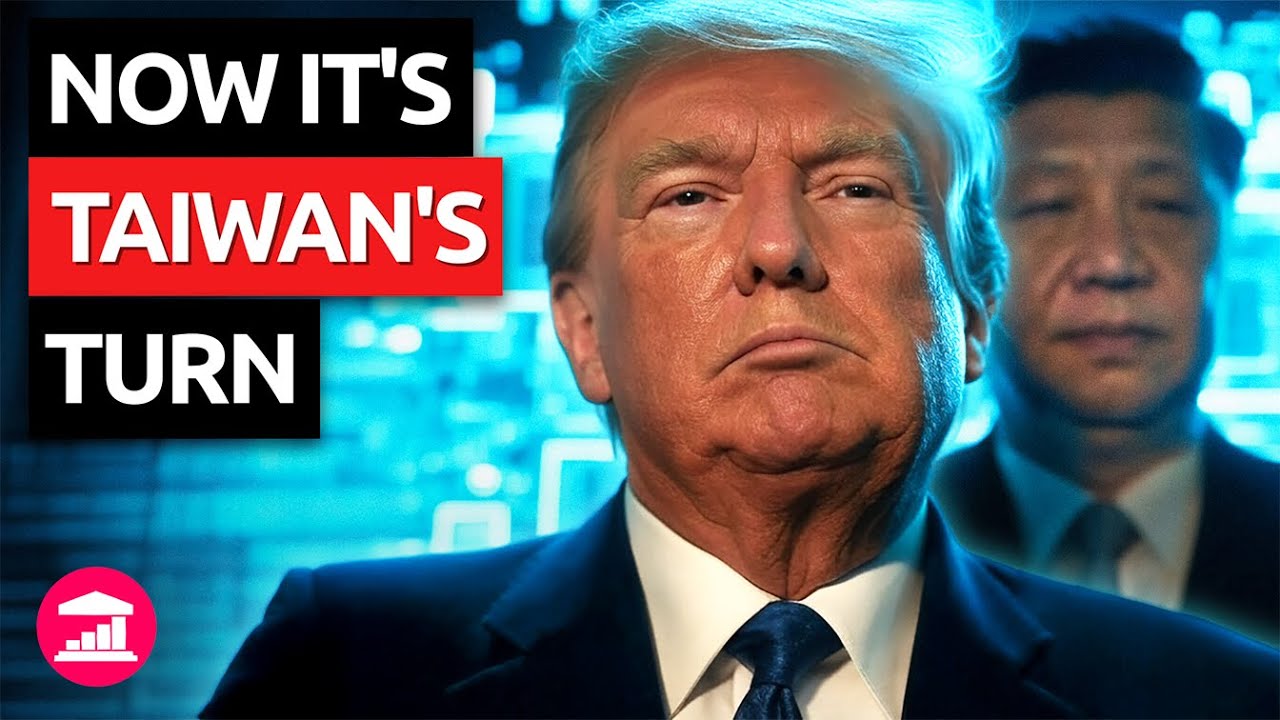
Taiwan: Is the "Silicon Shield" collapsing?

Iran lifts Dollar, sinks Euro

Germany doesn't want any more migrants?

Russia's "Alliance" in the Balkans is sinking

Ukraine: Problem with the ceasefire?

Nuclear weapons for Poland against Russia?

Canada challenges Trump on Tariffs

Trump, Putin and the question: What now?

Israel escalates War to crush Hamas

Houthis and al-Qaeda

EU: Greenpeace warns of dying farms