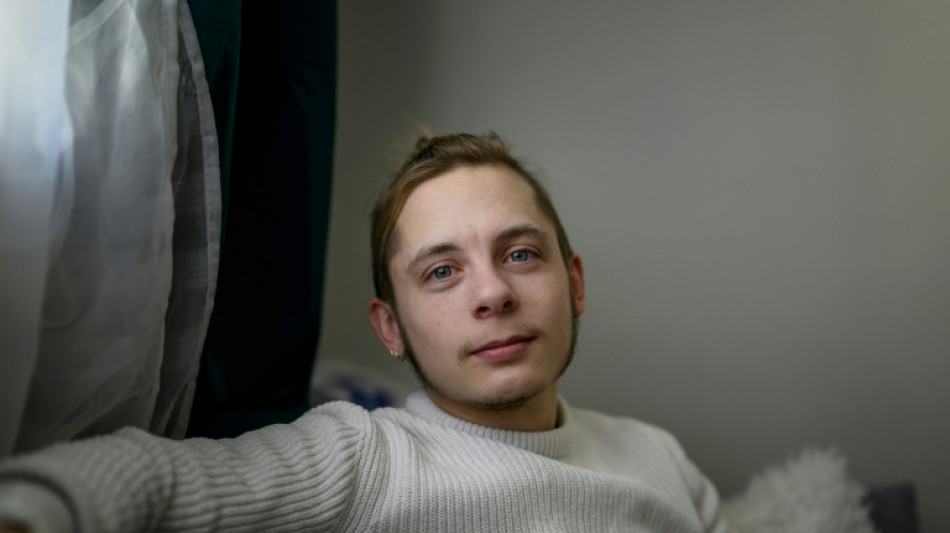
Insults and acceptance: being trans in rural France / Photo: JEFF PACHOUD - AFP

 Kenya's economy faces climate change risks: World Bank

 Milei demands expulsion of foreigners expressing 'hate' against Argentina

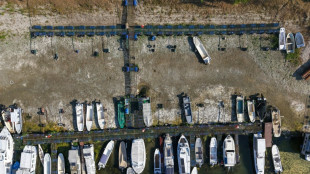
 Italy's Po River valley on drought alert

 Prada profits pinched as growth hard to chase

 Stocks climb on earnings and rates, oil retreats

 US economic growth slows in second quarter, missing expectations

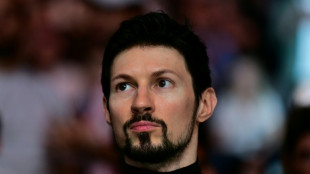
 Russia adds Telegram founder Durov to 'terrorist' blacklist

 Stocks diverge on earnings, as oil steadies

 Eurozone economy grows despite Middle East war

 Singapore group will develop 'most promising' Ebola vaccine

 Shell profit surges as Mideast war fuels oil prices

 Car maker Stellantis says back in profit in second quarter

 Samsung quarterly operating profit up 1,800% on AI boom

 South Korean stocks bounce after rout, oil holds gains on Mideast woes

 South Korea's women web sleuths fight AI deepfake porn

 Anything but programmable: New cost-efficient EC-power-supply-series for the DIN rail by CAMTEC PS
 Meta misses profit expectations, sticks to massive AI spending
 Campari - king of the spritz - hopes to conquer American heartland
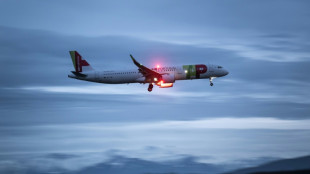 Air France-KLM and Lufthansa bid for Portugal's TAP airline

 Profits soar at Airbus as it delivers more planes

 Rheinmetall shares surge after armsmaker reports record profit
 FIFA hit by furious backlash over plans to sell stake in competitions

 MEXC Integrates World-Check to Fortify Institutional Grade Compliance Architecture
 Spain returns wildfire evacuees as France braces for worsening weather

 Russia seeks arrest of Telegram chief Durov

Valerie Montchalin found out who her friends were when she transitioned to being a transgender woman in her village high in the Massif Central of central France.
Some turned their backs on the 52-year-old builder. And she was not invited to the village get-together.
Everybody knows everybody -- and everything about them -- in Saint-Victor-Malescours, a village of 700 souls surrounded by wooded hills.
Montchalin kept her secret for decades. She knew she was different "when I was six or seven... without being able to put a word on it. But if I had told my mother that I didn't feel right in my body, I would have got a good slap," she told AFP.
Her family were afraid of "what people would say".
So, growing up, "I did what was expected of me," she said. She became a builder, married at 22 and had two children. As a man, she was "gruff, pretty macho -- the opposite of what I really was," Montchalin admitted.
But she was "suffering" inside, the discomfort particularly acute in men's clothes shops or when she looked into a mirror at the barbers. Finally, at age 48, she came out to her wife and children.
Since then, Montchalin has moved to the nearest city, Saint-Etienne, where she is receiving hormone therapy. She has let her hair grow and regularly goes to the beautician. "I am quite coquettish."
Her workers were initially quite "shocked", but now they greet her with a kiss on the cheek.
Her transition was not a dramatic "flag-waving one", she says -- a feeling echoed by six other transgender people from rural areas who talked to AFP.
All told how they learned to deal with the isolation and odd looks and of having to travel for hours for medical attention. Being transgender in the French countryside can be a long and lonely path.
- 'Rejection' -
Yet rarely have transgender people been more in the news.
On the one hand "Emilia Perez", a film about a transitioning Mexican drug lord, won two Oscars this month after triumphing at Cannes and the Golden Globes.
On the other, US President Donald Trump banned transgender people from the military and from women's sports and dressing rooms, a move quickly replicated elsewhere.
France has somewhere between 20,000 and 60,000 transgender people, according to official figures from 2022.
Despite a handful being elected as local councillors over the past five years, "trans people are a long way from being well represented socially or politically," said Virginie Le Corre, a sociologist at the LinCS institute in Strasbourg.
Gynaecologist Maud Karinthi, who specialises in trans identity, said lots of patients she sees in her clinic in Clermont-Ferrand come from far-flung villages across the thinly populated centre of France.
As well as travel, transgender people in the countryside have to deal with "isolation and rejection in their communities", she said.
- 'Not understood' -
"You can't talk about it and there is no access to information," said Valentin, a 25-year-old trans man.
It was only when he was 18 that the penny dropped. "I discovered the existence of transgender people on social media and that you could change your gender," he said.
"I said to myself: 'That's my problem.'"
"It changed my life," said the entrepreneur, who asked AFP to alter his name for fear it may cause him trouble at work.
The dearth of support groups and role models outside towns and cities does not help, said sociologist Le Corre, adding that the school system "has a lot of catching up to do".
Twenty-nine-year-old Ines, who is non-binary and does not see herself in any gender, finds it "very hard" when people see her as a woman.
Despite working in tourism in a small ski resort in the Alps, they are afraid of coming out there for fear of "not being understood".
"Non-binary isn't concrete for people," she said.
Getting surgery is still hard in rural areas "with waiting lists counted in years (from two to five years), too little available treatment and what there is patchy geographically", a 2022 French health ministry report found.
"Where I grew up all we had was a doctor's surgery, and it was open only one day in four," said Isaac Douhet, a transgender man who had to travel two hours each way for genital surgery in Lyon.
Armelle, a 22-year-old transgender woman who works in a cheesemonger's, had a similar marathon, travelling four hours from her home in Aurillac to Clermont-Ferrand.
- Beaten up -
In the countryside, "you need to have real force of character to not be affected by how others see you," she said.
Douhet agrees. While his foster family and their neighbours "were good" about his transition, he was made to suffer at school.
"People don't understand, they judge, they turn their back on you in the street and you will be insulted," he said.
He was once beaten up by other pupils.
Sarah Valroff, who is non-binary, calls themselves Saraph -- combining her birth name Sarah with the male moniker Raphael -- dresses in androgynous clothes and uses they/them/their pronouns.
But the 29-year-old business owner avoids "dressing like a man" when they go out in the country town of Ambert -- famous for its blue cheese -- or holding hands with their partner.
"The smaller the place, the more those who are a bit different stand out," said researcher Le Corre. But it is often more "generational than geographic".
Several of those AFP talked to decided to quit the country for the city. Douhet moved to Clermont-Ferrand where he likes being "lost in the crowd" and where he can regularly drop in on a centre Dr Karinthi set up for women and trans people.
Armelle is also thinking of moving to the city to smooth her treatment and be "more at ease" in meeting other trans people.
- Acceptance -
However, change is afoot in the countryside. "There is a new, more open attitude with people moving out from the cities and groups are being set up," according to sociologist Le Corre.
There is "a marked difference between young people who have grown up with the internet and those who were a bit closed in by their village," she added.
Trans people were also talking more openly and "refusing to hide".
Saraph has set up the podcast "Queer Horizons" that shines a light on rural queer life with the young in mind -- "to be the adult I would love to have had during my childhood."
Dermot Duchossois, a 23-year-old transgender man with the beginnings of a beard, loves his life in Pionsat, a village of 1,000, where he is a home help.
The only people who did not accept him were the managers of the supermarket he worked in before his transition. "They would not allow me in the men's changing room even though it was awkward for me to be with girls in their underwear."
But "in my village I never felt I was being stared at when I began to change. I was really well accepted. Even old people asked how I was getting on."
M.Anderson--CPN