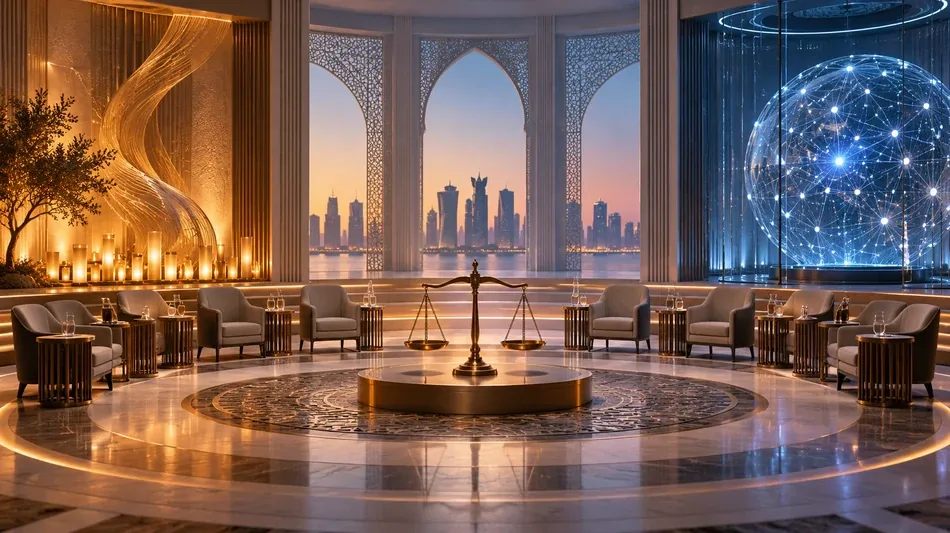
Doha Debates Examines Who Should Set the Moral Rules for AI

 Lula campaign seeks to disqualify Bolsonaro over Meta 'interference'
 Tech jitters lead stocks lower, oil surges then slides
 Solid GM results overshadowed by latest jump in commodity costs
 Power outage hits Google Cloud services, disrupting UK banks
 Gold Remains Under Pressure as Energy Inflation Clouds Rate Outlook

 Tamil Nadu Adds 25 State-Funded Workdays for Eligible Rural Households

 Asian Technology Shares Slide as Investors Reassess AI Boom

 Doha Debates Examines Who Should Set the Moral Rules for AI

 CNN Global Perspectives to Make Middle East Debut in Doha

 Industry Groups Outline Four Steps to Help Women Farmers Reach Markets

 World Gold Council Sees Digital Gold Market Tripling by 2031

 iQOO Neo 12 Set for October 28 China Launch With 144Hz Display

 Low-Cost Homemade Ideas Offer Alternatives for Halloween Costumes

 Tamil Nadu and Puducherry Face Return of Very Heavy Rain
 UN says 19 mn Afghans facing acute food insecurity by April
 China opposes US ban on govt agencies from using DeepSeek

 Indonesia investigates crash of suspected Chinese rocket fragment
 Middle East fuel crunch drives solar push in tiny Fiji

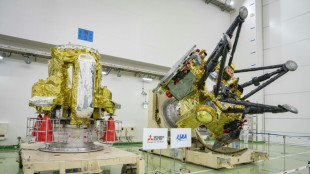 Japan probe on its way to Mars moon
 Ukraine races to secure energy supplies ahead of winter

 US judge orders Saudi engineer held in OpenAI case
A Doha Debates discussion brought religious, ethical and technology perspectives together to consider who should determine the values embedded in artificial intelligence.
A Doha Debates discussion brought religious, ethical and technology perspectives together to consider who should determine the values embedded in artificial intelligence.
Doha Debates has raised a timely question: as artificial intelligence (AI) shapes daily life, who should decide the values that guide it, companies, faith traditions, or society itself?
That question sat at the centre of Doha Debates’ town hall, “Should AI be shaped by faith?”, held on October 15 at Multaqa, Education City Student Centre.
Speaking to Gulf Times after the event, Doha Debates managing director Amjad Atallah stated the discussion was designed not simply to ask what AI can do, but who should shape the principles embedded in the technology.
“The leaders of AI companies are putting a lot of faith in their products, and they are asking for a lot of faith from us,” he stated. “But what about our faith traditions? Are they part of the makeup of these tools?”
Atallah stated the deeper question is whether people will remain in control of how AI develops. “Are humans going to be shaping the machines or are the machines going to be shaping us?”
Doha Debates, a production of Qatar Foundation, brought religious and secular perspectives together in a Majlis-style format.
Moderated by Mozilla Foundation chief executive Nabiha Syed, it featured AI philosopher Yaqub Chaudhary, Notre Dame Law School professor of canon law Monsignor John Paul Kimes, and author, strategic futurist and transhumanist Max More.
“Left to their own devices, are the major AI developers concerned about these moral and ethical questions?” Atallah asked. “The time to have a public debate about these questions is now while we still have an opportunity to influence the course of events.”
He stated that one central tension was authority: who decides which values a global technology should reflect.
Another was pluralism. If one AI system serves people with different beliefs and moral frameworks, it raises the question of whether moral neutrality is possible, or even desirable.
The third concerned function.
“Should it be a tool for retrieving basic knowledge, a trusted mentor, or something else?” Atallah stated.
The focus differed from a Doha Debates town hall in Qatar in January, which centred on whether humanity was ready for the possibility of superintelligence.
This time, the emphasis was deliberately on values and principles.
“Today, the question of values rests largely with the companies creating AI, even though the consequences of their decisions affect us all,” he stated.
The town hall therefore asked whether faith communities should have a place among those shaping AI and, if so, on what terms.
Atallah stated involving students and recent graduates from Qatar was central to the conversation, reflecting Doha Debates’ emphasis on youth voices and Qatar Foundation’s mission to unlock human potential.
“One generation from now, this new technology is set to be close to universal in the way cellphones and social media have become part of everyone’s daily routine,” he stated.
Atallah also stated that this generation still remembers life before AI, putting it in a distinctive position to support decide how the technology should be used.
Young participants challenged guests’ arguments and brought perspectives shaped by different nationalities, faiths, and worldviews, diversity that Atallah stated is particularly important in a debate about the values guiding global technology.
The objective, nevertheless, was not to force agreement.
“Complex questions rarely have a clear answer,” he stated. “We don’t expect everyone to agree, but the search for truth is a meaningful outcome in its own right.”
Atallah stated he hoped the discussion would encourage audiences to examine the systems they increasingly rely on.
“Whose values are built into the tools we use? Who made those choices, and who benefits from them?” he stated. “These are questions people from every belief system should ask.”
The conversation will continue beyond the event, with the full town hall due to be released on DohaDebates.com and digital platforms in December.
For Doha Debates, the question is not simply how powerful AI becomes, but whether society remains willing to scrutinise the values being built into it while there is still time to shape its direction.
Doha Debates Artificial Intelligence Education City Student Centre
D.Goldberg--CPN